Practical Coping Strategies (Part II)
Goal
To be able to effectively respond to bullying
It’s Okay to Fail (Hayes & Herbert, 2011, p. 50)
Feeling like a failure can contribute to having low self-esteem. By becoming more comfortable with failing and viewing failure as growth rather than being defeated, you will become better equipped to handle bullying situations. There are several things you can do to learn how to fail well:
- Attempt something new
- Discuss what might happen if you fail
- Play out various scenarios of “what ifs”
Expressing Anger (Whitson, 2012c)
Anger is among the most universal of human emotions, yet all too often, young people struggle to accept their feelings of anger and to know how to express this emotion in honest, direct, relationship-enhancing ways. You have four basic choices when it comes to expressing anger:
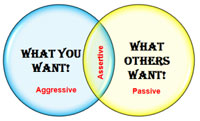 Aggression is one way the feeling of anger is expressed in behavior. Aggression is usually impulsive and unplanned. Aggressive behavior is destructive to relationships because it aims to hurt or damage a person or an object. Aggression can be physical (e.g. punching, kicking) or verbal (e.g. threatening, calling names).
A passive person expresses needs, wants, and feelings in an indirect way. They feel that their needs are not as important as the needs of others, so they behave in ways that allow their needs to be ignored or overlooked. Passive behaviors may take the form of poor eye contact or soft speech.
Passive aggressive behavior is a hidden way of expressing feelings of anger. It involves behaviors designed to get back at another person without the person recognizing the hidden anger. Passive aggressive behaviors include procrastinating, carrying out chores or tasks the wrong way, sulking, or getting hidden revenge.
Assertiveness is a style that is used to express anger in words, in a direct and respectful way. Assertive behavior sets limits on what a person is willing or not willing to do in a situation. It is an honest form of communication in which a person expresses their wants and needs without hurting or violating the rights of others. Assertiveness includes behaviors like good eye contact, even tone of voice, and the use of ‘I’ messages.
Watch the following video to learn more about being assertive and using ‘I’ messages:
Making & Refusing Requests (Whitson, 2012b)
Here are some assertive strategies for making requests. Keep in mind that along with your right to make an assertive request comes the other person’s right to refuse your request. Learning how to assertively communicate a request does not always guarantee that you will get exactly what you want, when you want it. That is not the goal of assertive communication, however. Rather, the goal is to for you to be able to express yourself in an emotionally honest, direct way and to build meaningful relationships with others.
- State the request. No need to be wordy or to volunteer extra information. Simply come right to the point and ask for what you need.
- Be persistent. If you feel that your request is being ignored or put off, be persistent in asking for an answer. This does not mean that you will get an answer immediately, but it does mean that you will know when you can get an answer.
Not only do you have the right to make requests, but you have the right to refuse unreasonable requests from others. In fact, saying “no” can be healthy when it prevents you from being controlled by others, taken advantage of, overwhelmed, or when it helps you steer clear of potential trouble. Here are some strategies for refusing requests:
- Be direct, firm, and honest
- Ask for more information if you are not sure what the request involves
- Postpone giving an answer if you need more time to consider the request
- Use ‘I’ messages to express your feelings assertively if the other person tries to force you into granting their request.
Next Step
Learn more about expressing anger effectively by watching the following video: