Depressed Thinking
Goal
To be able to more readily identify negative thoughts
Depressed Thinking (Greenberger & Padesky, pp. 157-158)
When we are depressed, we have negative thoughts about self (self-criticism), about the world (general negativity), and about our future (hopelessness). These negative thought patterns maintain the depressed mood.
Negative Thoughts about Self
Almost everyone who is depressed thinks self-critical thoughts. The thoughts are damaging because they contribute to low self-esteem, low self-confidence, and relationship problems, and they can interfere with our willingness to do things to help us feel better.
 Negative Thoughts about the World
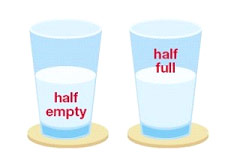
Thinking about your current experiences in a negative way is another characteristic of depressive thinking. We often do not take events at face value-typically interpreting or misinterpreting events that occur around us. An example of this is “reading between the lines” when a friend, relative, or co-worker is talking. When we are depressed, we often perceive others as negative, mean, or critical.
Negative thinking about the world is a style of thinking in which we notice and remember negative aspects of our experiences more vividly than positive or neutral events. For example, when we are depressed we tend to look at and remember the articles in the newspaper that report disasters and not remember the articles that report positive events. Focusing on the two out of ten chores that did not get done on a Saturday would be another example of negative thinking about the world.
Negative Thoughts about the Future
When we are depressed, we imagine that the future will be completely negative. This prediction or anticipation that events will turn our negatively is called hopelessness. Examples of this type of thinking include “I’ll blow it,” “Nobody there will like me,” “I won’t be good at it.“ A negative attitude toward the future may also manifest itself in thoughts like, “I’ll never get out of this depression” or “What’s the use in trying? I’ll never get any better.” We may anticipate that a conversation will go poorly, a new relationship won’t work out, a problem can’t be solved, or that there is no way out of the depression. In its most extreme form, hopelessness can contribute to thoughts of suicide.
Negative Thoughts about Self Exercise (Greenberger & Padesky, p. 157)
Instructions: To demonstrate how self-criticism plays a role in your life, remember a time when your self-esteem or self-confidence was particularly low. It may have been a time when you felt worthless and unlovable. Picture in your mind the moment you were feeling most depressed and remember or speculate what you may have been thinking. Did you have any negative thoughts about yourself? If so, write them here:
__________________________________________________________________________
__________________________________________________________________________
__________________________________________________________________________
__________________________________________________________________________
Negative Thoughts about the Future Exercise (Greenberger & Padesky, p. 158)
Instructions: To demonstrate how negative thinking about the future functions in your life, identify an activity you sometimes enjoy but do not do when you are depressed because you predict it will not turn out well. Write about the activity you avoid and your negative prediction of how it will turn out:
__________________________________________________________________________
__________________________________________________________________________
__________________________________________________________________________
__________________________________________________________________________
Identifying Negative Thinking Exercise (Greenberger & Padesky, p. 159)
Instructions: Negative thoughts that people frequently have when they are depressed are listed below. To see if you’ve had these types of negative thoughts and to help you distinguish among them, check each thought you have had and indicate whether the thoughts are negative toward self, the future, or the world.
| Check each thought you have had | Is the thought negative toward self, future, or world? | |
|---|---|---|
| ________ | 1. I’m no good | ____________ |
| ________ | 2. I’m a failure | ____________ |
| ________ | 3. Nobody likes me | ____________ |
| ________ | 4. Things will never get better | ____________ |
| ________ | 5. I’m a loser | ____________ |
| ________ | 6. I’m worthless | ____________ |
| ________ | 7. No one can help me | ____________ |
| ________ | 8. I’ve let people down | ____________ |
| ________ | 9. Others are better than I am | ____________ |
| ________ | 10. (S)he hates me | ____________ |
| ________ | 11. I messed up again | ____________ |
| ________ | 12. My life is a disaster | ____________ |
| ________ | 13. (S)he dislikes me | ____________ |
| ________ | 14. I’m hopeless | ____________ |
| ________ | 15. Others are disappointed in me | ____________ |
| ________ | 16. I can’t change | ____________ |
Next Step (Greenberger & Padesky, p. 160)
Review your answers to the Identifying Negative Thinking Exercise:
| 1. Self 2. Self 3. Self/world 4. Future 5. Self 6. Self |
7. World/future 8. Self 9. World 10. World 11. Self 12. Self |
13. World 14. Future/self 15. World 16. Self |