ADHD: The Threat-and-Soothing Cycle of Procrastination

Navigating the Emotional Regulation System
Paul Gilbert’s evolutionary model proposes that human beings switch between three systems to manage their emotions: the threat, drive, and soothing systems.
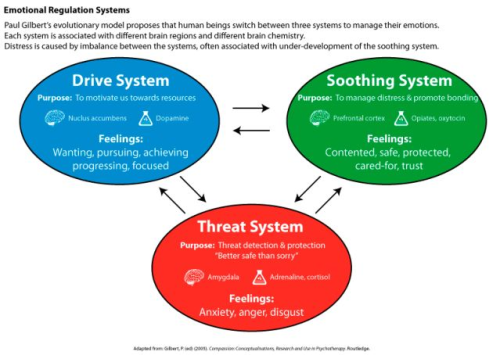
Commonly reported triggers of threat that lead to overwhelm often include:
- Completing an assignment that is unclear and/or uninteresting.
- Responding to text messages after a certain amount of time has passed (e.g., after a week has passed by).
- The expectation to complete convergent tasks in a timely manner (i.e., admin duties, responding to emails, prioritizing, etc.).
- Imposter syndrome.
- Choice paralysis.
- Rejection-sensitive dysphoria.
The ways in which people soothe can make a difference as to their ability to move out of the soothing system towards the drive system. For example, it may be easier to initiate a task after taking a sensory or movement break, rather than scrolling on technology as a form of soothing. A further important factor to consider is your self-talk. If you have attempted to do an assignment that led to overwhelm, it is understandable that you may have spent hours self-soothing. Even if you had only accomplished initiating a task that was overwhelming, it is an accomplishment within itself that you were able to achieve progression to the drive system in some capacity. Chastising yourself for not completing the task will likely re-trigger your threat system, and may lead to a perpetual cycle of feeling stuck between the threat and soothing systems.
The Protective Qualities of Self-Compassion
Self-compassion can help you navigate the emotional regulation system (i.e., threat to soothe to drive), without re-triggering the threat system. A series of studies have explored the protective qualities of self-compassion and self-esteem to uncover cognitions that serve to protect self-compassionate individuals from self-evaluative anxiety when their self-evaluation is threatened.
Inducing a Self-Compassionate Mindset
The first component of having a self-compassionate stance requires the ability to view the self with kindness even in the face of failure or hardship is argued to provide the safety needed to see the self clearly without fear of self-condemnation and, therefore, avoiding the need to suppress feelings and providing a supportive outlook for growth and change.
The common humanity component of self-compassion allows for the recognition of the related experiences of the self and other, in which pain and imperfection are acknowledged as an inevitable part of the human experience, as opposed to isolated occurrences that only happen to one alone.
The third component of self-compassion, defined as "mindfulness," requires taking a balanced approach to our negative emotions so that feelings are neither suppressed nor exaggerated. Mindfulness requires a willingness to observe one’s negative thoughts and feelings in a non-judgmental receptive mindset of openness and clarity, without trying to suppress or deny them.
Read the complete article available at Psychology Today!
Reflection:
How do you deal with ADHD?
#ADHD #Procrastination #Self-compassion
If you liked this article, you might also like, "5 Strategies to Make and Keep Routines With Adult ADHD"
You might also like, "5 Essential Tips for Women Coping With ADHD"

@comfortableNight4463
Thanks for the post, this is great info 😄
I actually use that same Emotional Regulation System model with my therapist sometimes. It helps when trying to understand emotions, reactions and experiences, and moving between the systems.
@SleepyShyCat You're most welcome! I wish you the best!

@comfortableNight4463 Another amazing post! Thank you for sharing these very informative links and information!
@AmintaBlack You're most welcome!