5 Things I Need You To Know About My ADHD

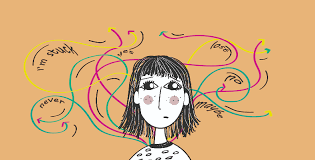
"I must say, from an outsider's perspective, I can see how some people may not believe that I have attention deficit hyperactivity disorder (ADHD). I am the last person to fit the stereotype of the little impulsive five-year-old boy that many people associate with ADHD. Nevertheless, I am affected by the same condition and would like to clarify how it affects me so that others may understand me better.
1. My ADHD doesn’t mean I don’t have a competent attention span
In fact, it isn't a deficit of attention as much as I would describe it as a malfunction of attention. Attention can be defined as the brain's ability to concentrate on a particular phenomenon and exclude all others. To say that I can't keep attention, would be misleading, as many people who have ADHD also experience "hyperfocus" on certain topics. Typically, these topics are ones in which I am more engaged and interested in. With that being said, please understand I also did not choose to engage in these subjects much like how I did not choose to not engage in the others. The problem isn't that I don't have attention, but rather, I don't get to regulate when I apply my attention and what I apply it on.
2. My ADHD is a ubiquitous part of my life
A commonly held notion is that ADHD only affects the ability to concentrate in a school setting. For me, however, it affects much more. It affects how I think, how I act, my daily conversations, what I worry about, how much I worry, the intensity of my emotions, my ability to plan, my awareness of how others perceive me, and it contributes to my feelings of exclusion. My ADHD is ultimately a part of me and plays a role in all that I do. With that being said, my ADHD comes with more positive traits as well: creativity, innovative thinking, empathy, sensitivity, compassion, and passion. Each of these play a role in how I interact and respond in various situations with all types of people on my daily life.
3. My ADHD is not a result of a lack of discipline
My ADHD is not a result of me not trying hard enough. It is not a result of my parents' neglect to discipline me. In fact, I feel it makes me and many others with ADHD quite the opposite. For me personally, I find that I have to work three times as hard as the majority of my peers to get simple tasks done. One of the most frustrating assumptions is that the accommodations I get on tests gives me an unfair advantage. I think this is partly fueled by a misunderstanding of the seriousness of the condition and the abuse some people have taken of the accommodation system. It bothers me, as a person who genuinely struggles with the implications of ADHD, that there have been many people to fake the condition in order to illegally take and sell drugs or to take advantage of the accommodation system in order to perform better on tests.
Even with the extra time I have, I still have to work incredibly hard. Just because I have extra time, does not mean that suddenly all my problems go away. I spend time and a half longer than everyone else combatting my busy mind and rereading the questions several times until I can direct my attention to what they mean, to answer a multiple-choice exam. ADHD makes reading a lot more difficult for me. My difficulty being able to concentrate on the words I am reading contributes to anxiety and the feeling of being overwhelmed by large amounts of words on a page. As a result, it is very difficult, even with extra time, to perform to what I feel my potential should be on tests.
4. My ADHD does not define my success or my intelligence
When I am having a conversation with someone, it may appear that I forget what I am talking about because I am mindless and get distracted by something completely unrelated. This is not true, however, as I frequently am distracted because I am reminded of a topic that is related in some way. The connection is typically small and the whole process happens so quickly in my mind. For this reason, I am quite creative and typically excel in tasks that require imaginative thinking. While ADHD affects my mind in some ways that make things a little more difficult, it does not affect my intelligence as a whole. Better put, it affects the means in which I learn. I have been able to succeed in magnet programs throughout my life, the International Baccalaureate program in high school, and balance various activities and clubs, some of which I took leadership roles in.
5. Judging my condition does NOT help anything
I feel like I can not talk about my ADHD without being heavily judged or misunderstood. This stereotype threat in itself has been shown, in many studies to impact performance, allowing the stereotype to live. In my personal experience, my own stress due to the feeling I can not communicate my ADHD comfortably heightens my social anxiety when talking to others, contributes to low self-esteem, and contributes to bouts of depression.
In short, we can do a lot better than this. We need to fight the stereotype and have empathy for individuals who have unique experiences, even if we do not share the same ones. Stop assuming everyone fits the statistic or is exactly like you. Celebrate diversity and make the effort to ask and listen to what individuals are feeling and experiencing."
*I think that all mental health conditions have a stigma around them, but others are less common. I feel that ADHD is a less common one, so I wanted to share someone's perspective on how they feel the stigma is surrounding this disorder. I think when people tend to think of ADHD, they tend to think of someone who is very easily distracted and very energetic. While it can seem this way, it's usually not the case. There is more than meets the eye and it's important to get to know someone before you judge them. Someone who has ADHD can still be extremely intelligent and disciplined. We all have baggage to carry and some people just have ADHD. Education about all types of mental (and physical) health is important to reduce stigma! It all starts by sharing and listening to different experiences ❤️ What is a stigma around something that you struggle with that you wish others knew the truth about?*
#ADHD #AttentionDeficitHyperactivityDisorder #Stigma
Please find the full article at The Odyssey Online.
If you liked this article, you may like this one on ADHD in adults.

@fruityPond7887
Thanks for sharing this pond! Helpful info more people should know 😺
@SleepyShyCat Of course Shy! Thank you for taking the time to read! 😊
@fruityPond7887
Super speedy reply :0 thank you for taking the time to make this post! :)
@SleepyShyCat Hehe of course! I try to share these great articles so that people know that they are not alone in their struggles and to spread information! ❤️💛