ED Community Weekly Forum Discussion: Letting Go of the Log 8/4/20

For most of us, our eating disorder has served a purpose and helped us cope with difficult experiences and circumstances at one time or another. Despite the negative consequences of hanging onto our eating disorders, it can be scary to let them go! We might be thinking, "What if I can't survive without it?"
Today's discussion is centered around an excerpt from Anita Johnson's book "Eating in the Light of the Moon" comparing eating disorders to hanging onto a log to stay afloat in rough waters, and what it means to let go of the log and move toward recovery.
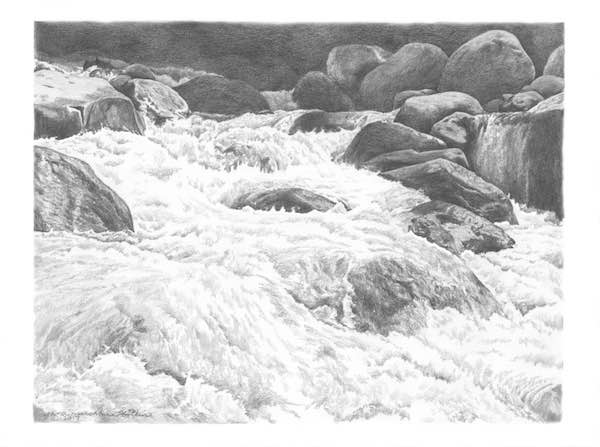
From Chapter 3 of Eating in the Light of the Moon:
*some small edits were made to make this piece more gender inclusive
Imagine yourself standing in the rain on the bank of a raging river. Suddenly, the water-swollen bank gives way. You fall in and find yourself being tossed around in the rapids. Your efforts to keep afloat are futile and you are drowning. By chance, along comes a huge log and you grab it and hold on tight. The log keeps your head above water and saves your lift. Clinging to the log you are swept downstream and eventually come to a place where the water is calm.
There, in the distance, you see the riverbank and attempt to swim to shore. You are unable to do so, however, because you are still clinging to the huge log with one arm as you stroke with the other. How ironic. The very thing that saved your life is now getting in the way of your getting where you want to go. There are people on shore who see you struggle and yell, Let go of the log! But you are unable to do so because you have no confidence in your ability to make it to shore.
This is not unlike the position many people find themselves in when they first become aware of their disordered eating. They feel foolish at best, humiliated at worst, that they are unable to stop a behavior that is interfering with their desire to get where they want to go in life. In the face of their shame, they quickly forget the role their disordered eating played in their survival, how it helped them keep their heads above water through some rough times by giving them a way to deal with their conflicts, feelings, and difficult situations. They immediately assume that there must be something wrong with them to continue such destructive behavior. This view, unfortunately, is supported by well-meaning friends, family, and professionals who suggest that they just stop doing it: stop starving themselves, stop bingeing and purging, stop eating compulsively, stop gaining weight.
Simply letting go of the log may not, in fact, be the best course of action to take. What would happen if you let go of the log, began to swim to shore, and got halfway there only to find that you didnt have the strength to make it all the way? This means that you wont be able to make it back to the log, either. Many people feel foolish for clinging to the log, and many of their friends, family, and even health professionals become frustrated with their resistance to letting go. They assume the tenacity with which they cling to their disordered eating is a personality flaw, rather than a sign from within that more preparation is needed.
Recovery from disordered eating requires honoring rather than condemning the resistance encountered. It insists upon a recognition that any behavior that slows, stalls, or creates obstacles in the path toward recovery has meaning and a purpose that can be valuable, even essential.
A person who seeks recovery needs to understand clearly the ways in which their disordered eating has served them so that they can stop viewing it as simply an impediment to her happiness. Only then can they know precisely which skills are needed to develop in order to live a life free from bingeing, dieting, and food obsessions.
To recover from disordered eating requires the development of whatever skills are necessary to replace the function of the log. Once a person develops these skills they will discover that they are much more effective and efficient than the disordered eating behavior, and will tend to choose to use them to help them cope with whatever stressors life throws their way. They can then let go of the log, relying on their newfound skills to keep them afloat and to give them the strength needed to make it to shore.
And so, very slowly and carefully, you let go of the log and practice floating. When you start to sink, you grab back on. Then you let go of the log and practice treading water, and when you get tired, hold on once again. After awhile, you practice swimming around the log once, twice, ten times, twenty times, a hundred times, until you gain the strength and confidence you need to swim to shore. Only then do you completely let go of the log.
Recovery from disordered eating begins with the understanding that the disordered eating behavior served you when your goal was survival. This understanding is then followed by the development of new skills that will enable you not to simply survive, but to get what you want out of life, to thrive. Survival is no longer the only goal. The goal becomes one that includes a life that is rich and fulfilling.
It is a gradual, step-by-step process that calls for letting go of judgment (there is something wrong with me), the development of some important life skills, and learning to trust that inner voice that will tell you when you are ready.
Discussion Questions: What role has the eating disorder played in your life? What is it protecting you from?What is waiting for you on the bank if you were to let go of the log and swim to shore? What reasons do you have for pursuing recovery?What is keeping you from letting go of the log/eating disorder currently?What other coping skills would you like to incorporate to allow for less reliance on the log/eating disorder?Is there a step you can take this week in order to practice allowing yourself to float?What are your overall thoughts on this excerpt/metaphor?
Tags: @24Help1 @2ndOf7 @AddictedTealover98 @azuladragon34 @Blessedboy @blueberry712 @Catlub @charmingSky1384 @ClimbingForever1 @CriesFromSmiles123 @cuddlyKiwi43 @Elizabeth2807 @elizabethunter @FunkyFlamingo @gentleLand5245 @Goldcherry2113 @greenShip8274 @Happy900 @Hashib22 @mmklemm @MorgiePositive @Myself85 @OpheliacRose @parisayano @plantlover3 @PotatoSoup @rabbit911 @redLime9266 @resourcefulPond1641 @SammyLouise @SarcasticWoman2005 @sensitiveTree7818 @sereneoceanscene @Shanna @SharpiePen @Smallbean0404 @SrijanSinha @Tazzie @theheartproject @Traveller8 @turquoiseFriend2396 @understandingMoon3999 @verawolf @youandmesohappily
To add or remove yourself from our taglist please visit this thread
To visit the discussion masterpost archive please visit this thread
Thanks