Be Leisure Smart, Not Boredom Prone

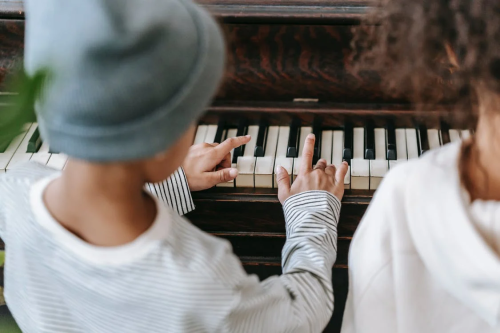
“Why is Leisure Important? Let’s start with a premise: using leisure well is a skill. Like all skills, it’s easier to develop if it is taught and improves with practice.
Leisure is critical for well-being. It’s when we relax and blow off stress. We can return to pressing problems with fresh eyes by freeing our minds from pressing problems. It allows us to build new abilities and gain new information. It can help us form and maintain social bonds and relationships. It improves our physical health directly–because we engage in physical activity–and indirectly–because it reduces stress.
Leisure is a time for us to try on new roles and use our imagination and problem-solving skills. For many of us, it’s what defines who we are. We camp and make music and are gamers, artists, bakers, tinkerers, or run the church bazaar or quilt. And that’s much more important to our sense of self than our jobs. And it is critically important to us at all developmental stages–from the cradle to the grave.
Boredom, Leisure, and Flow
People are motivated to stay at an optimal level of arousal: we want to be interested but not stressed. What that means depends on where our heads are at. Sometimes that means staring into space. Sometimes that means hurtling down a ski hill. It depends.
Flow is the state where we are so immersed in what we are doing that we have achieved that optimal level of arousal–completely involved, forgetting ourselves, and happy. When we relax, we aren’t being challenged, but we are content with our current stimulation level.
Like all emotions, boredom has a purpose. When we are under-stimulated–bored–we start looking for things to do. This is where individual differences and skills come into play. The experience of boredom prompts us to increase our level of stimulation. We pick up our phone, scroll or flip on the TV or laptop, and watch a video. It’s easy and solves the immediate problem–we have increased stimulation. Sometimes that’s enough. It may not, ultimately, be satisfying if it doesn’t fulfill other needs that are more effective at relieving boredom–it doesn’t allow us to be creative or to deeply engage in imagination or lose ourselves and move into a flow state. Identifying those other needs and learning to fulfill them is a skill.
Psychologist Linda Caldwell of Penn State University has argued that the last several cohorts of children are under-prepared for using their free time in ways that make them happy. We learn to find things we enjoy through experience–by doing things we like, by noticing that some things make us feel better than others (we like playing kickball or playing video games or reading), and by choosing to do the things we find fun (making a video rather than scrolling Tik Tok). In other words, it follows the same model of behavior that Bandura argues underlies all our behavior: To choose good leisure, we have to want it, know what to do to get it, believe we can do it, and think it’s worth the effort.
One problem, Caldwell has argued, is that often kids don’t know how to create leisure activities for themselves. Many have spent their early years in group settings where their daycare providers and preschool teachers have created fun activities for them. They move to schools with scheduled activities afterward. As teens, they are either scheduled (and don’t need to create leisure for themselves) or dumped into situations where they have lots of free time and don’t know what to do with it. So they fall back on things they know–and things we sometimes do. They scroll and text. They watch videos. They hang out. Good things–but usually effective boredom controls over the long haul."
KEY POINTS
- Leisure and relaxation are critical for our mental and physical well-being. Creating effective leisure is a skill.
- Just as stress tells us we are overstimulated, boredom tells us we are under-stimulated. Use it to spur action.
- You can choose to pay attention to what makes you feel good and bad and choose activities that make you happy.
Read the whole article here
#Boredom #Leisures #Well-being
💬 How do you combat boredom?

@globalBraid3744
I typically find myself bored when I find myself burned out. Things that interested me just have no enjoyment anymore. That's why I started managing when to take breaks and time off at times to prevent burning out.

@sunnyWriting4806 yes same here and doing nothing ust causes more guilt and it's not restfull at all
@zealousGrace5023
I can relate! I used to spend my leisure doing only things that I found meaningful e.g. learning a new language because otherwise, I felt guilty that I should be studying or doing something productive. However, it can lead to burnout very quickly so I think it is needed to also spend leisure time doing something relaxing.
@globalBraid3744 yes its very important
@sunnyWriting4806
I agree with you! It is important to take regular breaks and look for signs of burnout to prevent it.

@globalBraid3744 If I'm bored, I really try to find something to do but I usually end up napping to pass the time. I try to see if any of my friends are available because I really love to socialize, but I have a hard time keeping myself entertained 😂 I try to force myself to watch Netflix or read a book because I enjoy those things I just would rather kill my brain cells with Tik Tok!
@fruityPond7887
I think TikTok is sometimes a good way to pass the time. After a hard day at work, a person really needs something to get enough rest. Brain cells also need a break!
@globalBraid3744 That's very true! Tik Tok is good for taking a brain break because the videos are short and they don't require much thinking at all! 😂
@globalBraid3744 When I'm bored, I blast music throughout the house and dance from one room to the next. It helps. A lot.
@comfortableNight4463
That sounds like lots of fun!!
@globalBraid3744 It absolutely is! It's also quite the workout.