How to Get Your Partner to Stop Screaming at You

How often would you say your partner screams at you when they’re angry? If you can’t even remember, this is most likely a good sign. However, if your answer is that it’s too frequent to count, then you’re probably not very happy about the situation. If screaming is a part of your daily interchanges with your partner, you may figure that there’s not much you can do to change things. Luckily, based on new work in the area of emotions and communication, there may be a remedy.
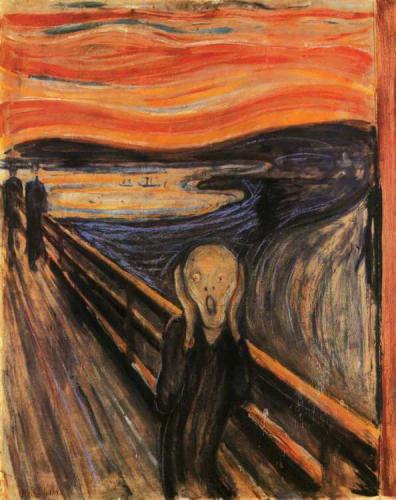
What’s Behind the Scream?
In a recently published paper, Baker College’s Stan Amaladas (2022) uses the framework of storytelling to understand what’s going on when people scream.
1. Stay silent; quoting an earlier author, Amaladas notes that, “To listen fully requires silence”
2. Regard the scream “as a question that is worthy of our attention” Someone is screaming at you because they feel they’re not, literally, being heard.
Asking yourself what your partner feels isn’t coming across could help you get to the bottom of their screams, especially if they tend to scream in particular circumstances.
The Stories a Screamer Might Tell
The Amaladas paper is not an empirical study in the strict sense as it is written from a more qualitative, narrative interpretive framework. In her story, she described herself as screaming when she felt that the senior doctors were heckling her and interfering with her ability to help the practice patient recover. Thinking of the story as a metaphor allows the listener to get to her “truth,” which in this case refers to her lack of trust in the senior physicians to understand her own anxiety.
Studying the Scream in the Laboratory
Perhaps somewhat surprisingly, despite the frequency with which screaming does occur in real life, there’s relatively little research on the emotional and cognitive underpinnings of this particular method of communication. Indeed, virtually all research on communication of emotions relies on the study of facial or other nonverbal cues. Yes, a person’s face may indicate that a scream is being emitted, but the person exposed to an actual screamer would be confronted with a great deal of vocal noise, which adds an entirely new dimension to the experience. Indeed, when you think about it, someone screaming out of fear may have a very similar facial expression as someone expressing extreme anger. Try this out yourself. Look in the mirror while you feign a scream in fear vs. one in anger.
Turning Down Your Partner’s Volume
Maybe your partner is afraid, maybe they’re angry, or perhaps they’re frustrated because they feel (paradoxically) unheard. If you notice your partner screaming in very similar circumstances from day to day, you can also do more than listen. Research on emotion communication suggests the importance of context. The German students were hearing vocalizations produced by their American counterparts without the luxury of knowing what prompted those emotions. You have that luxury and, over time, can take advantage of it to help turn the heat down with your partner.
Conclusion
To sum up, ideal communication of emotions occurs when both partners listen and both partners feel heard. To ensure fulfillment in this important area of your relationship, recognizing the scream as a symptom can become the first step to finding a cure.
How do you usually cope with screaming in a fight?
#Screaming #Relationships #Psychology

@calmDew1576
This has a lot of great information in it. When I disagree or when there is screaming I take a very calm and cool approach.