Psychology Today: Embrace Your Imperfection

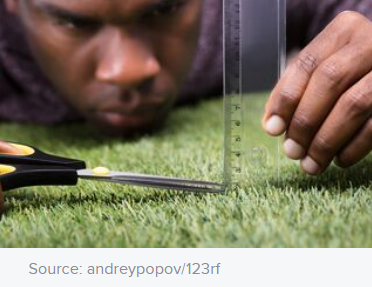
"Once upon a time, perfectionism was considered a virtue.
However, perfectionism has a downside. Perfectionists often see themselves as damaged, impaired, or simply not good enough. They live with a deficit mindset, feeling they need to be repaired, make amends, and do much better. They need to be perfect and achieve perfection in all they do to make up for their perceived failings.
Perfectionism is the pursuit of an almost impossible ideal, to address something you feel is missing that you need to make up for. And it can result in unhelpful, unproductive, and unhealthy consequences.
7 Damaging Effects of Perfectionism
1. Procrastination. When you need to achieve perfection, it can be hard to even start doing the thing. The very thought of the task ahead can feel overwhelming. We put it off, waiting for the ‘perfect’ time.
2. Time-wasting. We might be doing things to achieve an end–but are the things we’re doing really necessary? Perfectionists take excessive time to complete tasks. As Adam Grant has said, “Perfectionists waste a lot of time on details that don't really matter.”
3. No improved performance/productiveness. Ironically, all the time that stress, work, and care are taken by perfectionists–has little effect on their performance. How much more productive would you be if you could work well without feeling the need for perfection?
4. Overcompensation. Perfection is an ideal that can rarely, if ever, be achieved, but it doesn’t stop people from trying. Perfectionists feel driven to push themselves even harder, overcompensating for never achieving what they strive for.
5. Self-sabotage. Many perfectionists hold the belief that “I can’t fail if I don’t try.” They deliberately set themselves up to fail or underperform by not putting any effort into certain tasks. This allows them to say, “If I’d really tried, I would have done it perfectly.”
6. Burnout. If you are constantly pushing yourself, not living up to your impossible standards, getting disappointed, and failing to achieve perfection–that’s a lot of stress, anxiety, and strain.
7. Mental illness. High expectations and the pressure to perform perfectly causes various mental health issues. From their studies, Thomas Curran and Andrew P. Hill wrote, “The increase in socially prescribed perfectionism makes for a compelling backdrop for almost epidemic levels of serious mental illness.”
7 Strategies to Embrace Your Imperfection
1. Adopt a growth mindset. Reframe what you do as a learning process – informing your improvement, performance, and productivity.
2. Concentrate on process, not product. Planning and goal-centeredness are great, but you can miss opportunities and enjoyment in the present.
3. Quiet the inner critic. When a critical voice in your head may tell you you’re not good enough or that you need to do things perfectly, control it. Disprove it or turn down the volume and silence it.
4. Choose excellence. As Adam Grant said, “instead of aiming for perfection, it's healthier and more effective to strive for excellence” because “striving for excellence is pursuing high standards of quality. Perfectionism is very different.”
5. Accept imperfection and embrace "good enough." Adopting this mindset gives you immediate relief and freedom from guilt, liberating time, effort, and headspace for better things.
6. Use self-care. Ensure you have a good work-life balance and practice regular self-care to relax, refresh and rejuvenate yourself.
7. Embrace failure and fail better. Your standards can stay high, and your goals can remain huge, but when you see failure as an opportunity for growth, it releases you from the burdens of perfectionistic thinking or tendencies."
Read the full article here!
Reflection:
Do you struggle with perfectionism? How has it affected you?
*When I read this article, I was struck by how much I related to it. I struggled a lot with academic perfectionism. If I didn't get every question right, I would immediately berate myself. Even if I got a 99% or 98%, I would still think about the missing 1-2%. I would sometimes miss quizzes when I wasn't confident enough because I thought not going would be much better than not doing it well enough. That's when I realized I had completely gone off the rails. Now, I'm doing so much better. What helped me was that I realized doing what I can is better than not doin it at all. I focused more on the learning process and not the end result. I'm so thankful I was able to change my mindset before I got burned out beyond repair. I'm so much happier now and I wish I could go back and tell my younger self not to stress as much*
#Perfectionism #Coping #Mindset #MentalHealth

@comfortableNight4463 Physical health is a very important thing as a human being. We need to support the good resources to help our physical health better.
@adaptableFig6192 I agree. The first step would be eating intuitively and getting the proper amount of physical activity.

@comfortableNight4463
I think what helps for me is understanding that perfection is relative to everyone. Each person has their own definition of what perfection means to them. Finding your definition to continue in a healthful way challenging yourself to improve but at the same time respecting your shortcomings is what I believe is the way to overcome burn-out and maladaptive effects.
@sunnyWriting4806 Well-said! Perfection is subjective. As long as you're happy with the outcome, you shouldn't worry about tweaking it to match others' idea of perfection. Thanks for sharing!