Psychology Today: Understanding and Processing Anger

Anger is an emotion we’re all familiar with. We’ve all been disappointed, hurt, felt used, threatened, or let down. When anger shows up, we experience physical symptoms, like muscle tension, a knot in the stomach, and a sudden racing heartbeat. Anger never feels good, and it often leads to unpleasant interactions with others, with damaging negative consequences. Anger is a negative emotion, like jealousy, hate, and sometimes sadness. Anger can be explosive, violent, and destructive.
There’s a Chinese proverb that cautions against acting out in anger: If you are patient in one moment of anger, you will escape a hundred days of sorrow. Wise words… but as anyone who has ever experienced anger knows, dealing patiently when feeling angry is easier said than done.
Anger shows up when we feel the need to defend ourselves. It’s a sign that something is wrong and needs our attention and consideration. Neither acting out in anger nor holding it in produces a desirable result. Anger demands our attention, as it buries our more authentic primary emotions, and prevents us from seeing ourselves and our situation clearly, and understanding what is happening within ourselves.
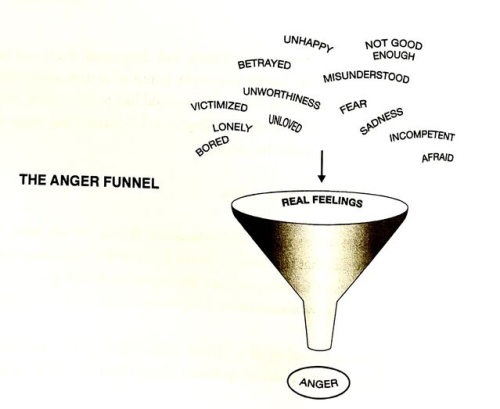
With the Anger Funnel, the process of understanding and processing anger, as it turns out, is not that difficult. Learning to lift the blanket emotion of anger and explore our true feelings leads us to a better understanding of and greater compassion for ourselves, and healthier, more positive, effective, and authentic interactions with others.
Step One: Think of a situation in your past that has made you feel angry: a time where you have acted out in anger or suppressed your anger and failed to stand up for yourself.
Step Two: Take a moment to remember that anger is a secondhand, blanket emotion that stems from primary emotions, such as sadness, feeling abandoned, betrayed, unsafe, lonely, scared, taken advantage of… the list goes on. Think about what contributed to your feelings of anger in that situation.
Step Three: Using the example of that situation, place the primary emotions that led to feelings of anger at the top of the Anger Funnel. Imagine these feelings trickling down the funnel and eventually pouring out the bottom as anger.
Step Four: Imagine — and write down, if you wish — how you might have processed your anger had you been able to better examine, understand, and communicate your feelings and concerns, rather than act out or suppress your anger.
Step Five: Put the funnel to work! The next time you’re angry with someone, take a moment to think about the feelings that have led to feeling angry. Have compassion for yourself and how you are feeling. Take the time to consider how best to resolve whatever is causing you to feel unsafe, threatened, or insecure. With these insights, respond compassionately, rather than reacting in anger.
A new way forward
Anger is a fight-or-flight emotion and an indicator that you need to find a new way forward. Learning to lift the blanket emotion of anger and explore your true feelings beneath will lead to a better understanding of and greater compassion for yourself and others. When you explore what lies beneath your anger, you are improving your communication with yourself. This, in turn, leads to better and more authentic interactions with others and will open the door to positive changes in your life.
What to do when anger shows up
- Step back, rather than act out in anger.
- Take a time out, to allow feelings of anger to decrease.
- Use the anger funnel to explore the underlying primary emotions, like sadness, disappointment, or fear that triggered your anger.
- Acknowledge the true feelings beneath your anger.
- Take steps to tackle the problematic situations in your life.
- Seek help from a mental health professional if you find your anger is out of control.
KEY POINTS
- About 90 percent of aggressive incidents are preceded by anger.
- Anger is widely agreed upon by mental health professionals as a secondary emotion.
- Anger shows up when a person feels the need to defend themselves. It’s a sign that something is wrong and needs attention.
Read the whole article here
#Anger #Emotions #Control
💬 How do you deal with the feelings of anger?

@globalBraid3744 great article! thank you for sharing

@globalBraid3744
Having innate confidence in myself and learning to identify where my anger stems from is a great way to avert anger into things that may potentially damage relationship or others. I think anger is a legitimate emotion, there are things that deserve our anger. The important part is directing that anger into a good cause with a level head and good judgement.

@sunnyWriting4806 Well-said!
@globalBraid3744 Very useful article!

Thank you for sharing. Very insightful. A lot of people would benefit from this.