VerWell Mind: Risky Doesn’t Mean Dangerous: How Adventure Can Help Children's Mental Health

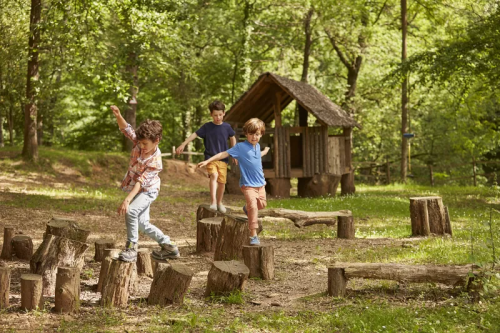
"Whether it’s hopscotch, four-square, kickball, or jumping off the jungle gym, play has the potential to improve kids’ mental health. That last example may seem out of place, but recent research from a team at the UK’s University of Exeter confirms that risky play, or in their words, “…child-led play where children experience subjective feelings of excitement, thrill, and fear; often in the context of age-appropriate risk-taking,” can have an effect on mental health as well.
Risky Play Increases Kids Mental Health
The researchers, in focusing on two separate studies, found that risky (also called adventurous) play in school-aged children led to fewer internalizations of symptoms and “more positive affect”. It’s a finding that Dr. Ronald Stolberg, PhD. says matches up with what he’s seen in his practice as a clinical psychologist over the last two decades.
Adventure in the Classroom Is Key
One of the main areas where risky play is studied is in the classroom environment, often in relation to school-based interventions in the same way—as the piece points out—that school breakfasts are studied in relation to learning outcomes.
The researchers connected their findings with a need for schools to integrate adventurous play into their planning decisions. They also noted that this was especially important for kids from low-income households.
Kevin Stinehart, a fourth-grade teacher in South Carolina, uses opportunities for risky play in his classroom daily.
has been able to rehabilitate a forest classroom—a space used for outdoor education within the natural environment—with the help of the local community.
He’s also instituted a play club, which gets kids outside for at least an hour of play before or after school at various times throughout the week. He says risky play for his students doesn’t mean some kind of daredevil exhibition and can be as simple as reducing fear about the world.
Integrating Risk into Play Structure Design
A lot of play structures tend to follow the same mold. There might be a couple of ramps, a set of swings, a set of bars, and a few sensory features, but schools and municipalities have tended to go with the tried and true.
The research suggests activities that involve heights or water as examples of risky play, but Schleicher says that not all risks are created equal on the playground. He points to the fear of heights, where creating multiple features (areas of the playground) that provide choice enables kids to make their own decisions in a safe environment. For him, playground design when it comes to mental health boils down to a couple of questions.
“Is this a place where a kid emotionally can stretch themselves? Is there an opportunity in this space for them to emotionally feel safe?”
Read the full article here!
#Children #MentalHealth #Research