VeryWell Mind: New Research Uncovers Why We All See the World So Differently

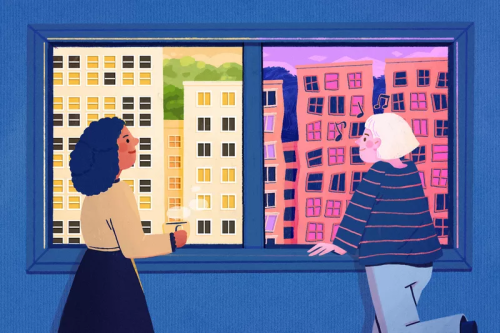
Everyone has their own opinions, views, and ideas about life and the world around them. But why is it often hard to understand and accept others’ take on the same matters?
New research by UCLA Psychology Professor Matthew Lieberman, PhD, sheds light on an explanation by pointing to a part of the brain he calls the “gestalt cortex,” that sits behind the ear and between the areas of the brain that process vision, sound, and touch.
What Does The Research Say?
In his research, which was based on an analysis of more than 400 studies and published in the journal Psychological Review, Lieberman explains that the gestalt cortex helps people make sense of information that is ambiguous or incomplete, as well as dismiss alternative interpretations.
Lieberman
also discusses "naïve realism," which is the notion that people think
their interpretation of
people and events is accurate or true over other’s interpretation. This can
lead to beliefs that other people got it wrong.
Lieberman claims naïve realism may be the biggest driver of conflict and distrust between people.
Although Lieberman states in his research that the gestalt cortex isn’t alone in helping people process what they see, he claims it’s an essential component.
For instance, he says the gestalt cortex includes the temporoparietal junction, which he believes is linked to conscious experience and making sense of situations that people witness or encounter.
Natalie Christine Dattilo, PhD, clinical psychologist and wellness expert, says this notion resonates with her. She explains that the term gestalt means “the whole is greater than the sum of its parts.”
Because most situations, especially social situations, are filled with incomplete or unclear information (i.e., what another person might be thinking or feeling), she says people fill in the gaps with their own interpretations.
“Most of the time, we fill the gaps with our own biases, assumptions, beliefs, thoughts, ideas, and conclusions,” says Dattilo.
“This is especially relevant and problematic for individuals prone to anxiety or depression, because the tendency would be to fill those gaps with negative, overly personal, catastrophic, or worrisome thoughts and conclusions.”
How The Research Was Done
Subjective construals are personal understandings of situations and the people and objects within them.
Lieberman’s review presents a model of subjective construals that are processed without a lot of effort. He calls these Coherent Effortless Experiences (CEE). Three distinct forms of "seeing" (visual, semantic, and psychological) are discussed to highlight the breadth of these construals.
The review states that the core CEE characteristics are accumulated in the lateral posterior parietal cortex, lateral posterior temporal cortex, and ventral temporal cortex, which are collectively called the gestalt cortex.
The link between subjective construals and gestalt cortex is backed by evidence showing that when people have similar subjective construals (meaning they see things similarly), they show greater neural synchrony with each other in the gestalt cortex.
How To Accept Others' Perspectives
Know you’re wired to fill in gaps with biases
Dattilo says there are primal reasons for this.
“Our brains evolved to sacrifice accuracy for the sake of efficiency because our survival depended on our ability to ‘think quickly’ rather than ‘think correctly’ in the face of a potentially life-threatening situation,” she says.
However, in modern times, she says people are more likely to experience a “socially threatening” situation, especially in a heightened state of stress and discord.
“This means that we are at least as likely to be wrong in our thinking about other people as we are right,” she says, adding that willingness to be "wrong" for the sake of growth and learning is a valuable mood management skill and promotes greater tolerance for different points of view.
Realize it’s okay to change your mind
If you’ve held a fairly firm view on a topic and publicly shared it, it can be difficult to express an alternative or opposing view without fear of being seen as “wishy-washy” or worse, says Dattilo.
However, “in actuality, being open and willing to change your mind is considered a sign of emotional intelligence and wisdom,” she says.
Acknowledge others may be right
While it’s hard to think you’re wrong, Julian Lagoy, MD, psychiatrist at Mindpath Health, suggests being open to the fact that in some instances, others' opinions might be better or closer to the truth than your own.
“We need to always be willing to listen and have some understanding of other people's perspectives, even if we think they are incorrect,” he says.
Learn both sides of the argument
Learning both sides of an argument well, especially the side you disagree with, is one way to gain perspective, says Lagoy.
“Sometimes people can be afraid that if they learn about an opposing view, they’ll get sucked into that point of view and ‘I’ll abandon my own view’ but the truth is, learning about the arguments on the other side can help us to be more grounded and have firmer feet in why we have the view that we do,” she explains.
Enhance your listening skills
Listening during times when difficult topics are being discussed involves regulating your emotions, being non-defensive, and compassionate, explains Dattilo.
She suggests practicing mindful listening, which is being fully present during conversations and reserving judgment.
“This helps build both emotional and cognitive empathy,” she says.
Focus on just the facts
“Just the facts” is a technique therapists use in therapy to help clients minimize putting a “spin” on situations, especially in the face of incomplete or ambiguous information.
To practice it for a given situation that is upsetting, Dattilo suggests writing down the details and what you believe to be the cause of your distress. Then, cross out each detail that contains an opinion, either negative or positive.
Think of things you have in common
If you find yourself angry about someone’s point of view or getting over-focused on your differences, Carmichael says to take a deep breath and think about a few things you really like about the person and any bonding features you share.
Read the full article here!
#Brain #Research #Viewpoints #Acceptance #EmotionalRegulation

@comfortableNight4463
Even if you are identical twins having grown in the same house, you still will have different experiences then the other person. It's important to understand that people think different because they lived differently from you.