VerywellMind - Self-Compassion Decreases Cardiovascular Risk in Women
“
The mind-body connection is a fascinating field of study. Again and again, scientists are proving that the way we think and how we feel can affect how healthy our bodies are.
In one recent study, published in Health Psychology, University of Pittsburgh researchers found that middle-aged women who practiced self-compassion had lower risk of developing cardiovascular disease than those who didn’t.1 What’s more, this was irrespective of other traditional risk factors, like cholesterol levels, high blood pressure, and insulin resistance.
"A lot of research has been focused on studying how stress and other negative factors may impact cardiovascular health, but the impact of positive psychological factors, such as self-compassion, is far less known," said Rebecca Thurston, PhD, professor of psychiatry, clinical and translational science, epidemiology, and psychology at Pitt, in an emailed statement.
A Closer Look at the Study
Almost 200 women between ages 45 and 67 took part in the study. Each participant completed a short questionnaire, rating how often they experience feelings of inadequacy, whether they often feel disappointed by their self-perceived flaws, or if they treat themselves with care and tenderness during difficult times.
Middle-aged women can find it difficult to practice self-compassion, because being in mid-life, there are many “uncompassionate” messages from society, which teach women ultimately how to treat themselves.
The physical part of the study involved a standard diagnostic ultrasound of each woman’s carotid arteries (the major vessels in the neck that carry the blood from the heart to the brain). This showed that those who scored higher on the self-compassion scale had thinner carotid artery walls and less plaque buildup than those with lower self-compassion scores.
A buildup of plaque inside the arteries creates less place for normal blood flow and increases the risk for heart attack in later life, says the National Institute on Aging.2
The results weren’t affected by control for other factors, such as smoking, symptoms of depression, and physical activity.
"These findings underscore the importance of practicing kindness and compassion, particularly towards yourself," said Thurston. "We are all living through extraordinarily stressful times, and our research suggests that self-compassion is essential for both our mental and physical health."
Why is Self-compassion Important?
If we can’t have compassion for ourselves, we can’t receive it from anyone else. “It’s a way to keep up the wall, to remain in the bondage of judgement and never forgive our mistakes,” says Donna Marks, EdD, a psychotherapist and addiction counselor based in Palm Beach, Florida.
As Marks explains, those mistakes are where we can learn and grow the most. “They are often the basis of our life’s purpose,” she explains. “For example, I used my addiction and recovery to help thousands of people. If I don’t have compassion for myself, I won’t be able to help other people get out of shame.”
Jeanette Yoffe, MA, MFT, the clinical director of Yoffe Therapy, which provides psychotherapy to children, teens and their families treating attachment, trauma, grief, and loss challenges, says self-compassion is hugely important as a mental health practice.
We are all living through extraordinarily stressful times, and our research suggests that self-compassion is essential for both our mental and physical health.
“It allows the self to let go of self-judgment and self-criticism and move towards self-love and self-forgiveness, while building a window of ‘stress tolerance’ to withstand, persevere, and rise above life’s most challenging moments and have compassion for them, rather than frown upon them,” Yoffe explains.
When we are stuck in guilt and shame, it can lead to depression. “Feelings of powerlessness to get out of the emotional hole can lead to bad habits like unhealthy eating, drinking, gambling, and other distractions that only compound the negative feelings and lowered self-esteem,” says Marks.
“If someone is not receiving mental health care or practicing daily ‘adaptive’ mental health practices to support calming the nervous system, they are most likely practicing daily ‘maladaptive’ coping skills which will overreact the sympathetic nervous system, and places a great toll on the bodily system, setting off a thermostat of ‘fight or flight’,” says Joffe.
When the body cannot break down stress properly, this can lead to toxic stress that overwhelms the sympathetic nervous system and breaks down the body’s ability to thrive. “The system collapses, which can cause disease and even death,” warns Joffe.
Tips for Practicing Self-compassion
Women may find it particularly difficult to practice self-compassion during midlife. “Often, as we age our feelings are deeper and it’s not as easy to shrug things off,” Marks explains. “We feel like we should know better and shouldn’t make mistakes, so we’re more likely to feel foolish.” There’s also the feeling that time is short and it’s harder to recover.
Yoffe agrees. "Middle-aged women can find it difficult to practice self-compassion, because being in mid-life, there are many uncompassionate messages from society, which teach women ultimately how to treat themselves," she says. They may have developed a catastrophic belief system that nothing will ever change, resulting in being stuck in what’s called a negative feedback loop. "This repeats these thoughts and in essence the person feels there is little they can do to change this," says Joffe.
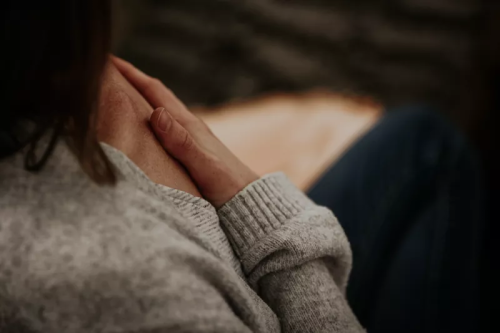
To help foster self-compassion, Yoffe recommends a type of talking therapy named dialectical behavior therapy (DBT). This involves placing one hand on your forehead and one hand on your heart and saying out loud to yourself, “Even though I am feeling angry, upset, disgruntled, annoyed, or disappointed, I can still have love and compassion for myself.”
“Repeat this as many times as you need until you feel a sense of relief,” says Yoffe. “It’s a mind-body technique to calm both mind and body, and bridge the self towards loving self-compassion, no matter what is happening in your life.”
If you find it difficult to treat yourself with kindness and understanding, a yoga or meditation class might help you get into a new habit of self-compassion.
Another simple way to cultivate a self-compassion practice is to talk about it. “Women can be hard on each other, instead of being nurturing and loving,” says Marks. “Having compassion doesn’t mean feeling sorry for someone. It means, ‘I feel your pain and I can’t take it from you, but I know how hard it is to be compassionate for yourself. I’m here for you. We can do this together.’”
The experts believes that thoughts can be reframed to support a positive growth mindset at any age, leading to lifelong positive effects. In Yoffe's case, she believes her own mental health care fostered greater self-compassion and saved her life. "This new found self-allowed me to find the relief I needed, to thrive again," she says. "Middle age does not mean your life is over, it means your glass is still half full!"
”By Claire Gillespie
Read full article here
#MentalHealth #News #Compassion #Women'sHealth

@zealousGrace5023 Thank you for sharing this article! These findings definitely make sense to me! I've gone to the ER and urgent care before because I was having chest tightness and it always turned out to be anxiety. It's scary how anxiety can manifest. Being able to calm yourself before it gets to that point is helpful for cardiovascular health now and in the future.
@fruityPond7887 it's sometimes crazy to think how extreme of an effect anxiety to have
i hope you are better now regarding that
@zealousGrace5023 You're so right. Our minds and bodies are connected more than we could've ever imagined! I am doing better, thank you for asking 😊💞
@fruityPond7887 I'm glad you're better ❤️
@zealousGrace5023 Thank you! You're too sweet 😘
@fruityPond7887 So are youu <3

@zealousGrace5023
It is almost shocking how many benefits we can get by being more self-compassionate! I am glad that researchers are trying to shed more light on areas with a lack of information like this study addressed.
@globalBraid3744 I know right! It's a new era of medicine
@zealousGrace5023 Great article! Thanks for sharing. Another reason for me to try harder to be more compassionate to myself
@comfortableNight4463 thank you!!
@zealousGrace5023 You're welcome!