Verywell mind - What is Neurodivergence?

Verywell mind - What is Neurodivergence?
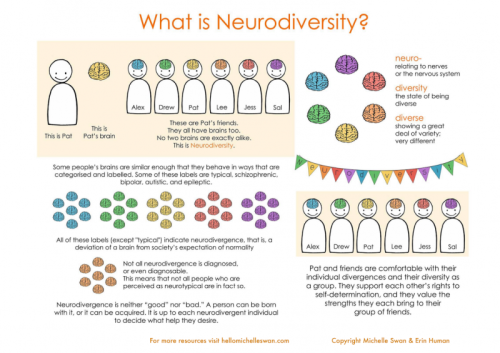
Neurodiversity
“The range of differences in individual brain function and behavioral traits, regarded as part of normal variation in the human population (used especially in the context of autistic spectrum disorders).”
The term was coined in 1997 by Judy Singer, an autistic sociologist, at the time of the Autism rights and awareness movement. It was introduced with the purpose of reducing stigma surrounding people with atypical neurological function. Neurodiversity introduces the concept of differences in neurological functions being natural human variation instead of disordered or wrong.
As more research has been conducted and more awareness raised, other neurodivergent brain types aside from Autistic are included under the umbrella of neurodiversity like ADHD, Dyslexia, Dyspraxia, OCD, etc. Neurodiversity advocates for people with such dispositions to be viewed as simply different instead of disordered.
Two categories fall under Neurodiversity - Neurotypical and Neurodivergent.
Neurotypical
“Neurotypical people are those with standard brain processing and functioning. They often do not know that they are neurotypical and are seen as “normal””
Neurodivergent
“Neurodivergent people are those whose brain functioning and processing deviates from what is considered "typical". They are usually made aware that their brains function differently and are viewed as “abnormal””
“The framing of neurotypical as "normal" is very similar to the idea of heteronormativity, which is the notion that being straight and cisgender is the default, regular way for people to be, and that any other sexuality or gender identity is abnormal and problematic.”
The idea that neurodivergent people are ill and disordered causes social stigma that has lasting detrimental effects on the neurodivergent, leading to comorbidities like depression and anxiety. However, acknowledging the differences are natural and embracing them benefits not just the neurodivergent but also the rest of society as their varied functioning results in qualities like extreme perception, more creativity, uncanny problem solving, quicker learning, etc. The Harvard Business Review even recommends for employers to increase neurodivergent people in their work force as it provides a unique advantage.
“At one time, these conditions were treated as problems. However, with understanding neurodiversity, we now have a better and more appropriate way of handling them.The understanding of neurodiversity has led to an entire net
work of neurodiversity leaders and educators who seek to help people understand how to embrace and work with neurodivergent people instead of attempting to fix them.”
While a lot of changes have been made, most of society is unaware of this turn in perspective and neurodivergent people still face a lot of stigma. Even so, eventually with more support and understanding neurodiversity will be more widely understood and accepted.
What do you think of this theory and distinction?
Read the source article here.
#Neurodiversity #Neurodivergent #MentalHealth #SocialChange

@zealousGrace5023 Neurodivergent people do face so much stigma still in our society. I know things are so much better than they were 50, 100 years ago, but still. I think neurodivergent people provide us with such amazing perspectives and can help us think in different ways that we wouldn't be able to anyway! Thank you for sharing!
@fruityPond7887 YEs thank you! I like to focus on the fact that it is getting better and if we continue to work towards it will improve even more
@zealousGrace5023 Right :) Things may not be perfect yet, but as long as we are making progress, that's what matters! 💖
@fruityPond7887 absolutely

@zealousGrace5023
What do you think of this theory and distinction?
In general, I'm a fan of anything that reduces stigma; with rare exception(s) I do not find stigma helpful at all in regards to fostering connections between people - both on the micro and macro levels.
And in my own life, I've always felt that I have learned the most from people that are different from myself.
@sereneSunset26 true! rare exceptions aside stigma doesn't really help anyone, not really anyway

I thought this post was very informative and let me learn about a concept I had not yet been introduced to yet.
@7CupsUserPol i'm glad you learned something new and enjoyed it! :)