Understand Your OCD
Goal
To become an expert in your own OCD.
Regain Control (Derisley et al., pp. 46; 48)
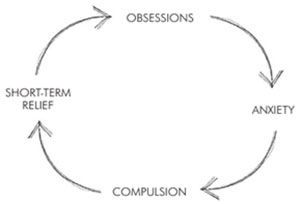 Now that you have a good understanding of what OCD is, it’s important that you start to become an expert in your own OCD. This will allow you to gain power over it and take back control. Otherwise, you’ll continue to fall into the OCD trap of continuing to worry about upsetting thoughts and doing rituals. Look at the image to the right to see how this trap works. When an obsession pops into your mind, it causes you to worry. The worry is unpleasant and makes you anxious, which means that you will want to do something to stop it. This leads you to perform a compulsion, which temporarily reduces your worry. You feel better in the short-term because your anxiety subsided; however, when an obsessive thought creeps into your mind again, you’ll need to do more compulsions to feel better. This is how the cycle begins.
Awareness Exercise (Derisley et al., pp. 46; 50; 53; 82; 84)
Instructions: Reflect on the obsessions and compulsions that you regularly experience. Remember that obsessions can be thoughts, pictures, or urges in your mind that are repetitive and feel out of control whereas compulsions are repetitive actions. Feel free to use this online OCD self-assessment as a way to identify OCD symptoms you may be experiencing: http://www.anxieties.com/96/ocd-self#.VSGvefnF-So. Then, walk through what the OCD trap looks like for you by following these steps:
- Choose one of your obsessions that you find particularly problematic.
- Identify what emotion you experience when you have the obsession (e.g., worried, scared, fearful, frustration, disgust, anger).
Note: If you have difficulty figuring out how your obsession makes you feel, imagine how you would feel if you were prevented from doing your compulsive behavior.
- Identify what compulsion(s) the feeling prompts you to perform.
- Ask yourself if you experience a sense of relief after doing the compulsion.
- Reflect on if this cycle causes you to avoid certain situations, places, and/or people.
Continue to grow in your awareness of your OCD by writing down for one week everything that OCD makes you do and how many times each day it makes you do it. Then, organize these compulsions from least to greatest to show how frightened or upset you think they will make you feel when you even think about changing them.