Learn why people compartmentalize emotions, how it helps and harms mental health, and what therapy can do to promote emotional integration and resilience.
Table of Contents
What Does It Mean to Compartmentalize?
Why Do People Compartmentalize?
Healthy vs. Unhealthy Compartmentalization
When Compartmentalization Becomes Emotional Avoidance
How to Integrate Instead of Suppress
When Someone Close to You Compartmentalizes
When Compartmentalization Affects Your Well-Being
Key Takeaways
Frequently Asked Questions
What Does It Mean to Compartmentalize?
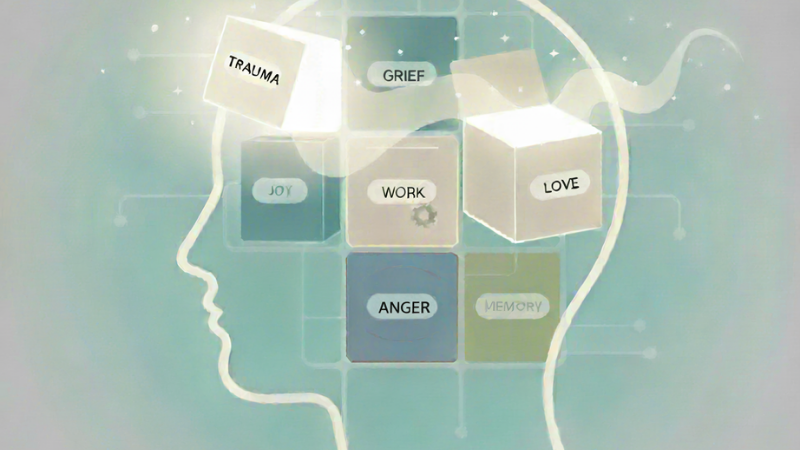
Compartmentalization is one of the most fascinating and misunderstood psychological defense mechanisms. It allows us to keep difficult emotions or conflicting values in separate “mental boxes,” so we can function without being overwhelmed. Everyone compartmentalizes at times, but when this becomes a pattern, it can deeply shape how we handle stress, relationships, and authenticity.
In this article, we’ll explore what compartmentalization really means, why people do it, how to tell when it’s healthy or harmful, and what to do if it starts to interfere with emotional well-being.
In psychology, compartmentalization refers to separating conflicting emotions, memories, or values into distinct categories of the mind. It’s the brain’s way of protecting itself from emotional overload.
Imagine a doctor who witnesses trauma daily but is still able to go home and enjoy dinner with family. Or someone who experienced childhood pain but functions at work without consciously reliving it. These mental “walls” allow us to stay productive and stable, at least temporarily.
Compartmentalization is not inherently unhealthy. In small doses, it’s an adaptive survival tool. But when used excessively, it can create disconnection between your feelings, your actions, and even your sense of self.
Compartmentalization vs. Dissociation: What's the Difference?
The terms can overlap, but they are not always used in the same way. In everyday language, compartmentalization usually refers to keeping conflicting thoughts, feelings, or parts of yourself separate so they do not have to be confronted all at once. In clinical literature, however, compartmentalization can also be understood as a form of dissociation, alongside another form known as detachment.
The distinction can therefore depend on context. A person might compartmentalize difficult feelings in an ordinary, adaptive way without experiencing the more disruptive changes in memory, identity, perception, or sense of reality that can occur with clinical dissociation. What matters is not simply having psychological "walls," but whether the separation causes distress, affects functioning, or involves significant changes in how you experience yourself or the world around you.
Why Do People Compartmentalize?
At its core, compartmentalization is about emotional self-preservation. People compartmentalize to:
- Avoid feeling overwhelmed by strong emotions like grief, guilt, or anger.
- Maintain functionality under pressure, especially in caregiving or high-stress professions.
- Cope with cognitive dissonance when their actions don’t align with their beliefs.
- Protect their identity from painful experiences that challenge self-image.
The Role of Trauma and Survival
Compartmentalization is deeply tied to survival instincts. For individuals who have experienced trauma, abuse, or chronic distress, separating the painful memories and associated emotions into mental "boxes" is essential for daily functioning. This allows the individual to appear "high-functioning" on the surface while keeping toxic or overwhelming self-related material psychologically at bay. Without this mechanism, the person would be constantly flooded by their past.
Learned Emotional Suppression
Sometimes, compartmentalization is learned early. A child who grows up in a tense, unpredictable, or emotionally neglectful home may learn that expressing emotions or vulnerability is unsafe. They learn to “shut off” or isolate their true feelings to maintain their physical or emotional safety. As adults, they continue this strategy automatically, long after the immediate danger has passed.
Healthy vs. Unhealthy Compartmentalization
Not all compartmentalization is created equal. Used intentionally, it can support focus, emotional regulation, and professional balance. But when it becomes rigid or unconscious, it may lead to denial, repression, and emotional distance.
Here’s a breakdown of the difference:
| Feature |
Healthy Compartmentalization |
Unhealthy Compartmentalization |
| Awareness |
Done consciously, with recognition of feelings. |
Automatic and unconscious; emotions are suppressed or denied. |
| Purpose |
Used to stay grounded and manage stress temporarily. |
Used to avoid dealing with reality or uncomfortable truths. |
| Integration |
Emotions are revisited and processed later. |
Emotions remain disconnected and unresolved. |
| Relationships |
Allows balance between personal and professional roles. |
Creates emotional walls or inconsistency in closeness. |
| Long-term Impact |
Supports clarity, productivity, and resilience. |
Leads to burnout, numbness, or identity confusion. |
The core distinction lies in time and intention. Healthy compartmentalization is like hitting a temporary "pause" button on an issue until you are in a safe, appropriate space to deal with it. Unhealthy compartmentalization is hitting a permanent "delete" button that never truly works.
When Compartmentalization Becomes Emotional Avoidance
Overusing compartmentalization can sometimes lead to emotional avoidance, a pattern where uncomfortable feelings are continually pushed away rather than processed. This might look like:
-
Being “fine” on the surface while secretly feeling detached or numb.
-
Switching between different “selves” depending on context.
-
Avoiding meaningful conversations or conflict.
-
Feeling productive but emotionally disconnected from others.
The Physical Cost of Emotional Suppression
The problem is that pushing emotions aside does not necessarily make them disappear. Keeping thoughts and feelings tightly contained can take effort, and research on emotional suppression suggests that this can come with increased physiological strain even when someone appears calm on the outside.
Over time, repeatedly holding emotions in may be associated with greater tension, fatigue, and other stress-related physical symptoms. That does not mean that suppressed emotions directly cause illness, but constantly managing what you feel can be exhausting and may add to the overall burden of stress.
Risk of Relationship Rupture
In relationships, rigid compartmentalization creates emotional walls. Loved ones may sense a disconnect or feel that the individual is holding back, leading to frustration, loneliness, and strained intimacy. A major life event - such as a loss, betrayal, or health crisis - can "break" these mental containers, flooding the individual with all the unprocessed emotions at once, leading to severe anxiety or panic. Recognizing when compartmentalization starts becoming emotional avoidance can be an important step toward understanding and bringing those feelings back together, whether you notice the pattern in yourself or someone close to you.
How to Integrate Instead of Suppress
Healthy integration doesn’t mean you lose boundaries or start feeling everything all at once. It means learning to connect your experiences, rather than keeping them in silos.
Here are a few strategies that help:
-
Practice Emotional Check-Ins
Pause once or twice a day to name what you’re feeling without judgment. Awareness is the opposite of compartmentalization. This is a foundational step in emotional literacy.
-
Use Mindfulness to Bridge Gaps
Mindfulness and grounding exercises help bring you back to the present moment, reducing the need to mentally “escape” stressors. Use techniques like the 5-4-3-2-1 method when you feel dissociation or avoidance setting in.
-
Journaling for Self-Reflection
Writing helps you notice patterns like when you shut down or detach and explore what triggers those reactions. Writing down a stressful concern can be a way to mentally "place it aside," knowing it is recorded and can be revisited when appropriate.
-
Talk It Out
Set aside 15 minutes in a safe space (your home or a therapist's office) to deliberately revisit the emotion you put aside earlier. You might write about what you are feeling, put it into words with someone you trust, or simply give yourself time to notice the emotion without immediately pushing it away.
When Someone Close to You Compartmentalizes
Being close to someone who compartmentalizes can sometimes feel like you know them well, but still cannot reach certain parts of them. They may be present, caring, and fully engaged in some parts of the relationship while becoming distant or difficult to reach around certain feelings or experiences. It can be easy to take that distance personally, but it does not necessarily mean they do not care.
If compartmentalization has become a way of managing difficult emotions, pressure can sometimes make the person withdraw further. Asking for an answer in the middle of an emotionally charged moment may get you a quick or surface-level response simply because they are not ready to open up yet.
A few approaches tend not to help:
-
Pushing for the conversation on your timeline: Choose a time when both of you have enough space to talk rather than asking for an answer in the middle of a difficult moment.
-
Treating silence as a verdict: Someone becoming quiet does not automatically mean they are angry, indifferent, or pulling away from the relationship.
-
Labeling the behavior: Saying "you're compartmentalizing" can make someone feel analyzed or judged rather than understood.
What can help is lowering the pressure around the conversation. Talk about what you have noticed rather than assuming you know why it is happening. For example, "You seemed really quiet after that call" leaves room for them to explain, while "You always shut me out" tells them what you think is happening. You can also offer to talk later rather than expecting them to open up immediately.
It can help to remember that opening up does not have to mean talking about everything at once. Sometimes feeling safe enough to share one thought or emotion is a more realistic starting point than expecting someone to explain everything they have been holding back.
If they learned early in life that expressing emotions was difficult or unsafe, changing these patterns may take time. Anxious and avoidant attachment patterns can sometimes shape how people approach closeness and emotional disclosure, although attachment patterns are only one possible influence.
It may be worth encouraging professional support if the pattern is becoming more disruptive, affecting their daily functioning, or leaving you carrying most of the emotional work in the relationship. A therapist can help them explore what makes certain emotions difficult to approach while also helping both of you develop healthier ways of communicating.
When Compartmentalization Affects Your Well-Being
Compartmentalization can be a useful way to get through difficult moments. It becomes more concerning when keeping certain feelings or parts of yourself separate starts to interfere with your relationships, daily life, or ability to understand what you need.
In a clinical context, affective compartmentalization refers to keeping positive and negative aspects of yourself in separate mental categories. Research suggests this can have both protective and vulnerable sides. When positive self-aspects are active, compartmentalization can be associated with higher self-esteem. When negative self-aspects become more important or are brought to the forefront, it can be associated with lower self-esteem and more depressed mood. Over time, keeping these parts separate may also make it harder to develop a more balanced view of yourself.
Therapy can give you a place to notice these patterns without having to push difficult feelings away. Depending on your needs, a therapist might use approaches such as Cognitive Behavioral Therapy (CBT), Dialectical Behavior Therapy (DBT), or trauma-informed approaches to help you:
-
Notice emotional triggers instead of automatically pushing them aside.
-
Build tolerance for difficult feelings without immediately avoiding them.
-
Connect your thoughts, feelings, and behaviors in ways that feel more consistent with your needs and values.
Key Takeaways
Compartmentalization is not the enemy, it’s a mental survival tool that helps us manage pain and pressure. But when it becomes a habit of avoidance, it can prevent growth, emotional intimacy, and authenticity. Learning to notice when you’re using it, and practicing healthy integration through mindfulness, reflection, and therapy, can help you live with greater clarity and coherence. Therapy offers a safe, guided space to reconnect with your emotions so that you can live not in fragments, but in wholeness.
Noticing the walls you have built around difficult feelings can be the hardest part. It does not mean something is wrong with you. It can simply be an opportunity to become more curious about what you have been keeping separate and why. If you want some company while you work through it, you can talk to a listener or work with a therapist.
Frequently Asked Questions
What causes someone to compartmentalize their emotions?
Compartmentalization often develops as a way to cope with overwhelming stress, inner conflict, or trauma. When emotions feel too painful or contradictory, the brain separates them into “mental boxes” to preserve daily functioning and emotional stability.
Is compartmentalization a trauma response?
Yes, it can be. People who have lived through trauma or prolonged distress sometimes learn to isolate painful memories and feelings just to get through the day - a survival strategy that can persist long after the danger is gone.
How is compartmentalization different from dissociation?
Compartmentalization involves keeping certain thoughts, feelings, or experiences separate. In clinical literature, it can also be understood as a form of dissociation, which more broadly involves disruptions in how you experience yourself, your memories, or your surroundings.
Can compartmentalizing emotions be healthy?
Yes, in moderation. Healthy compartmentalization helps you stay calm, focus at work, or navigate difficult situations without breaking down, as long as those emotions are revisited and processed later.
Is compartmentalizing the same as being in denial?
Not exactly. Compartmentalization involves keeping certain thoughts, feelings, or experiences separate so you can focus on other parts of your life, while denial involves refusing to accept or acknowledge something that is happening or true. The two can overlap, but compartmentalizing does not necessarily mean you are denying reality.
How does compartmentalization affect relationships?
Excessive compartmentalization can make intimacy difficult because it limits vulnerability and emotional sharing. Partners may feel disconnected or sense that the person is “holding back” parts of themselves.
Why is compartmentalization linked to burnout and fatigue?
Constantly keeping emotions suppressed takes mental and physical energy. The body interprets prolonged suppression as stress, leading to symptoms like tension and exhaustion.
How can someone stop over-compartmentalizing?
The first step is awareness - noticing when you’re shutting down or “switching off” feelings. Techniques like mindfulness, journaling, and therapy can help reconnect emotions safely and gradually.