Preparing for the Journey
Goal
To develop a support network and move towards change
Ways to Develop a Support Network
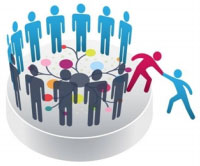 Your support network - the people who are committed to your recovery and can encourage you and help keep you on track - will be absolutely necessary in the long road ahead. Before you even start taking steps to quit or cut back, it is incredibly important that you:
- Identify supportive people. Consider how they can help and how and when you can ask them.
- Ask for help directly. When you make a request for help and support, be as specific as you can. Face your reluctance to ask for help and take a risk. Practice ahead of time what you will say if you think this will make you more comfortable and more likely to follow through.
- Get involved in organizations and stay active. If you are in a recovery organization, make a point of talking to someone else in the program at least once a day, especially in the early weeks and months of recovery. Keep a list of at least 10 names and phone numbers of others in recovery.
- Face your excuse for resisting help. (Examples: I don’t want to bother them...I don’t want them to think bad of me...I don’t want to hurt their feelings)
Overcoming Difficulty in Asking for Help
Face your fears or reluctance to ask for help and support from others. Have a list of people (and phone numbers) you can rely on for help or support. Share your concerns and feelings with at least one or two people you trust. Take risks in opening up and sharing with others. Join a mutual support program.
Stages of Change Exercise
Now that you have people who can help you on this journey (and you will probably benefit from all the help you can get!), you are almost ready to begin. But before you start your journey to recovery, you should know where you are in the process.
Instructions: Listed below are the six stages of change on this journey. Read through them and identify which stage you are currently in. We have included some questions to help you figure this out.
Tip: If you don’t know your answer to any of these questions, talk with someone in your support network (we’ll refer to them as a “supporter” from now on) and come up with answers you can agree on.
Precontemplation - you aren’t aware of your problem and are resistant to change because you don’t think you have a problem.
- If you’ve come this far, this is probably not you.
Contemplation - you acknowledge that you have a problem with alcohol or drugs and plan to take action in the next 6 months or so.
- Do you think you have a problem with alcohol, tobacco, or other drugs? Do you know exactly why you want to quit using substances?
Preparation - planning to do something about your problem within the next month. Though part of you wants to quit using, the other part doesn’t. Don’t expect your motivation to be 100% at this point. You begin to think about the advantages of change.
- Are you willing to make a commitment to quit using within the next month? Do you know what steps to take to stop using on your own? Do you need to be detoxified from alcohol or other drugs to stop using? Have you told others (family, friends, etc.) about your desire to change your problem with alcohol or other drugs?
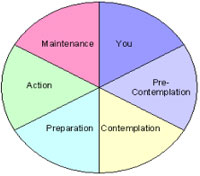 Action - making the commitment to stop. If you are physically unable or have a history of complications associated with stopping (seizures, suicidal thoughts or feelings), you should consider detox or hospitalization to help you stop. During this stage you begin to learn more about yourself so that you can also change your thinking, emotions, and self-image. You learn to cope with thoughts about and cravings for substances as well as dealing with people, places, and things that can influence you to use again. You become involved in self-help groups or other forms of social support to build structure into your life, reduce boredom, and help you stay connected to others who care about your recovery.
- Do you have a strong commitment to quit alcohol or drugs to stay sober? Do you need to change people, places, or things to help you stay sober? Do you need to learn to control your thoughts and cravings for substances? Do you need to address the effects of your substance use on your family or other relationships to increase your chances of staying sober? Do you need to address new ways of dealing with upsetting feelings to increase your chances of staying sober? Are you willing to participate in self-help groups or other forms of social support to increase your chances of staying sober?
Maintenance - or relapse prevention - you work hard to prevent a return to alcohol or drug use and accept that there are not easy or quick solutions to your substance use problem. You learn to identify and manage relapse warning signs and high-risk situations. You work on balancing the various areas of your life so that you increase your chances of feeling good about yourself.
- Do you know the warning signs of a potential relapse and have st rategies to help you cope with these before you use again? Do you know your personal high-risk factors that make you feel vulnerable to using substances and have strategies to cope with these? Do you know what steps to take should you actually go back to using substances following a period of abstinence? Is your life generally balanced?
Termination - your former problem no longer presents a temptation or threat. You have the confidence and skills to cope with your life problems so that the risk of relapsing to alcohol or drugs is low.
Goal Setting Exercise
 Goal setting is helpful so you know where you are in the process towards recovery. Now it is time to decide on where you are trying to go. Watch the following video to learn more about the importance of goal setting:
Instructions: On your own and/or with a supporter, look through the examples of long and short-term goals listed in different categories below. Use the table below to copy down those you want to set as short term goals (within the next six months) and long term goals (in the year or years to come), adding whatever goals you want to accomplish that are not on these lists. Discuss with your supporter how you can reach these goals and include a specific date to shoot for per goal.
Physical Recovery
- Getting alcohol or drug-free
- Taking care of physical problems resulting from or worsened by your substance use
- Eating a balanced diet to ensure proper nutrition
- Getting sufficient sleep, rest, and relaxation to reduce stress and help increase your energy
- Exercising regularly to maintain good physical health and reduce stress
- Learning to manage physical cravings to use substances
Emotional or Psychological Recovery
- Accepting that you have a problem and making a commitment to do something about it
- Learning to challenge negative thinking that can lead you back to substance use
- Learning to cope with upset feelings, stress, and life problems without resorting to using alcohol, tobacco, or other drugs for relief or escape
Family recovery
- Examine how your problem has affected your family
- Decide what you can do to improve your relationships with family members
Social or Interpersonal Recovery
- Make amends to others hurt by your substance use
- Rebuild damaged relationships
- Make new friends with others who do not get drunk/high
- Learn to assertively refuse offers to use
- Develop healthy leisure interests to replace time spent using substances
Other areas of recovery
- Address areas such as work, school, legal issues, money, or creativity in your change plan
| Goal Setting | Short-Term Goals | Long-Term Goals | Deadline |
|---|---|---|
Next Step
Does treatment need to be one of your goals? Take this test to find out: https://turntohelp.com/are_you_opioid_dependent/