Empathizing With the One Who Hurt You
Goal
To develop empathy for the person who hurt you
Cultivating Empathy (Worthington, 2011, pp. 47, 49)
 We often exaggerate the “psychological distance” between a person who has hurt us and ourselves. More frequently than not, a hard search of our lives will reveal the same energy to commit evil that is in our offenders, even if we do not act it out in the same ways or with the same severity of outcome. People tend to attribute their own negative behavior to circumstances outside of their control, but attribute the negative behavior of others to something being wrong with the person.
The act/disposition distinction is an important one to make, because we tend to judge our actions by a different set of standards than we do other people. The truth is, everyone’s negative behavior is a combination of circumstances happening to us and our natural tendency to behave selfishly and in ways that hurts others. Thinking in this way fosters compassion. Compassion is “sympathy with work boots on.” That is, compassion is feeling that the person is needy and wanting to do something to help. The human tendency to blame others for the very thing for which we let ourselves off the hook creates an artificial psychological distance between others and ourselves and impedes the development of empathy and compassion.
Cultivating Empathy Exercise (Worthington, 2011, p. 44)
Instructions: In thinking about your target transgression, write about what you think your offender was experiencing and other possible experiences the perpetrator might have had that contributed to the transgression occurring. Then, try to cultivate compassion by considering what you might do to meet one of the person’s needs.
Role Play Exercise (Worthington, 2011, p. 45)
Instructions (part 1): Write about a hypothetical conversation you would have with the person who hurt you. How does this conversation go? What do you say? What does the transgressor say? Try to have at least 3 meaningful exchanges between you and your transgressor. Be sure to try to factor in the person’s history, pressures, and reasoning.
Example Dialogue:
Me: You really hurt my feelings when you ran over my dog and didn’t seem sorry.
Transgressor: I didn’t realize it still bothered you.
Me: I wish you had showed a little more remorse, I really loved my dog.
Transgressor: I’m sorry for causing you pain.
Instructions (part 2): Pull up an empty chair across from you, and deliver the dialogue you wrote in part 1 of this exercise. Sit in one chair for your lines and in the other chair for your transgressor’s lines-moving back and forth every few seconds. Do you have any new insights now that you’re putting yourself in the transgressor’s place?
Instructions (part 3): Reflect on these questions:
- What have you realized about the person’s motives and possible feelings?
- Do you understand their feelings and reasoning better now?
Yehiel Dinur’s Story (Worthington, 2011, pp. 48, 50)
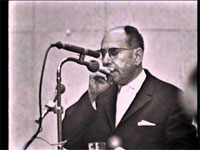 Yehiel Dinur was a holocaust survivor who was a witness during the trial of the infamous Nazi war criminal, Adolf Eichmann. Dinur entered the courtroom and stared at the man behind the bulletproof glass-the man who had presided over the slaughter of millions. The court was hushed as a v ictim confronted a butcher of his people. Suddenly, Dinur began to sob and collapsed to the floor, but not out of anger or bitterness. As he explained later in an interview, what struck him was a terrifying realization. “I was afraid about myself,” Dinur said. “I saw that I am capable to do this...Exactly like he.” In a moment of chilling clarity, Dinur saw the skull beneath the skin. “Eichmann,” he concluded, “is in all of us.” Reflect on these questions:
- What is the point of this story? Do you agree with it? Why or why not?
- Do you think that Yehiel Dinur thought that he was in any way similar to Adolf Eichmann before his realization?
- Do you tend to underestimate your capacity, under a different set of circumstances, to commit atrocities?
We want to believe that we are different from those who harm us. On many levels, we need to believe we are different from those who harm us. As we have seen, however, in Yehiel Dinur’s tale, we are all capable of the same evils as others, even if we choose not to believe it. By looking deep in ourselves and discovering that we are capable of doing unto others as our offenders have done unto us, we learn that perhaps offenders aren’t evil monstrous creatures bent on our suffering, but rather they are people like you or I.
Next Step
Watch the following video about empathy and putting yourself in someone else’s shoes: