Exotic Animals!

Please post photos/GIFs of exotic or lesser-known animals, plus some info about them! Then we can all learn about cool new creatures <3
For example, this is an okapi. <3
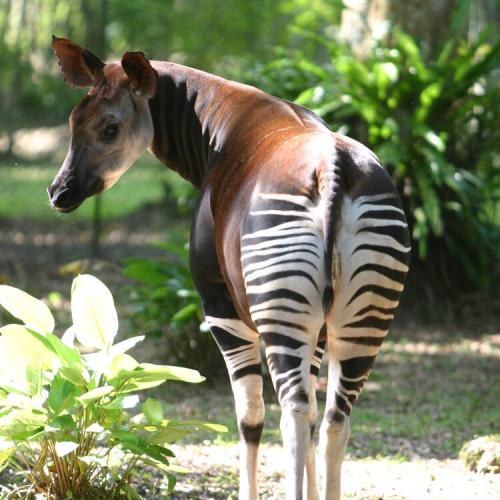
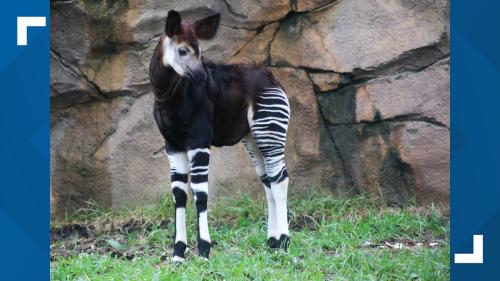
- AppearanceOkapis are about eight feet long, weigh 450–550 pounds, and stand six and a half feet high at the shoulder. They have thick, velvety, oily fur that is mostly reddish brown with white stripes on their legs and rear. Males have two small skin-covered horns called “ossicones” on their forehead.
- FeaturesOkapis have long prehensile tongues, large ears, and scent glands on the bottom of their hooves. Their stripes may help them camouflage in the partial sunlight of their rainforest habitat, and may also help young okapis follow their mothers and adults find each other.
- BehaviorOkapis are active during the day and spend their waking hours foraging for food, including leaves, fruits, grasses, some species of fungi, and reddish clay. They are not social animals, but may feed together in small groups for a short period of time.
- HabitatOkapis are native to the Ituri Rainforest in the Democratic Republic of Congo, and live in closed, high canopy forests. They don't range into gallery forests or into forest islands on the savanna, and they don't stay in the disturbed habitats surrounding human settlements.
- LifespanOkapis have a typical lifespan of 20–30 years.

@jesusredeemedme2425
what a gorgeous creature!

@jesusredeemedme2425
Try to find an Okapi at a zoo sometime. If they get up close, they're usually super friendly.
This is a dumbo octopus:
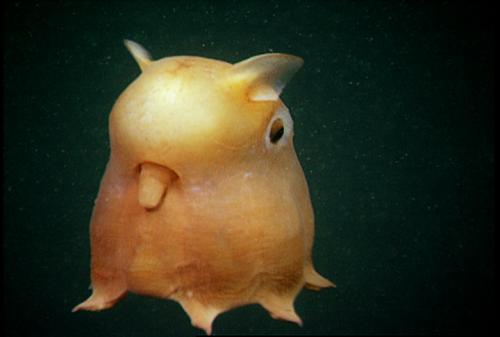
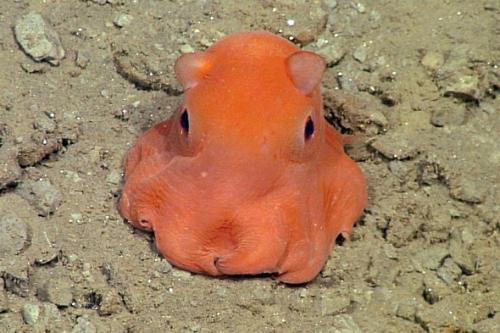
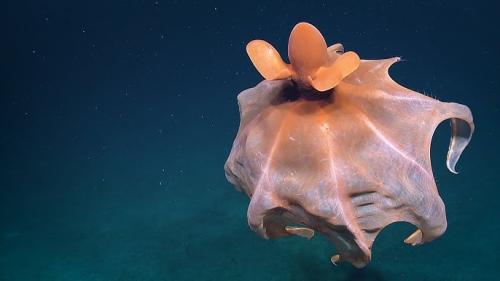
You may be surprised to find that Grimpoteuthis is the name of neither a Muppet nor a Disney character. Rather, it’s a genus of pelagic umbrella octopuses known as the dumbo octopuses. With features as adorable as its name suggests, the dumbo octopus is small, compared to other octopods, at only an average 20-30 cm - slightly larger than an adult guinea pig. It propels itself through the water and navigates currents with specialized flippers on top of its head that look just like ears - hence the moniker, Dumbo, after the fictitious elephant that used its ears to fly.
Grimpoteuthis’s other unusual traits are adaptations to life in the cold, pressurized depths of the ocean. There are 13 recognized species of umbrella octopuses, which exhibit a variety of shapes and colors and have the ability to “flush” or camouflage themselves to their environment. Unlike most octopuses, the Dumbo octopus doesn’t have an ink sac because it rarely encounters predators in the deep sea.
https://www.oneearth.org/species-of-the-week-dumbo-octopus/
Japanese spider crab:
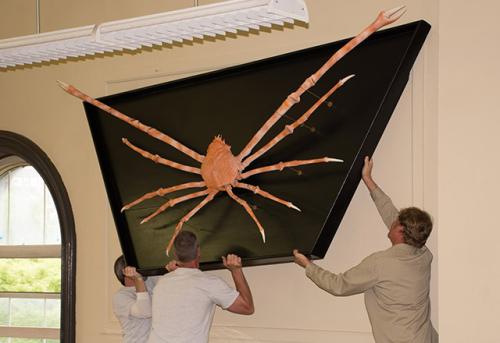
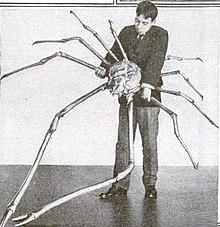
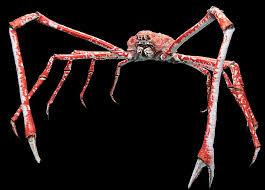
How big is a Japanese spider crab?
The massive leg span of the Japanese spider crabs make it the world’s largest living crab. The carapace (main body cavity) of the Japanese spider crab is 12 inches (30 centimeters) across. But its legs, which continue to grow even once it reaches adulthood, can span up to 12 feet (3.8 meters) from claw to claw.
How many legs does a spider crab have?
The Japanese spider leg has ten legs: eight walking legs and two legs that have claws (known as chelipeds). The chelipeds of an adult male are considerably longer than his walking legs, while an adult female has chelipeds shorter than her walking legs. Japanese spider crabs may lose one or more of their legs if torn off by a predator or trawl net. These missing legs can regrow when the crab molts.
Where do spider crabs live?
Japanese spider crabs live on the seafloor along Japan’s Pacific coast. They are found primarily on the sandy and rocky continental shelf and slope.
When adult crabs are ready to spawn, they migrate to shallower waters, about 160 feet (50 meters) deep. Younger crabs also live in shallower, warmer waters, and migrate down to deeper waters as adults.
https://www.montereybayaquarium.org/animals/animals-a-to-z/japanese-spider-crab
@tinywhisper11 <3

@jesusredeemedme2425 😕 I don't like those photos😰
What, the spider crab? I tried to post pics of a sugar glider last night, but the website glitched on me lol
Pika <3
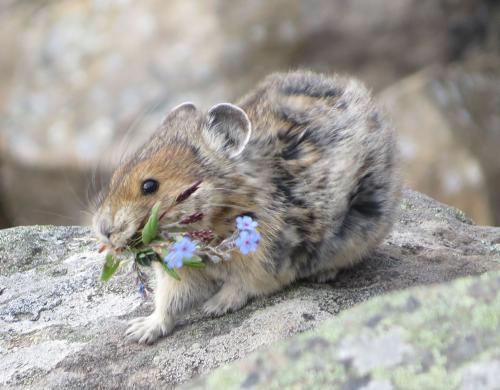
Despite their cuddly appearance, American pikas—the smallest members of the lagomorph group—are among North America's toughest animals. Pikas are one of the few mammals in the lower 48 states that can survive their entire lives in alpine terrain, the windswept no-man's-land above tree line.
American pikas are small, rodent-like mammals. Pikas have short, stout bodies with big, round ears and do not have a visible tail. Pikas reach a size of about seven to eight inches (18 to 20 centimeters) in length.
The American pika has a brown and black coloration, which is meant to camouflage them among rocks. Pika fur is thick to keep them warm in the winter. During the summer, they put on a much lighter coat of fur—however, the hair is still thick enough that a pika might overheat if exposed to very high heat for long periods of time.
https://www.nwf.org/Educational-Resources/Wildlife-Guide/Mammals/American-Pika

@jesusredeemedme2425 beautiful
@jesusredeemedme2425
Boosting :)