Share Your Knowledge :)
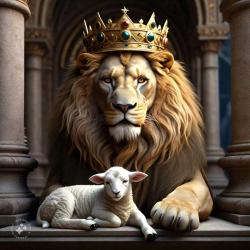
Share your knowledge on any subject, or Google/ask AI, and teach us <3
Even if it’s super basic, and you think everyone knows it… They don’t. Share with us! :)
Please try to keep it to things that matter, rather than things that are trivial. Thank you! <3
@Tinywhisper11
Subscribe to this thread so you can learn <3

@jesusredeemedme2425 💖 ok thankyou💖💖 I love you
I love you more! <3
# Igneous Rocks
1. _Granite_: A sturdy, speckled rock with a mesmerizing mosaic of quartz, feldspar, and mica minerals. Its colors dance across the spectrum, from warm golden hues to cool grayish tones, with flecks of black and white.
2. _Basalt_: A dark, fine-grained rock with a smooth, uniform texture that resembles polished ebony. Its somber colors range from deep charcoal to rich, dark brown.
3. _Pumice_: A lightweight, porous rock with a sponge-like texture that's both fascinating and fragile. Its colors are a delicate blend of creamy whites, pale grays, and soft beige.
4. _Obsidian_: A shiny, glassy rock with a conchoidal fracture pattern that resembles the smooth, curved surface of a black pearl. Its colors are a deep, mysterious black, with subtle hints of dark brown and gray.
5. _Gabbro_: A coarse-grained, dark rock with a distinctive greenish tint that's reminiscent of ancient, weathered bronze. Its colors are a complex blend of dark greens, grays, and blacks.
6. _Andesite_: A fine-grained, grayish rock with a porphyritic texture that's dotted with tiny, white feldspar crystals. Its colors are a subtle blend of pale grays, creamy whites, and soft pinks.
7. _Diorite_: A coarse-grained, grayish rock with a mix of plagioclase and pyroxene minerals that creates a fascinating, mottled texture. Its colors are a complex blend of grays, whites, and blacks.
8. _Pegmatite_: A coarse-grained, light-colored rock with a distinctive graphic texture that's reminiscent of ancient, weathered wood. Its colors are a delicate blend of creamy whites, pale grays, and soft pinks.
# Sedimentary Rocks
1. _Sandstone_: A coarse-grained, yellowish rock with a gritty texture that's reminiscent of rough, weathered sandpaper. Its colors are a warm, sunny blend of golden yellows, oranges, and reds.
2. _Shale_: A fine-grained, layered rock with a papery texture that's both delicate and durable. Its colors are a subtle blend of grays, blacks, and dark browns.
3. _Limestone_: A light-colored, dense rock with a fossil-rich texture that's both fascinating and beautiful. Its colors are a delicate blend of creamy whites, pale grays, and soft beiges.
4. _Conglomerate_: A coarse-grained, layered rock with a gravelly texture that's reminiscent of rough, weathered concrete. Its colors are a complex blend of grays, whites, and blacks.
5. _Breccia_: A coarse-grained, layered rock with a jagged texture that's both fascinating and rugged. Its colors are a complex blend of grays, whites, and blacks.
6. _Siltstone_: A fine-grained, smooth rock with a silky texture that's reminiscent of soft, weathered silk. Its colors are a subtle blend of pale grays, creamy whites, and soft pinks.
7. _Mudstone_: A fine-grained, smooth rock with a clay-like texture that's both delicate and durable. Its colors are a subtle blend of grays, blacks, and dark browns.
8. _Gypsum_: A white or transparent, crystalline rock with a fibrous texture that's reminiscent of delicate, sparkling crystal. Its colors are a pure, snowy white or a clear, sparkling crystal.
# Metamorphic Rocks
1. _Marble_: A light-colored, dense rock with a distinctive veiny texture that's both beautiful and elegant. Its colors are a delicate blend of creamy whites, pale grays, and soft beiges.
2. _Slate_: A dark-colored, fine-grained rock with a smooth, uniform texture that's both durable and versatile. Its colors are a somber blend of deep grays, blacks, and dark browns.
3. _Quartzite_: A white or light-colored, dense rock with a sparkling texture that's both fascinating and beautiful. Its colors are a pure, snowy white or a clear, sparkling crystal.
4. _Gneiss_: A banded, coarse-grained rock with a distinctive foliated texture that's both complex and beautiful. Its colors are a complex blend of grays, whites, and blacks.
5. _Schist_: A layered, fine-grained rock with a flaky texture that's both delicate and durable. Its colors are a subtle blend of grays, blacks, and dark browns.
6. _Phyllite_: A wavy, fine-grained rock with a smooth, silky texture that's reminiscent of soft, weathered silk. Its colors are a subtle blend of pale grays, creamy whites, and soft pinks.
7. _Hornfels_: A fine-grained, dense rock with a distinctive spotted texture that's both fascinating and rugged. Its colors are a complex blend of grays, whites, and blacks.
8. _Eclogite_: A dense, coarse-grained rock with a distinctive greenish tint that's reminiscent of ancient, weathered jade. Its colors are a complex blend of dark greens, grays, and blacks.
******PSA******
If i use AI (like these first few are), they are not necessarily 100% accurate. AI isn’t infallible, but it gets a lot right. Like they say in Reading Rainbow, “You don’t have to take my word for it.” Do your own follow-up research, and don’t take it as gospel lol
@jesusredeemedme2425 😮😮😮 there are soooo many
Right??? And that’s not including minerals and crystals…
Let's explore the fascinating world of languages.
Did you know that there are over 7,000 languages spoken worldwide? Here are some interesting language-related facts:
# Language Families
1. *Indo-European*: Spoken by 46% of the world's population, this family includes languages like English, Spanish, Russian, and Hindi.
2. *Sino-Tibetan*: Includes languages like Mandarin Chinese, Tibetan, and Burmese.
3. *Afro-Asiatic*: Includes languages like Arabic, Hebrew, and Amharic.
# Language Isolation
1. *Basque*: Spoken in Spain and France, Basque is an isolated language with no known relatives.
2. *Burushaski*: Spoken in Pakistan, Burushaski is another isolated language with a unique grammar and vocabulary.
# Language Extinction
1. *Ainu*: Spoken in Japan, Ainu is a critically endangered language with only a few fluent speakers remaining.
2. *Yuchi*: Spoken in the United States, Yuchi is another critically endangered language with only a few fluent speakers remaining.
# Language Fun Facts
1. *Longest word*: The longest word in the English language, according to the Oxford English Dictionary, is pneumonoultramicroscopicsilicovolcanoconiosis, a lung disease caused by inhaling very fine particles of silica.
2. *Tonal languages*: Languages like Mandarin Chinese, Vietnamese, and Thai use tones to distinguish between words, making them challenging for non-native speakers to learn.
@jesusredeemedme2425 7000😮 I am fluent in 3 languages😁😁
English, gibberish, and sarcasm? ;)
Oh snap!
Tiny knows me well ;)
Oh good. That would have hurt my feelings.

@jesusredeemedme2425 Cool!
On an interesting (though disturbing) note, there has been an increase in speakers of one indigenous language: Nahuatl.* Originally it was the language of the Aztecs for a few centuries before the conquistadores arrived from Spain... More recently, the largest Latino/Hispanic prison gangs in the American penal system have adopted Nahuatl in order to communicate without the prison guards (or white, black, or other convicts) understanding what they say. In short, Nahuatl has been converted into verbal cryptography by organized criminals.
*The l at the end is silent. All Nahuatl words with an ending l are said that way...kinda like French with its silent ending vowels. The l is only pronounced when it is followed by a vowel.
Let's explore the fascinating world of culinary arts.
Culinary arts involve the preparation, cooking, and presentation of food. Here are some interesting culinary-related facts:
# International Cuisines
1. _Italian cuisine_: Known for its rich flavors, aromas, and bold ingredients, with popular dishes like pasta, pizza, and risotto.
2. _Chinese cuisine_: A diverse and complex cuisine with a long history, featuring popular dishes like dumplings, noodles, and stir-fries.
3. _Indian cuisine_: Characterized by its use of spices, herbs, and other ingredients, with popular dishes like curries, tandoori chicken, and naan bread.
# Cooking Techniques
1. _Roasting_: A cooking method that uses dry heat to cook food, resulting in a caramelized exterior and a tender interior.
2. _Searing_: A cooking technique that uses high heat to create a crispy exterior on food, while locking in juices and flavors.
3. _Braising_: A cooking method that uses liquid and low heat to cook food, resulting in tender and flavorful dishes.
# Desserts and Pastries
1. _Croissants_: Flaky, buttery pastries that originated in France and are often enjoyed for breakfast or as a snack.
2. _Tiramisu_: A popular Italian dessert made with ladyfingers, mascarpone cheese, and espresso.
3. _Mochi_: A traditional Japanese dessert made with pounded rice and often filled with sweet fillings like red bean paste or ice cream.
Molecular gastronomy is a subdiscipline of food science that applies scientific principles to the understanding and transformation of ingredients and cooking techniques. It's a modern and innovative approach to cooking that involves using scientific knowledge to create new and unique dishes.
Some common techniques used in molecular gastronomy include:
1. Spherification: Using sodium alginate to create spheres of liquid food, like caviar or ravioli.
2. Foamification: Using soy lecithin or other ingredients to create light and airy foams, like espumados or meringues.
3. Gelification: Using agar agar or other ingredients to create firm and jelly-like textures, like terrines or aspic.
4. Emulsification: Using ingredients like lecithin or xanthan gum to create stable mixtures of oil and water, like mayonnaise or hollandaise sauce.
Molecular gastronomy has been popularized by chefs like Ferran Adrià, Heston Blumenthal, and Grant Achatz, who have used these techniques to create innovative and avant-garde dishes.
Some examples of molecular gastronomy dishes include:
1. Ferran Adrià's "Spherical Ravioli": A dish made with spherified liquid parmesan, served with a light and airy foam.
2. Heston Blumenthal's "Snail Porridge": A dish made with snails, oats, and parsley, served with a gelified parsley sauce.
3. Grant Achatz's "Hot Potato, Cold Potato": A dish made with a cold potato soup, served with a hot potato gel and a side of crispy potato skin.
Molecular gastronomy can be expensive due to the use of specialized ingredients and equipment, but it's also a unique and fascinating way to experience food!
@jesusredeemedme2425 I don't quite understand, I'll read this one again later💖
Read: Rich people making food weird so they can charge WAYYYYY more. ;)
Glassblowing is a fascinating process that requires skill, patience, and attention to detail. Here's a step-by-step guide on how glass is blown:
# Gathering
1. The glassblower gathers a small amount of molten glass from the furnace, which is heated to around 2,000°F (1,093°C).
2. The glassblower uses a metal blowpipe (or blow tube) to collect the glass.
# Marvering
1. The glassblower rolls the molten glass on a flat surface called a marver to create a stable foundation and to eliminate any irregularities.
2. The marver helps to shape the glass and create a symmetrical shape.
# Blowing
1. With the glass attached to the blowpipe, the glassblower blows air into the pipe to inflate the glass.
2. The glassblower uses a combination of blowing, swinging, and rotating the pipe to shape the glass.
# Shaping
1. The glassblower uses a variety of tools, such as jacks, blocks, and paddles, to shape the glass.
2. The tools are used to create the desired shape, size, and texture.
# Working the Glass
1. The glassblower continues to work the glass, using a combination of blowing, shaping, and cooling to achieve the desired shape and form.
2. The glassblower must work quickly, as the glass can become too cool and rigid to work with.
# Annealing
1. Once the glass has been shaped, it is placed in a special oven called an annealer.
2. The annealer slowly cools the glass over several hours to prevent stresses and breakage.
# Finishing
1. After the glass has been annealed, it is removed from the oven and inspected for any imperfections.
2. The glassblower may use a variety of techniques, such as grinding, polishing, or engraving, to finish the piece.
Glassblowing is a complex and nuanced process that requires great skill and attention to detail. Glassblowers must have a deep understanding of the material and the process, as well as the ability to work quickly and precisely.
@jesusredeemedme2425 my carer showed me a video of this being done, it looks soooo cool. But so hard and easy to break
Like trust. ;)
How to calculate a percentage:
You are going to do one number divided by another number. But which number is which?
So if I have done 1 page of my coloring book, and my coloring book has 31 pictures, I would do 1/31 =0.0323
But now you have to multiply by 100. No matter what you did in the last step, always multiply by 100. So 0.0323 times 100 = 3.23! Now you have your percent! I have done 3.23% of my coloring book!
Hope this helps!
@GreenLime3141 wow maths is so complicated😕
Right??? Lol
@Tinywhisper11 If you think percentages are complicated, try algebra... I had to take remedial algebra three times when I was in high school. It was a b****.
@slowdecline48 😂😂😂😂 don't forget I never went to school, I'm lucky I learnt how to count😂
@Tinywhisper11 It's too bad you're not allowed to go to You2b....there are videos on basic math there. Oh well. Presumably there are other websites out there that can help, if you really want to learn. At the very least, you should know how to do the four basic operations. After that would come percentages, fractions, etc.
Do you have access to Khan Academy?
I took stats. I failed miserably and had to drop the class before I LITERALLY failed…
@jesusredeemedme2425
Buckle up folks..We are going to learn the basics of economy through this story or you know, revise our economics knowledge since most of you might know this. Introducing my fictional country - Azuria (ofcourse, I named my country after me because I am vain like that)
Barter Call Saul – And better hope Saul needs fish in exchange for flour
When the people of Azuria first settled on their island, life was simple *cue violin music, preferably something Vivaldi *. They had fertile land, clean water, and plenty of fish in the pond..I mean sea. But without a structured system, life was chaotic. If a fisherman wanted bread, he had to find a baker who needed fish. If a farmer had extra wheat but needed a new tool, he had to hope the blacksmith needed wheat at that moment. This system known as the Barter system where we exchanged goods for other goods… sucked. To solve this, the leaders of Azuria (I was there when the old magic was written) introduced *drum rolls * the Azurian Pound (£AZR) —a new currency that everyone could use to buy and sell goods. Now the fisherman could sell fish for money and use that money to by bread whenever he needed it. The economy of Azuria had begun. *dun dun dun *
Fiat Currency: Because we said so – Why money has value : Because we are delulu)
Then people started to wonder… what exactly is money? At first the Azurian Pound was just shiny metal coins and crisp paper bills but soon people realized something important: money wasn’t valuable because of what it was made of, but because everyone agreed it had value (Yes, we basically gaslighted.. Gaslit?.. Well…deluded ourselves into believing money has value… In theory, if everyone in the world collectively just decided money is just paper and has no value, well then, money will have no value…And you thought people who believed in aliens were crazy!)
In the early days, some skeptical Azurians still preferred bartering. “Why trade my fish for a piece of paper when I can get a sack of wheat instead?” . But then they faced a problem—what if the wheat farmer didn’t want fish? With money, they could sell fish to anyone, take the money, and buy whatever they needed later. Money solved the problem of coincidence…it acted as a universal medium of exchange.
But money did more than just help trade. It became a unit of account, meaning everything in Azuria had a price in pounds… no more guessing how many eggs were worth a loaf of bread or if two kilogram of fish is actually equal to an Azure scents 100 ml perfume. It also became a store of value – meaning people could save it for the future without worrying about their goods spoiling or losing worth.
Back to our delusion, I mean the story - money itself wasn’t valuable, but what it could buy was. The Azurian Pound £AZR was just metal and paper but everyone accepted it because they knew they could exchange it for real things: food, clothes, tools, and services. Money is valuable because it is backed by goods (materials and stuff) and services (actions people do for money like doctor visits, haircut, education)
In the early days, people trusted money because it was backed by gold—each pound could, in theory, be exchanged for a fixed amount of gold in the royal treasury. So, for every Azurian Pound in circulation, there was an equivalent amount of gold stored in the reserve. But instead of carrying around heavy gold bars to trade, people used paper money as a convenient stand-in for the gold’s value.This was called the gold standard, and it reassured Azurians that their money had real value. But over time, Azuria moved to a fiat currency system where money wasn’t backed by gold but by the strength of the economy itself (like the money in the real world)
This meant that money’s value now depended on goods and services—the things people produced and the work they did. If Azuria was producing lots of fish, wheat, furniture, and iron tools, and if doctors, teachers, and builders were providing valuable services, then the economy was strong, and the currency remained stable. But if factories shut down, farms failed, and workers lost jobs, the Azurian Pound would weaken because there were fewer goods and services to back it up.
Fisheconomics :The Fishy Tale of Inflation, Deflation, and the Market Game
In Azuria, as I have said before, The money is backed by goods and services, for simplicity let’s say: The value of 1 Azurian Pound (£AZR) = 1 fish. Every day, fishermen catch fish, sell them for £AZR 1 each, and use that money to buy food, boats, or nets. So the government prints I pound for every fish caught. So lets say, in a year there were 500 fish (I am not good at arithmetic so let's keep it simple) , the government printed 500 pounds. (This is for the imagination's sake, GDP works in complicated ways)Everything is stable.
The next year, the government decided to print 500 pounds anticipating 500 fish. But here’s the problem—the number of fish caught was only 250. Now, everyone has extra money, but there aren’t more fish to buy. People need fish, there arent enough fish but there is more money. Fishermen realize, “People have more money, so I can charge higher prices!” Instead of £AZR 1, they now sell fish for £AZR 2.
This is inflation—when prices rise because there’s more money, but not more goods. The same fish that cost £AZR 1 before now costs £AZR 2. Suddenly, your savings buy you fewer fish than before. If this continues, everything gets more expensive, and money becomes weaker. (This is the answer to that age old question - Why can't we just print more money? - Because if we print more money without backing it up with goods and services - Inflation will happen - More money + Less Goods = Higher Prices)
Now, imagine the opposite. Something happens—maybe people start saving their money instead of spending it. Fishermen struggle to sell fish, so they drop their prices to attract buyers. Now, a fish costs only £AZR 0.5 instead of £AZR 1. Sounds great, right? But there’s a problem—if fishermen earn less, they can’t afford to pay their workers or buy new boats. Businesses start shrinking, jobs disappear, and people spend even less, expecting prices to drop further.
This is deflation—when prices fall, but so do incomes, jobs, and economic growth. People hesitate to spend because they think things will get cheaper, and that slows everything down.
So, everything comes down to this - supply and demand (It is said that if you say these magic words 3 times, an Economics Major will magically appear in front of you)
If there are lots of fish but not enough buyers, fishermen lower prices to sell them before they rot (high supply, low demand = cheap fish).
If there was a storm and fishermen were unable to go to the sea, they raise prices because there aren’t enough fish to go around (low supply, high demand = expensive fish).
The same rule applies to everything—whether it’s fish, houses, or phones. The price depends on how much of something exists (supply) and how much people want it (demand).
So, Azuria’s economy is always changing. Too much money? Prices rise. Too little spending? Prices drop. And in between, supply and demand keep everything moving. That’s how money, prices, and the economy swim together in a giant fishy cycle!
If you want to learn about the Abracadabra of Money cycle .. How cash moves and sometimes magically multiplies.. How the bank works.. why a simple “Good Afternoon” from Jerome Powell is the worst thing that can ever happen to you (Even if you don't know him, he has a hand on your wallet) ……..hit like and subscribe..ehh comment.
I hope this all made sense and you actually learned something along the way. Thanks for coming to my TedTalk!
Dude… You are so smart! And funny. Can I subscribe to you instead??? And are you going to write a book???? <3
@jesusredeemedme2425 Haha, thanks! I know, I hear that a lot... I am very humble too, right? 😆😂
Honestly people are out here trying to unsubscribe from real life, so I guess I'll just keep updating this thread instead. A book though? That's an idea... but my procrastinating, lazy @ss could maybe... one day... next year... never.. who knows? But seriously....thank you! You just made my day🤗
Unsubscribe from real life? I hope not <3 Although I prefer being here over the monotony of my life so I get that kind lol
@azurePond PART II
The Abracadabra of Money Cycle: How Cash Moves and (Sometimes) Magically Multiplies
In the bustling seaside country of Azuria, life was simple— 1 Azurian Pound (£AZR) = 1 fish. Every morning, a fisherman named Theo set out to sea, casting his nets and hauling in fresh fish. One fine day, he caught 50 fish and sold them to Finn’s Fish Fry (I love a good alliteration), the most popular restaurant in town, for £AZR 50.
Finn, the restaurant owner, now had 50 fish but £AZR 0 in cash. Meanwhile, Theo had £AZR 50 in his pocket. Being a smart saver, he walked to the Azurian Bank (AZB) and deposited his money, leaving it safe and sound. The bank manager, Mr. Sterling (Because that is the generic name of a bank manager), took the deposit and smiled.
Now, here’s where things got interesting...
The Loan That Made Money Multiply
Finn’s restaurant needed cooking oil, spices, and a little help to run smoothly. But he had spent all his money on fish! What can I say, Finn is not as smart as Theo. So Finn visited the bank and asked for a loan.
“Of course,” Mr. Sterling said “We’ll lend you £AZR 30.”
Now, where did this money come from? It came from Theo’s deposit. *gasps *
The bank took £AZR 30 from Theo’s £AZR 50, leaving only £AZR 20 in actual cash inside the bank. But Theo still believed he had his full £AZR 50 available in his account.
Now, in the economy
Theo still owns £AZR 50 (in his bank account).
Finn now has £AZR 30 (borrowed from the bank).
The bank only has £AZR 20 in cash but has given out loans.
Buuuuut….the total money in circulation now seems to be £AZR 80 (Theo’s 50 + Finn’s 30) In reality, only £AZR 50 physically exists. Let that sink in. Maybe sit up straight from the one week old banana posture for like a minute.
The Return of the Pound
Finn used the £AZR 30 loan to pay his cook, Oliver. (Expert Advice - If you actually need to take a loan to pay your worker’s wages, you aint doing so well. But this is for the example’s sake)
Feeling rich after getting his wages, Oliver did what any good friend would/should do —he treated his friends to a feast at Finn’s Fish Fry.
Oliver and his friends spent exactly £AZR 30 on fish fries. The restaurant earned £AZR 30 back in cash.
Finn smiled. “Perfect. Now I can repay the loan!” He walked back to the bank and gave back the £AZR 30 he had borrowed.
Mr. Sterling, the banker, put the money back into Theo’s account. So now, when Theo returned to withdraw his savings, his full £AZR 50 was there, just as he expected.
But in between, that same £AZR 50 had been used multiple times—by the bank, by Finn, by Oliver, and back to Finn. The economy felt like it had more money, even though no extra cash had been printed. And like any magic trick, once you see what’s happening behind the curtain, it doesn’t feel so magical anymore—it feels like a scam. Poor Theo… his money went behind his back!
What If the Magic Breaks? – The Multiplication Trap
Let’s rewind and see what happens if things don’t go as planned.
Finn, the restaurant owner, still takes a £AZR 30 loan from the bank, just like before. But this time, instead of paying Oliver (the cook) his salary, he decides to spend the money on extra ingredients—maybe more spices, fancy plates, and a new frying pan.
Now, lets see how this changes everything…
Oliver never gets his £AZR 30 salary.
Since he has no money, he can’t buy fish fries from the restaurant.
The restaurant doesn’t get back £AZR 30 in sales.
Finn still owes the bank £AZR 30.
But now, he has no extra money coming in because Oliver didn’t have money to spend.
Without sales, the restaurant has no profit—only extra ingredients sitting in storage.
The loan cannot be repaid.
The bank was expecting Finn to return £AZR 30.
But Finn doesn’t have £AZR 30 because no one bought food.
Now the bank is short on money—it gave out £AZR 30 from Theo’s deposit but hasn’t gotten it back.
What happens if Theo tries to withdraw his full £AZR 50?
The bank only has £AZR 20 left in cash (because £AZR 30 was lent to Finn).
If Theo comes asking for their money, the bank doesn’t have enough cash to give them.
This is how banks collapse—when loans don’t get repaid and people panic to withdraw money. But there isn't money or the Bank to give. This is called Bank run.
Moral of the story? Pay your employees well. But there's more.. multiple morals.. Money in an economy only works when it’s moving.
If people don’t get wages, they don’t spend.
If people don’t spend, businesses don’t make profits.
If businesses don’t make profits, they can’t repay loans.
If loans aren’t repaid, banks run out of money.
This is why wages, spending, profit, and investment all keep the economy running. If one stops, everything slows down, and the whole system collapses.
Dude… Can you be my teacher???? I’d be thrilled to keep learning this way! It’s fun and keeps me hooked <3
@jesusredeemedme2425 Thank you..Haha... that means a lot! I'm glad you're enjoying it! Learning should always be fun and engaging. I’m not promising anything but I’ll keep updating the thread.
What do you want to learn more about? The economy? Or just some basic topics like politics, government, and science (AI, genetics, space)? Feel free to ask—I’ll try my best to answer if I know or I will learn about it and then answer. My degree is in Literature and Journalism and I’m currently studying International Relations. So if you have any specific questions about those, I can definitely help with that.
Also, I love teaching! Right now, my only student is my baby brother, and because of him I’m constantly learning new things too. He asks me questions I don’t always know the answers to (because Kids assert dominance like that), so I study them and explain them to him. Thanks to that... I now have some extreme niche knowledge on dinosaurs, crypto and the James Webb Telescope! Curiosity is always welcome here. Even if you think your questions sound dumb, go ahead and ask... I’m the same way, so I’ll always encourage you. <3
EVERYTHING PLEASE! I’m hungry to learn <3
@jesusredeemedme2425 we will continue with economics and see where it will lead us ..ok?
Sounds great! <3 Ty :)
@azurePond Part III
Welcome back to Azuria…. where the sea is salty, the economy is fishy, and money is still a collective delusion we all happily believe in.
By now, the people of Azuria had mastered the art of buying, sellin and even saving money. But soon… the ambitious minds of Azuria began asking themselves a very important question that is the basis of all of our existential crisis:
How do we make more money?
Enter the Stock Market — where people realized they could make money from money without ever stepping foot on a boat or holding a single fish in their hands.
The 3Fs of Finance : Fish, Fries, and FinnCorp
After years of running Finn’s Fish Fry, our old friend Finn wanted to expand his restaurant into a full fledged seafood empire — with chains all over Azuria, a delivery app, and maybe even his own line of branded fish sauces (Finn’s Fancy Fish Sauce™️ — because alliteration is still king).
But there was one little problem, like all people with grand ideas… he didn’t have enough money.
Finn thought about asking the bank for another loan but Mr. Sterling would probably laugh him out of the Azurian Bank at this point.
That's when Finn had his Eureka! moment (fully clothed and while he was at the restaurant ofc)
Instead of borrowing money, he would sell pieces of his business to the people of Azuria.
How Shares work: Tiny pieces of the fish pie
Finn marched into the Azurian Financial Office (AFO) and registered his company as FinnCorp Ltd. He decided that his entire business would be worth £AZR 1000.
But instead of selling the whole thing to one person, he divided the business into 100 tiny pieces called shares.
Now each share was worth £AZR 10.
Finn announced to the entire town:
"Hey Azurians! I’m selling 100 shares of FinnCorp. If you buy one share, you’ll own 1% of my restaurant. If FinnCorp makes profits…. I’ll share those profits with you! So buy these papers that says “1% of FinnCorp” for £AZR 10 " (These papers are what we call - Stock Certificates, But now we have Demat accounts instead of papers because papers are so out of trend)
Why would anyone buy Fish pies.. I mean … Shares?
Now, you might be thinking — Why would anyone give their hard-earned pounds to Finn for a small piece of paper that says 'I own 1% of FinnCorp'?
Because shares are magical little pieces of paper that can do 3 three important things:
Dividends - If FinnCorp made profits, Finn would give a small part of those profits to the shareholders every year as a thank-you for investing. This is called a dividend — basically free fish money.
Price Increase- If FinnCorp became the hottest seafood chain in Azuria, the value of the company would rise. Now instead of £AZR 10, each share might be worth £AZR 20. So shareholders could sell their shares for more money than they originally paid.
Voting Rights- Some lucky shareholders even got to vote in important decisions like whether Finn should add shrimp tacos to the menu or ban pineapple from fish pizzas forever.
The Azurian Stock Exchange (AZX)
Soon… other businesses wanted to do the same thing— Theodore’s Fishing Nets, Mariam’s Bakery, Azure Pond’s Azure Scents perfumes and even Oliver’s Secret Spice Company.
So the Azurian government set up the Azurian Stock Exchange (AZX)— a grand hall where people could buy and sell shares of different companies.
Every morning, traders gathered at the AZX, shouting prices and scribbling numbers on parchment paper like they knew what they were doing (For more information, watch the documentary - The Wolf of Wall Street.. Though I only remember Leonardo DiCaprio)
Supply, Demand, and more Fish
Lets say Theo bought 10 shares of FinnCorp at £AZR 10 each.
One day, news spread that Finn had discovered a secret spice that made his fish fries taste 10 times better than any other restaurant.
Everyone suddenly wanted FinnCorp shares.
Now, there were 100 people trying to buy the same 100 shares.
Theo, being the shrewd little investor that he was, leaned back with a smug grin and said:
“I’ll sell you my shares… but only if you pay £AZR 20 each.”
The price of FinnCorp shares doubled overnight — not because Finn sold more fish or made more money, but simply because everyone wanted those shares.
Bubble Trouble: The Great Fishexistential crisis
For a while… Azuria was buzzing with stock market fever.
People were buying shares not because they believed in the businesses, but because they thought they could sell those shares for more money later.
Suddenly, every random fisherman was calling himself an Investor Guru and started a podcast.
FinnCorp shares soared to £AZR 50.
Oliver’s Secret Spice Company hit £AZR 100 just because Oliver once smiled at a flying crow.
Everyone was getting rich — until one day, Finn's Fancy Fish Sauce™️ turned out to taste exactly like… well… fish sauce. It was later revealed that the secret ingredient was just a hoax and people lost their trust in Finn. And when trust is broken ….. 💔 🥺….. Stock markets crash.
People panicked. They started selling their FinnCorp shares as fast as possible.
The price plummeted back to £AZR 5.
The Fish Bubble Bursts
This is what economists call a Stock Market Bubble — when everyone buys shares based on hype instead of the company’s real value.
When the bubble pops, prices crash, and everyone realizes they’ve been holding nothing but fish-scented dreams.
Moral of the Fishy Tale
The stock market can be a powerful way to grow wealth—but only if you invest in businesses that actually produce something valuable (like fish fries, not fish sauce).
Recap Time
Share | Tiny piece of a company on paper |
Dividend | Bonus fish money (The profit you get for the shares) |
Price Increase | When shares become worth more |
Bubble | When everyone buys shares just because everyone else is buying |
Crash | When everyone realizes the shares were never worth that much to begin with |
So...... the next time someone asks you why the stock market goes up and down, just remember our magic words, you know, the economics major summoning ones:
supply and demand— and a little bit of collective delusion wrapped in fish-scented dreams.
@azurePond And here I was going to post something about investing & personal finance, as it's one of my interests. Looks like you're taking care of "Finance 101". 😃
I might still post some very general advice...
@slowdecline48 Yes.... we definitely need the advice! I'll handle the theory part .... and you can guide us through the practical applications and financial advice!
Teach us about bitcoin and investing :)
@jesusredeemedme2425 Bitcoin, to me, is more of a speculative asset than an investment asset. Ditto for cryptocurrencies in general, at least for now. Here's the difference:
- A speculative asset is something that is meant to be "traded", or bought & sold in a short to medium period. Stocks can be treated the same way if a buyer or seller prefers. The goal of trading is to take advantage of rises or falls in the price of an asset...in other words, "buy low, sell high"--soon. Short-term profits are the goal. Trading is also known as "speculation".
- An investment asset is something you buy & hold onto because its market value rises over time. This implies a much longer timeframe...we're talking years to decades. The goal of investing is not to get rich quick (it's rarely ever possible in any case) but to build your wealth over time....your lifetime. An investor doesn't concern him/herself with short-term market action because (s)he is looking down the road, so to speak. If you sell, it's when you're very old.
As a somewhat educated investor I would not advise you, or anyone else in Cups, to try to become a trader. Not in stocks, crypto or anything. Trading profitably is very hard to do consistently...the majority of traders lose, which is why most guys who try it don't last too long. Even among successful traders, almost all of them have a story of "blowing up their account" (losing all their cash) at least once & usually more than that. To trade--stocks, crypto, stock options, whatever--requires certain attributes that most people don't have...above all, iron self-control & a flair for estimating probabilities. A knack for reading charts & familiarity with one's market of choice is also essential. The fact is when it comes to trading successfully, most people just can't pull it off. I don't do it myself...& I tried, several times.
@azurePond "Welcome back to Azuria…. where the sea is salty, the economy is fishy..."
"Welcome to Lake Woebegone. Where the women are strong, the men are good-looking & all the children are above average!"...
Sorry, I couldn't resist. 😏
@slowdecline48 🤣🤣🤣
I’m missing the reference lol
@jesusredeemedme2425 The phrase about a fictional town of Lake Wobegon created by Garrison Keillor for his radio show A Prairie home companion... I didnt know it before but I googled it when slowdecline made that reference!
@azurePond Nice. 👍🏼 Economics is something that nowhere near enough of us know anything about. All I have to add is the following, for anyone who's interested:
Also, bank runs were among the early events during the Great Depression.
@slowdecline48 Absolutely! Economics affects sooo much of our daily lives. First, I was like.. maybe I should post something science-related, but then I thought—science happens whether you know it or not. Apples do fall down. You need science when you want to send an apple to the sky or keep an apple from rotting, or plant another apple tree.
But the economy isn’t like that. Even if you don’t know economics, it will still affect you. And if you don’t understand it and stay passive about it, you’re likely to get ehh ... fudged. So yeah... economics is something we should all know at least the basics of—along with money management, personal finance, and basic tax laws.
Also... thank you Slowdecline48 for adding those articles—they’re really helpful! And yes, bank runs were common during the Great Depression. They are a sign that people are losing trust in money, and when trust disappears, so does value. Funny how economics is basically life lessons!
@azurePond 👏👏👏👏👏 ok that all makes sense,and I learnt what inflation and deflation is💖 I now understand why we can't all just print more money (cause yep! It is just paper) but for the really poor countries we should print more money out for them, solve world hunger💖😁
Thank you for the story 😁 and don't worry your not the only vein one, I have a 'tiny' kingdom, and a planet named tiny too😁😁
@Tinywhisper11 Thank you! I’m glad you found it useful. Also..... cool people have imaginary countries and planets named after them 😎✨
[cw: famine, mention of unmusical violins]
@Tinywhisper11 Yes. When many people are hungry, it takes more than just throwing money at the problem. As Azure handily explained, when you pump money into an economy, if there isn't an increase in goods & services the only result is inflation. In the US that happened right after the C0vid lockdowns were rolled back, because our government made the old mistake. 😒
Famines happen for several reasons...one of them is crop failure. A season of bad weather can prevent potatoes, corn, wheat, etc. from growing. When that happens there is no harvest. In such a situation, if there isn't any stored-up grain in reserve, then people have to go without food. Not eating for a day or two is no problem for most of us...in fact, fasting can be good for you. But when people don't have food for a week, or longer...
One early result of hunger can be a food riot. Also known as a bread riot, they happened more often prior to the 19th century. It's one event you do not want to get mixed up in. People get hurt, maimed, & removed from the census in riots.
@slowdecline48 Well explained 👏👏
@azurePond PART IV
No Government , No Bank, No Problem? - In banks we trust, In code we verify
@Torean
Torean, are you reading these??? These are awesome! <3

I hadn't been but I'm glancing through a little now. I agree, they are 😁
Right??? <3
In traditional wood joinery, the simplest joint (though not always recognized as such) is the half-lap. It originated in ancient Egypt, during the time of the pharaohs...no one knows exactly when or who came up with the idea first, only that it was some Egyptian craftsman. (Most of the basic joints were invented in ancient Egypt; the rest came from the Romans, Chinese & Japanese.)*
*This does not include modern systems such as "biscuit joinery" & Kreg gear, since I don't consider them to be true joinery.
@slowdecline48 That’s fascinating! It’s amazing how ancient craftsmanship laid the foundation for so many techniques still in use today. The ingenuity of Egyptian woodworkers is seriously impressive... imagine being the first person to figure out how to make strong, lasting joints with just hand tools!
Funny enough, one night I couldn’t sleep and ended up watching " Y0u Tube" videos about Japanese wood joinery till dawn.. Alice me in "Y0u Tube" rabbit hole... I was flabbergasted—they can build entire houses without cement or nails or screws! The precision and skill required are just mind blowing🤯
@azurePond Oh yes. Medieval shokunin* raised the bar as high as it could go, in terms of joint complexity & precision with hand tools...their best work was usually reserved for Shintō & Buddhist temples. If I ever become even half as good as one of those guys, I'll dance in the streets.
*Transliteration of the Japanese term for a person who makes those screen panels out of wood & rice paper. I believe it's also used for traditional carpenters generally, but I could be wrong there.
Let's not leave Rome out. They were the ones who invented the smoothing plane, after all... We also have frame carpentry because of imperial Rome. You'll find more sophisticated tools (& furniture) from England, France, etc. from the late medieval period up to modern times. But their workmen wouldn't have been able to do what they did if it weren't for the Romans.
@slowdecline48 Civilizations have always advanced through the exchange of technology... globalization is nothing new (Though protectionism is something new and dangerous). Carpentry, woodwork, crafts, engineering and architecture all reflect cultural interactions and the stages of human history. You can trace influences across time, seeing how ideas traveled and evolved. Though not actually an example of Carpentry (I am not so familiar with that topic)it reminded me of architecture. I remember seeing the columns of the Pantheon and our guide explained that some of the massive granite used for them was quarried in Egypt and transported across the Mediterranean. The column design followed classical Greek influences while the engineering advancements came from Roman innovations in construction (If I remember correctly) So..... if the Romans had not conquered Egypt, secured trade routes and mastered large scale transportation those iconic columns might never have existed. I mentioned this because you were talking about Rome, and somehow… it all made sense in my mind.. In a roundabout way..my brain works in mysterious ways..haha. And you're absolutely right—Rome’s contributions to carpentry and engineering were truly foundational.
@azurePond "Though protectionism is something new and dangerous"
Not quite...
- Ecclesiastes says "there is nothing new under the sun." Granted it was written prior to the rise of modern science & techs, but there's still truth in that phrase. In this case, Smoot-Hawley is an example.
- Depending on certain factors, protecting one's own industries can be the right thing to do...it makes sense when a fledgling industry is beginning within one's nation, or when another nation is flooding the market with cheap goods. Trump's tariffs are not a good example because they've been applied suddenly & thoughtlessly, true. But we've had trade imbalances with several countries for many years now. That needs to be corrected. The most well-known example is China: it has strictly protected its own industries while taking advantage of lax regulation on our part; that's one reason why so much of what we use in the US is made there. If you let most of your manufacturing go to one foreign country, then the government of that country has got you by the short-n'-curlies!
@slowdecline48 Thank you for the clarification. That was very detailed, so thank you once again for making the effort. But I completely forgot an early example of protectionism .... Imperial Japan! How could I forget that? Also, ironically... I've heard that phrase before — nihil novi sub sole? Or is it nihil novi sole sub?
Protectionism is good... like a self protecting... little scale... but if every country starts doing it, it could be dangerous (at least in the short term) since our economies are so interconnected now. If we phase it out slowly, there wouldn't be any major damages.
@slowdecline48 That’s a beautiful sentiment! ......... I have heard people claim that the pyramids were built by aliens or that there's an Indian temple that does not cast a shadow because it is magic (spoiler alert - it's called optical illusion and having engineering skills). People create conspiracies, attributing such feats to magic or extraterrestrials but in reality it is all the human genius—creativity, patience, mathematics, and engineering at their finest. Dismissing these achievements as something beyond human capability is actually a disservice to our intelligence and evolution. It’s disappointing that we’d rather believe in aliens than recognize our own talent—we're selling ourselves short. The level of skill and dedication those medieval shokunin had is awe-inspiring—centuries later their work still stands as a testament to their mastery. The idea of striving for even a fraction of that excellence is both humbling and motivating. It could be Egyptian, Indian, Japanese... But it is ultimately human. And like Tinywhisper11 said - Humans are wonderful creatures.. our brains are amazing! If you do reach that level (or even come close) I hope you follow through on that street dance.... I’d say it would be well-earned! So, are you into woodworking yourself? That takes a lot of practice and patience... huge respect for anyone dedicated to mastering it!
Yes, though not as deeply as those carpenters & furniture makers of old. Up to now I've almost always lived in 1BR apartments...with limited space (& rental complex rules 🙄), you can only do so much. Mostly I've built custom canes & other small projects. That will change in a few weeks, however.
How will it change?
@slowdecline48 That’s really cool! Even with limited space... custom canes and small projects sound like a great way to keep the craft alive. what’s changing in a few weeks? A bigger workspace, maybe?
@azurePond @jesusredeemedme2425
Yeah. Gonna have more space, though it won't all be available right away. That's okay because right now it's full of trees...some of them rather tall. A lot of pines, some water oak. Plenty of raw material for future projects. 😁👍🏼
@slowdecline48 Oh.... that sounds like a little slice of paradise in the making! 🌿 Tall pines, oaks... and future projects brewing — that's the kind of raw material dreams are built on. Can't wait to see what you'll create out of all that space... I am totally excited for you!
That sounds amazing <3
How does it not cast a shadow???
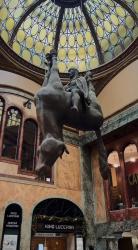
@jesusredeemedme2425 Actually, it does cast a shadow, but we cannot see it. It is designed in such a way that the temple's shadow falls close to its base... creating the optical illusion of having no shadow. Lots of complicated mathematics! I dont know if it is the whole temple, but the google says t has the longest tower and that tower des not cast any shadows. To get the facts correct, I did a Google search, and copy pasted… -
@slowdecline48 humans are very clever creatures💖
Okay I’m doing another one.
There is something called the Gut-Brain Axis that means that the gut (intestines, digestive system) affects the brain and the brain affects the gut! They communicate with each other!
I did my project on it in Microbiology!
@GreenLime3141 Ooh... I watched a TED Talk about how gut microbiome health affects the brain. If your gut health isn’t good, you’re more likely to experience depression and anxiety. "Food for thoughts" gets a whole new meaning right now.
And you study microbiology? That’s such a fascinating field! My elder brother is in biotech—I know it’s not exactly the same, but he often talks about how certain microbiological discoveries are relevant to his work. Basically most of the biotech work is the application of microbiological findings? Something like that.
@azurePond I'm studying the human anatomy😁😁😁 ok well I'm really just a peeping Tom as some like to call it😁😁😁
@Tinywhisper11 Oh no… that’s like me claiming to be a rocket scientist just because I make paper planes in class 😭🤣
@Tinywhisper11 I've been studying female anatomy for well over three decades now. 😏
@slowdecline48 😂😂😂😂😂😂
@GreenLime3141 ewwww guts😝 God made us so perfect in every way, it's quite amazing how the body works 💖
Agreed
@GreenLime3141 I heard about this a little while ago, yeah. On one hand it is more amazing evidence of how complexity can emerge from a few very simple principles or directives when given enough time, as evolution has demonstrated ad nauseam. On the other hand...it is another instance of how, despite the capabilities of human brains, they're usually bad at "logic-ing". Mess with the gut-brain axis, & even the most brilliant & reasonable person will have his/her thinking processes degraded to some extent.