Culture Shapes Who We Should Help

What children and adults believe about helping behavior.
KEY POINTS
- Adults often think that family should be most likely to help each other, and strangers least likely.
- Young children tend to think everyone should be helpful.
- There are also big cross-cultural differences in the belief about whether family, friends, and strangers should be helpful.
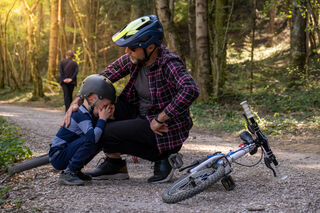
"Suppose you’re in a hurry to get somewhere and as you’re walking down the street, you see someone struggling to pick up groceries from a bag that broke. Suddenly, you notice that the person gathering the lost goods is your uncle. Chances are, you stop to help. What if the person was a friend of yours? Would you stop then? How about a random stranger? Most of you probably have the intuition that you would be most likely to help your family member, likely (but perhaps less likely) to help a friend, and least likely to help a stranger. There are even evolutionary theories that suggest that because you share more DNA with your relatives than with other people, perhaps we should be wired to help our family more than people we don’t know.
Is this tendency to help family more than friends, and more than strangers, wired into us as humans? This question was explored in a paper in a 2022 issue of the Journal of Experimental Psychology: General by Julia Marshall, Anton Gollwitzer, Kellen Mermin-Bunnell, Mei Shinomiya, Jan Retelsdorf, and Paul Bloom. They did two developmental studies in which they had children between 5 and 9 years of age respond to a series of scenarios. They had adults address the same scenarios. One study looked just at children and adults from the United States, while the other looked at children and adults from several different countries.
In the first study, participants heard about scenarios in which a child needed help (in one scenario, a child was hungry, and in a second a child fell and was injured). They were told that someone (a parent, a friend, or someone they didn’t know at all) saw the child. They were asked whether the person had to (that is, was obligated to) help. The youngest children essentially felt that everyone should help. They felt slightly less strongly about strangers than about family and friends, but only slightly. As children got older, they increasingly differentiated between people, they continued to believe that family should help but thought friends had less of an obligation, and strangers even less of an obligation. This pattern was strongest for the adults who were surveyed."
Read the full available article at Psychology Today
Reflection: Do you belive that culture shapes who we should and actually do end up helping?
#Culture #Helping #Belief
@professionalVision2624
Yes!
I remember learning about this in a sociology class.
Culture is such a big factor in so many aspects of our lives!
Thanks for the article! 💛✨
@innateJoy9602
Culture can be a real and deciding factor of how we percieve ourselves and our loved ones aswell as strangers. Thank you so much for your comment!

@professionalVision2624 This is an interesting post. I believe that social influencing and compliance play a key role into shaping someone's personality. There is no evidence so far showing that aquired features are being inherited through the DNA.
This is why it is very important for young kids to grow in a healthy family environment and receive education. Culture can shape ethics and who we "should" help. Creating values from a young age can change who someone will be as an adult.
Thank you for the post!
@calmDew1576
I'm happy you found the article interesting! Thank you for your comment! <3

@professionalVision2624 I think this is so interesting and yes, culture definitely shapes who we think we should help. I don't know much about other cultures, but here in America we are taught as children about "stranger danger" and to stay away from anyone we don't know. As you get older, obviously things change but I am still wary of helping random people. I feel better if I'm volunteering in a group or with an organization!
@fruityPond7887
Yes, "stranger danger" I know that term! And it have definitivly affected how I view people I don't know. I appreciate your profound understanding of this issue and how culture does interact and affect our daily lives and how we view strangers.