How To Cope With The End of Daylight Saving Time

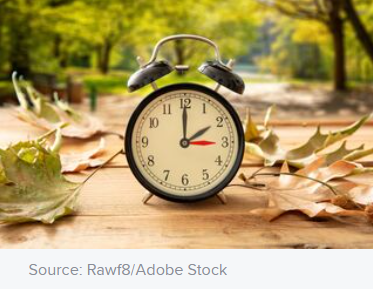
"On Sunday, Nov. 6, most of North America will “fall back” to standard time, setting clocks back one hour for the end of daylight saving time.
Research shows that daylight saving time leads to sleep loss—even in the fall when we gain an hour of sleep. That’s because most people simply wake up earlier, leading to a net loss of sleep. There is evidence that these sleep disruptions last five days or longer. There is also clear evidence that changing our clocks increases the incidence of emotional and behavioral disorders, stress-related immune disorders, and accidents involving injuries.
The American Academy of Sleep Medicine suggests some steps you can take to make the time change feel a little easier.
- Go to sleep at your usual bedtime on Saturday night before we turn the clocks back.
- Adjust your clocks at bedtime, not before.
- Try to get up at your normal time on Sunday morning. If you have gone to bed at your normal time, that should give you an extra hour of sleep.
- If possible, try to get your body moving: get outside in the morning light, which resets your body by boosting cortisol levels (which give you energy) and halting melatonin production (which makes you sleepy).
Read the complete article available at Psychology Today!
Reflection:
How does the end of daylight saving time affect you?
#DaylightSavings #Coping #Sleep

@comfortableNight4463 Let's also be aware that 7 Cups is international. Time changes are different in different places, and some of our clocks go forward at this time of year. Not everyone at 7 Cups lives in North America 😉
Charlie