What Is Psychodrama?

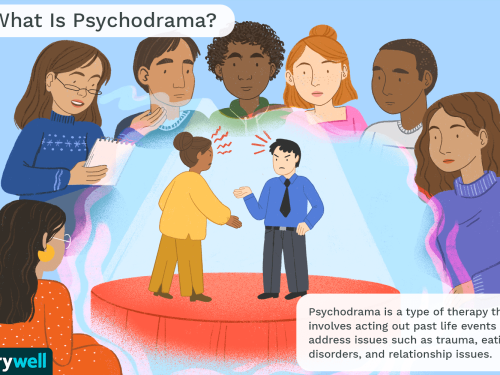
Psychodrama is a type of experiential, action-based therapy in which people explore issues by acting out events from their past.
This type of therapy
incorporates aspects of role-playing, dramatic self-presentation, and group
dynamics to help people gain greater understanding and insight into their lives
and experiences.
There are three basic components of a psychodrama session:
- The Warm-Up Phase
- The Action Phase
- The Sharing Phase
The warm-up phase is a period in which members of the group introduce themselves, work on establishing trust, and create a sense of group cohesiveness.
The action phase involves creating and acting out a scene from the individual's life. The therapist acts as a director to guide the individual, known as the protagonist, and others in the group through the scene using various techniques including:
- Doubling: This involves a member of the group acting out the protagonist’s emotions and behaviors. The actor will say what they believe the protagonist thinks or what they seem to be withholding. The activity creates a link between the protagonist’s internal reality and the reality of the external world.
- Mirroring: The individual observes others as they act out scenes, events, and conversations so that the individual can watch. This technique can be useful for helping people gain perspective or when someone needs to have some emotional distance in order to better understand their emotions.
- Role-playing: This technique involves the individual portraying something, often a particular person or object, that is a source of stress or conflict in their life.
- Role reversal: This technique involves the protagonist acting out the role of another person in their life while another actor plays the part of the protagonist. This can help improve empathy and understanding of another person’s perspective.
- Soliloquy: In this technique, the protagonist describes their inner thoughts and feelings to an audience. The goal of this is to help the individual gain greater insight into their inner feelings and thoughts and to help promote catharsis.
The sharing phase then involves the therapist helping the individual process and understand the emotions and thoughts that have come to the surface. The hope is that this will lead to insight and transformation.
How to Get Started With Psychodrama
If you are interested in trying psychodrama, it can be helpful to know what you can expect during your first session. During your session, expect your therapist to start with warm-up exercises that are designed to help build trust and cohesion within the group.
Depending on whether you are the protagonist or a participant, you may be acting out scenes from your own life or from the lives of others in your group. You may be asked to share your own thoughts about the experience once the reenactment is complete.
Overall benefits of Psychodrama
Research suggests that psychodrama may produce a number of potential benefits:
- Research suggests that psychodramatic therapy may lead to an increased sense of competence and self-efficacy. It may contribute to a better understanding and resolution of trauma.
- Another benefit is that psychodrama has a wide variety of applications. It is adaptable depending on the individual's needs and situation. In addition to being used to help individuals, it has also been utilized in a variety of settings including business, teaching, management, training, and religion.
Source: https://www.verywellmind.com/what-is-psychodrama-5193006
Would you try psychodrama or not and why?
#Therapy #Art #Amusement

@calmDew1576
I've heard of psychodrama therapy before, but didn't know much about it.
I would give it a try!
Increasing our sense of competence and self-efficacy sounds beneficial!
Thanks for the article! 💛✨
@innateJoy9602 That's so true! It's also a form of art therapy with a lot of research backing it up. It makes sense that representing someones issues helps them accept the situation and incorporate new managing techniques in long-term. Thank you for sharing your thoughts!

@calmDew1576
I used to have psychodrama once a week for 4 month in a hospital. It was really useful. One of the best therapy.
@kala I agree! I believe psychodrama can help people see things outside of the box but also demystify some of their problems! Proving yourself that you can manage your issues in psychodrama can help you perform these techniques in your everyday life. Thank you for sharing your experience!