Why It’s So Easy to Get Addicted—and How Best to Treat It

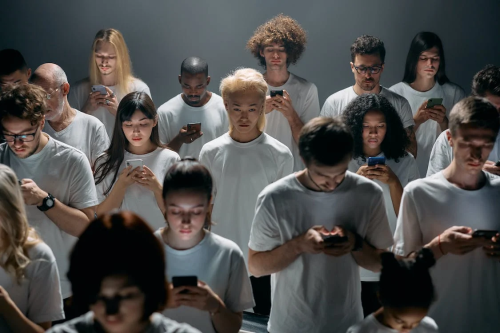
“It’s frequently noted that we’re not addicted to a substance, activity, or relationship as such but to how they make us feel. As long as it reliably helps us feel better, or at least less bad, we’re liable to get hooked on it. Addiction is a powerful, probably the most powerful, mechanism of escape from distressful feelings. This is why—nationally and internationally—it’s such a major, obdurate problem. And it doesn’t matter how much, through minimization or denial, we recognize it ourselves.
Experts concur that individuals with mental or emotional issues—such as anxiety, depression, guilt, shame, post-traumatic stress, bipolar, and attention-deficit/hyperactivity disorders—are more likely to become addicted. Plus, they’re prone to all kinds of addiction, not simply substances like alcohol, drugs (prescribed, over-the-counter, and illicit), and nicotine. They could also be hooked on eating, shopping, gambling, a dysfunctional relationship—or bird-watching. Even bird-watching could be considered "addictive" if, maladaptively, it throws one’s life out of balance. What’s crucial to understand is that whatever individuals are addicted to, they’re engaged in excessively, so it’s clearly harmful to them. Only when the underlying causes of addiction are identified and appropriately addressed can it be successfully treated long-term. And typically, this work can’t be done on our own but requires outside help. For in feeling even worse about ourselves when we’re not using, we employ all sorts of rationalizations and justifications to continue our habit, whose now flagrant toxicity is probably more obvious to others than ourselves.
KEY POINTS
- If a substance or activity helps a person avoid confronting painful feelings, it’s all too easy for it to take hold of them and become habitual.
- Most mental health experts consider addiction a dopamine/neurological disease because it biochemically highjacks our brain’s normal functioning.
- Only when the underlying causes of addiction are identified and appropriately addressed can it be successfully treated long-term.
- If you know someone who’s addicted or if, indeed, you are yourself, take heart: Many biopsychosocial treatments exist to successfully manage it.”
Read the whole article at Psychology Today
#Addiction #RewardSystem #Treatment
💬 What can we do to help people struggling with addiction?
@globalBraid3744
Thanks for providing such an informative article on addiction.
To help, it’s important to educate ourselves on the subject.
It’s also important to have compassion and not shame them.
Thanks for the post! ✨💛

@globalBraid3744 It has finally become clear thataddiction is purely based on mental factors.The simple answer to why we get addicted is that we basically want to cover other needs that lay within us through the substance, person or activity that makes us escape reality for a brief moment.
It is crucial to realize that this toxic attachment to someone or something can only cause more problems in longterm.Some people learn to cope with it but it is possible to even overcome it. Identifying why you have this need, finding purpose in life and setting small, realistic goals can actually help you very much to overcome addiction to the point that the same thing doesn't even intrigue you (to the point that you get addicted) anymore, since you simply find better things to do and more important rhings to lose (from personal experience with computeer games).
Thank you for the post!
@globalBraid3744 I think having a good, strong support system would be very instrumental in helping people overcome addiction. Thanks for sharing this article!

@globalBraid3744 I think to help those struggling with addiction it's important to be understanding and nonjudgmental. It's like anything else - you don't know their full story and every situation is different. We have to be kind and just allow them to know that we are there for them when they are ready to seek help. <3