Stacks for 2026

Instead of resolutions I made a book list that I'm looking forward to read. I will be adding reviews as I deep dive. This will be my little corner so feel free to stop by little bookstore corner and feel free to add thoughts or books or themes.
I avoid self help books anything other then that I'm open to it and I love poems too. So feel free to share your favourite poems and any poet you admire from your country or the poems that have touched you deeply
1) Existential/ Inner world/loneliness
- I who have never known men - Jacqueline Harpman
- The wall - Marlen Haushofer
- The vegetarian- Han Kang
- Good morning, midnight- Jean Rhys
- Outline - Rachel Cusk
- The lost daughter - Elena Ferrante
2) Identity, Gender & Roles
- Dream house - Carmen M Machado
- Autobiography of Red - Anne Carson
- Bound - Maddie Ballard
- The pairing- Casey McQuiston
- Greta & Valdin - Rebecca K Reilly
- Bellies - Nicola Dinan
3) Memory, Grief & Self
- Things in Nature merely grow - Yiyun Li (Tw: surviving suicide of dear ones)
- I am, I am, I am - Maggie O'Farrell
- The Women - Kristin Hannah (Resilience of women surviving war)
- Hamnet - Maggie O'Farrell
- Foster - Claire Keegan
- I leave it up to you - Jinwoo Chong (fragmented identity)
- Wild Dark shore - Charlotte McConaghy (Ecological dread)
- Ending- Maria Reva (Extinction, absurd hope)
4) Fantasy & Magic
- Piranesi - Susanna Clarke
- Jonathan Strange & Mr Norrell - Susanna Clarke
- The Golden Compass - Philip Pullman
- The tower by Thea lenarduzzi (memoir & folklore)
5) Classic
- Reread On the road by Jack Kerouac
- Slaughterhouse five, Cat's cradles, Mother night, God bless you Mr Rosewater, Bluebeard - Kurt Vonnegut
6) Travel
- Japan - Pico Iyer
- The Art thief - Michael Finkel
- Rivers of London by Ben Aaronvich
- Familiar stranger - Stuart Hall
7) Experimental themes and writing
- Stag Dance - Torrey Peters
- Ghost Cities - Siang Lu
- Sombrero Fallout by Richard Brautigan
- Dreaming of Babylon by Richard Brautigan
- In watermelon sugar by Richard Brautigan
- Luminous by Sylvia Plath
- The Moustache by Emmanuel Carrere
@eatingpopcorns
I'm especially interested in Luminous by Sylvia Plath, a true mind of a genius.
This is a very dedicated new year's list!
I hope you enjoy each one 💚😊

@Amanda84 this was recommended to me by my local bookclub that it's one of the best writings I can come across. I love Sylvia Plath's work
@eatingpopcorns
I love the extensive selection and your taste in literature. Keep the posts coming!
@trueconfidant123 thank you
I Who Have Never Known Men by Jacqueline Harpman (1995)
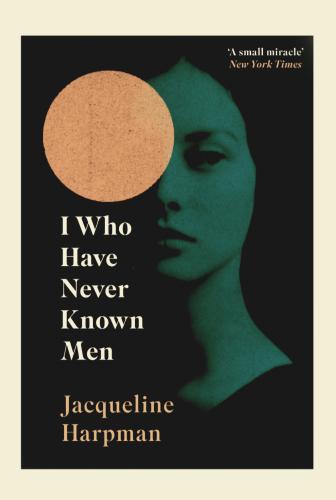
Genre: Dystopian, Science fiction
Sensitive topics explored: Forced confinement, mortality, Systemic violence, gender-based discrimination, misogyny, classism, child endangerment and abuse.
My take on the book: I just sat for a while after reading this book. Something had shifted in me because the book didn't end but it lingered. And I found myself asking: What did I just witness? A story? A warning?
At its heart, this novel feels like a meditation on womanhood stripped of everything we are told makes us whole - our memory, sexuality, choice, lineage. What remains when all of that is taken away? Are we still women? The narrator exists in this suspended state, and as I read, I couldn't stop wondering how much of womanhood is something we are born into, and how much is imposed, taught and enforced.
The narrator's rage and curiosity unsettled me the most because lot of women have felt so familiar in our lives. Rage at being withheld information. Curiosity that refuses to die even when it leads nowhere. Isn't that what keeps so many of us going when the world offers so few clear answers? The main character is a young girl among 40 women imprisoned deep underground where they are watched under constant surveillance. The story unfolds through the young girl's eyes with life known only of captivity. Her life is defined by a lack of agency where she just exists rather than lives and yet, through thought alone she resists. If thoughts can be taken away, what remains? And if it can't, why does the world try so hard to silence it?
The other women disturbed me in an entirely different way. They withhold knowledge from her claiming protection, but isn't silence one of the most effective tools of control? Their refusal to share what they know mirrors how systems survive by convincing the oppressed, that silence keeps then safe. I wonder how many times I've mistaken silence for care. How often I've been told, 'you're better off not knowing.'
The plot changes when the women finally leave the bunker and enter the world. The narrator desperately wants to learn how to fit in, how to behave correctly, how to comfort, how to touch even when touch repels her. Why does acceptance always seem to demand self-erasure? She feels guilty for her emotional distance, her individualism and I couldn't help but think: Since when did not performing emotional labor become a moral failure for women?
What struck me most was what happens when everyone begins to die. The need to conform dissolves and with it, the performative version of womanhood. When there is noone left to please, who are we? Do we still owe the world tenderness? Or do we finally belong to ourselves? The narrator doesn't become cruel but she becomes free in a quiet, unsettling way.
The absurdity of the novel weighed heavily on me. There is no explanation for imprisonment. No reward for endurance. Why do some people love while others disappear? Why does suffering feel so random, so undeserved? The narrator doesn't receive any answers and neither do we. But instead of rejecting the absurd, she lives within it. So, is that what survival actually is? Not understanding closure but continuing anyway?
By the end of the book, I realized the book isn't interested in resolutions. There is no catharsis, no revelation, no clean ending. And maybe that's the point. Human history is senseless. Violence repeats itself. Women continue to struggle against systems that claim to protect them while stripping them of their autonomy. What does it mean to search for authenticity in a world that thrives on erasure?
The narrator's body reflect this suspended existence: she never undergoes puberty, never develops in the ways society associates with womanhood. She often sees herself as less human than the other women, a perception shaped by her physical difference and enforced infantilization. And I asked myself: how deeply have we internalized the idea that womanhood is tied to reproduction, desire or function? Her infertility does not make her less of a woman but the world has trained her to believe it does. Haven't so many women been made to feel the same way, trapped in identities that never quite fit?
When I think about this book now, I don't think in terms of plot. I think in questions. And maybe that's what it gave me permission to sit with discomfort, to accept not knowing, to continue asking anyway. In a world obsessed with answers, I Who Have Never Known Men insists that curiosity itself - persistent, futile and defiant is an act of humanity.
And I wonder, if everything were stripped away from me - history, body, future, what would I choose to hold onto? Would it be hope? Rage? Or simply the refusal to stop thinking?