



@InsightfulPhoenix
Needed to read this 💜

@InsightfulPhoenix
Needed to read this 💜

@InsightfulPhoenix
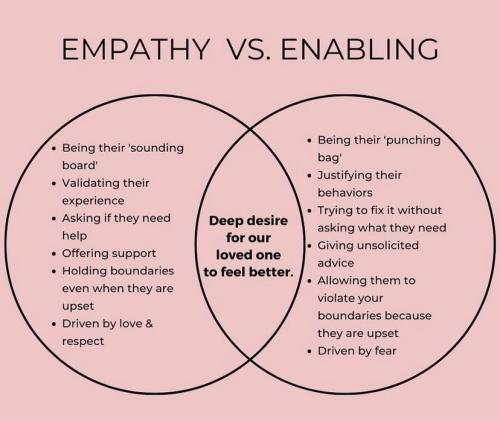
I think this is an important distinction that many people learn through experience. Empathy and enabling often come from the same place—a genuine desire to help someone we care about—but they can lead to very different outcomes.
To me, empathy involves trying to understand another person's feelings while still respecting both their autonomy and our own boundaries. It allows us to be supportive without taking responsibility for solving every problem on their behalf. Enabling, on the other hand, can sometimes occur when our desire to reduce someone's discomfort leads us to protect them from consequences, overextend ourselves, or neglect our own well-being.
What resonates with me most is the reminder that healthy support does not require self-sacrifice. We can care deeply about someone while still maintaining boundaries and encouraging personal responsibility. In fact, I think some of the most compassionate actions are those that support growth rather than dependence.
This is a valuable topic because the line between empathy and enabling is not always obvious, especially when emotions are involved. It often requires self-awareness, honesty, and a willingness to ask whether our actions are truly helping in the long term.