Time Outs
Goal
To be able effectively discipline using time outs
Disciplining Using Time Outs (Kazdin, 2005)
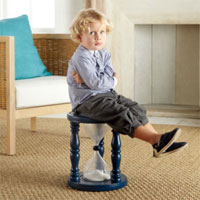 Disciplining effectively begins with rewarding and praising positive behaviors. However, many of us know that children do not always behave the way we want them to. At these times, mild punishment techniques can be useful. These are only useful when you praise your child for the positive opposite of the undesired behavior. If your child fights with other kids, then you should praise your child when they are sharing and interacting well with other kids.
An example of an effective punishment is time out. This involves removing a child from the opportunity to receive attention or other rewards when they misbehave. During time out, the child is sent to a boring or non-reinforcing place for a brief amount of time immediately after a problem behavior occurs. The length of time out can vary from 1 to 5 minutes. Here are some guidelines for how to do time outs appropriately:
- Select a room that is away from people and does not have anything interesting to do but do not lock the door.
- Remain calm.
- Use time out immediately. This prevents your child from becoming more and more aggressive.
- If you need to take away a privilege, remove it for only a short amount of time. The immediacy and consistency of the punishment is more important for discipline than how upset your child becomes.
- Don’t threaten time out. Use it. Don’t debate or argue with your child. Tell them what was done wrong and calmly tell them to go to time out.
- If your child goes to time out quietly without a tantrum, praise them for it.
- If your child refuses to go to time out right away, the time it takes your child to get there is added to the original amount of time.
- Let your child know that time out starts when they are quiet and is in the actual time out area.
- If the child absolutely refuses to go to time out, have backup procedures. These may include a loss of privileges. However, it is important to let your child know that if they do not go to time out, they will lose a privilege. This should occur when time out is first introduced.
- If a child breaks something in time out or makes a mess, they need to fix it or clean it up.
- Continue to be positive and praise the good behaviors and appropriate behaviors that your child does.