The relationship between thoughts, behaviors, and feelings
Goal
To recognize how thoughts, behaviors, and symptoms are related to each other and how changing one can impactthe others.
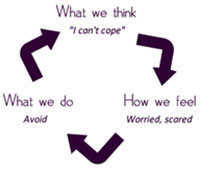 As we mentioned briefly in lesson 2, there is a relationship between our mental and physical well being. The ways we feel, think, and act are interconnected. Unfortunately, it can be hard to see these connections unless we take the time to actually map it out for ourselves. Consider the following example: you were driving to work, but get stuck in traffic and are running a few minutes late. You might THINK “Today is off to a terrible start, I bet this is just the beginning.” You probably now FEEL frustrated. When someone asks you how you’re progressing on a project, you may snap at them out this frustration. This BEHAVIOR was in some ways triggered by the thought of how terrible the day was going and the feelings of frustration. We can think of this relationship as a triangle�sometimes called the CBT triangle. The image below illustrates that. Of course, it can work the other way, too: if you were feeling frustrated, but chose to go for a walk at lunch rather than stewing on your negative thoughts at lunch. Then, you might feel better and have a more positive outlook for the remainder of the day.
Jordan’s Story
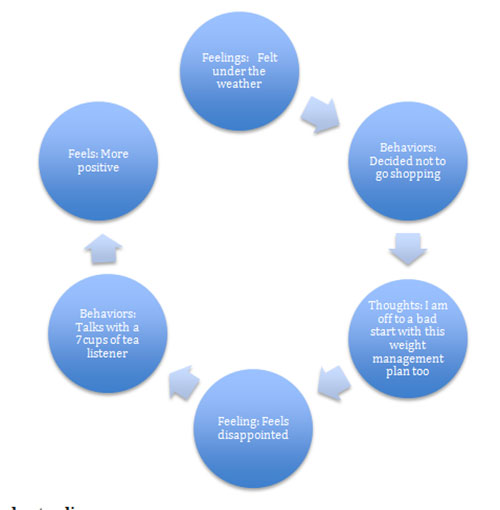
Jordan decides that she will make a plan to stick with her plan for weight management beginning after her weekend grocery shopping, so that she will have healthy food on hand when she begins her plan. Unfortunately, on Saturday morning, she feels under the weather, and decides not to go shopping. Later, she thinks, “I am off to the same old pattern with weight management patterns, again.” In response to this negative thought, they feel disappointed in themself. She decides to reach out to a listener on 7cupsoftea.com. After talking with her listener, Steve, she feels better and thinks, “This time I can be successful.”
Your turn:
 Now, on a piece of paper or on your 7cups growth path consider your own thoughts, feelings, and behaviors about weight management. Draw the path for the relationship you see�and try to find both a positive CBT triangle and a negative one. Here is a list of questions that might help you:
Thoughts
- What has your thinking been like since you decided to make necessary changes?
- What thoughts do you have about yourself? Your future?
Feelings
- How have you felt since the decision?
- What makes you feel better? Worse?
Behaviors:
- What types of things have you avoided or done less often because of not having a weight management plan?
- What types of things have you done more of since deciding to follow a weight management plan?
- How have your relationships changed since your decision to change?