The relationship between thoughts, behaviors, and symptoms
Goal
To recognize how thoughts, behaviors, and symptoms are related to each other and how changing one can impact the others.
 Our thoughts, behaviors, and physical symptoms are often very interrelated. However, it can be hard to recognize these connections until we lay them out on a map. For now, imagine you had a great day at work: your boss complimented you on how hard you’ve been working. You might THINK “Wow! She appreciates my work. I love this job.” Then, you decide to stay at work a little longer because you FEEL appreciated. This BEHAVIOR was impacted by your own thoughts and feelings. This is sometimes called the CBT Triangle or CBT Model. If you look at the image below, you can see that it works the other way, too: your thoughts and feelings can be impacted by your behaviors. Imagine, for example, that you were frustrated about meeting a deadline for work, but instead of skipping your workout and going home, you decide to still go to the gym. After the workout, you feel less stressed and the deadline seems more manageable.
Now, let’s think about how this relates to managing diabetes. You have probably had many thoughts since you were diagnosed. What have those been like? Would you describe them as more good thoughts or bad thoughts?
Daniel’s Story
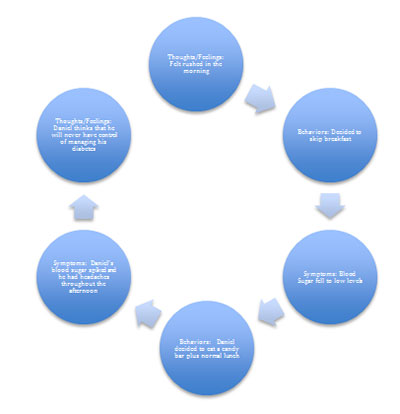
Danielhad a rough day with managing his diabetes today. He was running late this morning, so he decided to skip breakfast on his way to work. This resulted in a really low blood sugar reading. To combat this, he decides to eat a whole candy bar as soon as lunch rolls around, along with the rest of his lunch. This spikes his blood sugar and he has headaches throughout the afternoon. When he gets home, he checks his blood sugar levels before dinner and is frustrated when he sees that his numbers are way off of where they should be. He thinks to himself, “I will never get this under control at this rate!” In Daniel’s frustration, he decides to have a frozen pizza for dinner, even though he knows there’s too much sodium in it for his diabetes diet.
If we mapped the relationship between Daniel’s thoughts and feelings, behaviors, and symptoms it might look the following:
Your turn:
Now, on a piece of paper, in the Diabetes forum consider your own thoughts and feelings, behaviors, and symptoms since you were diagnosed. Write out a path you see between them. Remember, you can see positive relationship paths, too! Maybe you felt like you had to make a change, so you thought that you could have control in this, and decided to start working out and have seen improvements in some of your symptoms since then. Here is a list of questions that might help you:
Thoughts
- What has your thinking been like since your diagnosis?
- What thoughts do you have about yourself? Your future? Your illness? Your treatment? Your medications?
- How have you felt since the diagnosis?
- What makes you feel better? Worse?
Behaviors:
- What types of things have you avoided or done less often because of your diagnosis?
- What types of things have you done more of since your diagnosis?
- How have your relationships changed since your diagnosis?
Symptoms
- What physical symptoms have you experienced?
- Do you have trouble sleeping? Trouble concentrating?
- Do you experience changes in your appetite?
- Do you lack energy?