Reframing Automatic Negative Thoughts
Goal
Recognize automatic negative thoughts and reframe them into positive thoughts.
 During the last lesson, we looked at the common types of negative automatic thoughts. Now, let’s look at how we can take those negative thoughts and challenge or reshape them into more positive thoughts. The first step is one that you already did by keeping a thought record of the previous week.
Pull out your thought record from the last lesson. See how you can apply each of the next questions to those thoughts. Either write or share your responses in the Forum. We will see how Daniel might go through this exercise as we go.
- Challenge your thoughts. Remember: thinking something does not make it true.
- Daniel starts thinking that there’s no reason to come up with a plan for managing diabetes on his vacation, because he knows there will be no healthy food options available on the trip. He thinks it will be too difficult to try to stick to his diet while eating out as often as he will on vacation. However, he soon realizes this is a negative thought. He realizes it is not helpful to think about the vacation or his management goals in this way.
- Can you come up with another challenge to this thought?
 Next, look for evidence. Acknowledge any evidence in favor of your thoughts, but then ask yourself if you’re ignoring evidence that contradicts your thoughts. Be sure you have considered all the facts.
- Daniel takes a step back and looks more closely at his vacation plans. He realizes that he is focusing on the fact that he will be eating out more often, rather than learning what restaurants will have options that help him stick to his diet plan.
- Then, search for alternatives. Try to look at the situation from another perspective. Ask yourself if your thinking is becoming too inflexible.
- Daniel decides to make a list of possible outcomes besides just eating out anywhere on vacation. First, he considers only choosing restaurants that offer salad entrees or salad bars. Then, he considers the possibility of bringing food and having picnics on the road. Finally, he considers making meals in his hotel.
- Can you come up with another alternative?
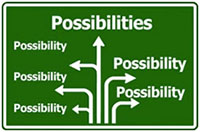 After considering alternatives, make sure to put the whole thing in perspective. Consider what the worst possible outcome could be.
- Daniel decides to develop a strong plan for while on vacation. However, he also decides to acknowledge that the worst outcome would be a week off of his plan. He recognizes that even if he didn’t choose good restaurants during the week, one week off his plan at home does not mean he can’t get back in his good habits when he returns home.
- Finally, consider what a more helpful thought would be. Ask yourself what a more helpful way to look at the situation would look like.
- Daniel sits back and considers that in the future he should start by considering how he can continue to manage his diabetes in new situations, rather than assuming that he will not be able to do so.
- Can you come up with another more helpful thought?
Conclusion
 Looking at negative thoughts in a more positive way can help overcome the barriers to meeting your goals and managing your diabetes. Working your way through this lesson guide, you have taken many positive steps forward in managing your diabetes. We hope that you have learned a number of skills and tools to move from being unsure of how to change to recognizing how to overcome barriers to your goals and dealing with set backs. This is likely a life-long journey for you and you are off to a solid start on this path. If you ever feel you need support again, this guide can help you get back on the road of self-managing your diabetes.