societal stigma around autism
Hi 7 Cups!
I’m K, a listener here.
I wanted to share some thoughts on how we can work together to eliminate the stigma around autism. As a listener, I’ve seen how important it is to create a space where people feel understood and accepted. Here are a few ways I think we can help:
1. Educate Ourselves and Others: Learning about autism beyond stereotypes helps us challenge misconceptions and spread accurate information.
2. Listen Without Judgment: When someone shares their experiences, especially those on the spectrum, it’s crucial to listen with empathy and respect.
3. Use Person-First Language: Language shapes perception. Saying “person with autism” instead of labels helps emphasize the person, not just the diagnosis. THIS ONE IS QUITE IMPORTANT TO CHECK IN WITH THE INDIVIDUAL ABOUT AS NOT EVERYONE AUTOMATICALLY FEELS THE SAME ABOUT THEIR NEURODIVERGENCE ❤️
4. Celebrate Differences: Instead of focusing on challenges, let’s highlight strengths and unique perspectives that autistic individuals bring.
5. Speak Up Against Discrimination: If you hear stigmatizing comments or see unfair treatment, gently correct it or support the person affected.
By doing these things, we can create a more inclusive and supportive community where everyone feels valued. Thanks for reading and for being part of this effort!
with care,
LoveK93

Boosting this because I think it's important, also because I want to add more stuff particularly about stereotypes:
- When you've met one person with autism, you've met one person with autism. Sure we have diagnostic criteria and common traits, but we might act differently, be introverted or extroverted, etc like anyone else.
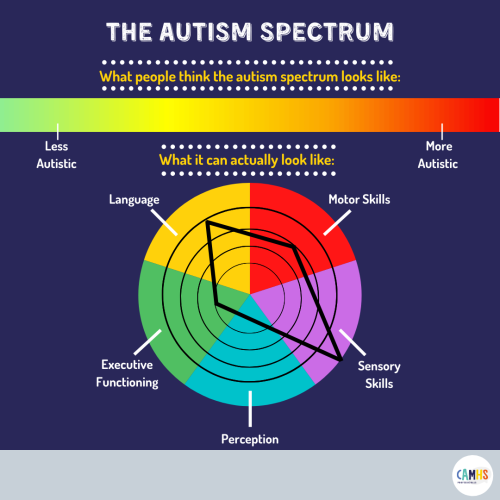
- Not everyone is "on the spectrum" nor is the spectrum linear. Being "on the spectrum" describes how your autistic traits are, not how autistic you are.
- Lots of us prefer identity-first language (autistic), but some of us prefer person-first language (person with autism). Adding onto what K mentioned, do ask the person.
- If you're American, avoid Autism Speaks. They've gotten better over the years, but many of us don't like them because of fearmongering and using their money for lobbying. The ASAN website has an infographic explaining why it's better to not support them: https://autisticadvocacy.org/considerthefacts/
Here's a graphic explaining what people mean by spectrum (image is from CAHMS)