🌶️ Let's Talk Green Chiles! Can You Handle the Heat?

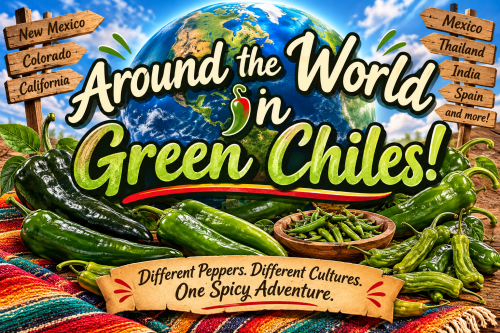
Welcome, fellow food lovers! Today, we're taking a little trip around the world, and our destination is the wonderful, spicy, sometimes deceptively fiery world of GREEN CHILES! 🌶️
Did you know that green chiles come in dozens of varieties, with different flavors, textures, heat levels, and traditional uses depending on where they're grown?
Some are mild and slightly sweet, some are smoky and earthy, and others might make you question your life choices after the first bite. 😂
Let's explore some of them!
🇺🇸 Green Chiles Across the United States
The United States has several regional chile-growing traditions, particularly throughout the Southwest.
🌶️ New Mexico – Hatch and New Mexican Green Chiles
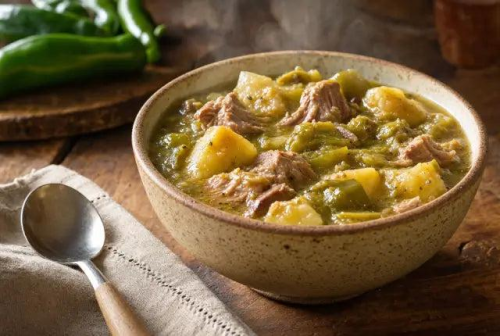
New Mexico takes its green chile seriously! In fact, chile is one of our official state vegetables.
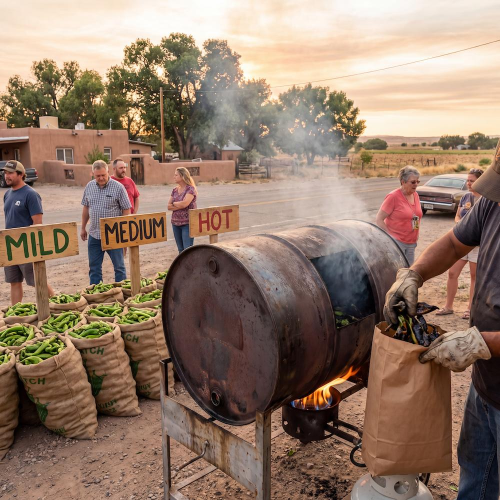
One interesting fact: Hatch isn't actually a variety of chile. Hatch refers to the region in New Mexico where the peppers are grown. Several different varieties can be grown in the Hatch Valley.
Some popular varieties include:
NuMex 6-4: A mild chile with a gentle, slightly sweet flavor. Great for eggs, sauces, and people who enjoy flavor without too much heat.
Big Jim: A large, thick-fleshed chile that's excellent for stuffing, roasting, and making chile rellenos.
Joe E. Parker: A mild-to-medium chile commonly used for roasting, sauces, and everyday cooking.
Sandia: A hotter variety with a more noticeable kick. Excellent for green chile stew and salsas.
Barker's X-Hot: For people who enjoy a serious amount of heat!
Española Improved: A Northern New Mexico favorite, known for its early harvest and more pronounced heat.
Common uses: Green chile stew, breakfast burritos, enchiladas, chile rellenos, burgers, pizza, salsa, and just about anything that could benefit from a little roasted chile.
🌶️ Colorado – Pueblo Green Chiles
Colorado has its own chile-growing tradition, particularly around Pueblo.
Pueblo chiles are known for their thicker walls, substantial flesh, and medium-to-hot heat depending on the variety.
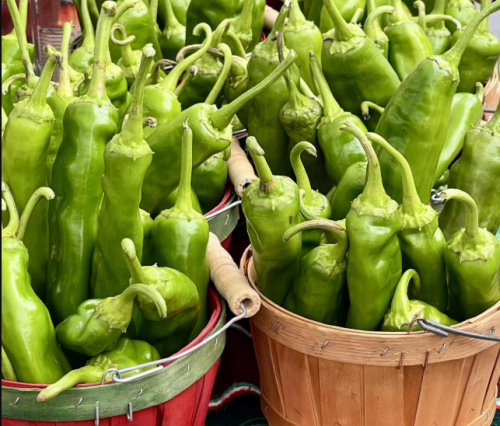
They're especially popular for roasting, stuffing, making chile rellenos, and preparing green chile sauces.
Colorado's shorter growing season and high-altitude growing conditions contribute to its distinctive chile-growing tradition.
🌶️ California – Anaheim Chiles
Here's another fun fact: Anaheim chiles actually have New Mexico roots!
The seeds were taken from New Mexico to Anaheim, California, where the pepper became commercially popular.
Anaheim chiles are generally mild, long, and fleshy. They're great for roasting, stuffing, sauces, and adding flavor without overwhelming heat.
🌶️ Florida – Datil Peppers
Florida has its own little firecracker!
The Datil pepper is particularly associated with St. Augustine and has a fruity, slightly sweet flavor alongside substantial heat.
They're commonly used in hot sauces, marinades, jellies, and seafood dishes.
Although they're often recognized by their yellow-orange color when ripe, they can also be harvested green.
🌶️ Other American Favorites
Jalapeño: Medium heat. Popular in nachos, salsa, poppers, pickling, and sandwiches.
Serrano: Typically hotter than jalapeños, with a bright, fresh flavor. Commonly used in fresh salsa, sauces, and Mexican dishes.
Sport Peppers: Small, tangy peppers commonly pickled and served on Chicago-style hot dogs.
🌎 Green Chiles Around the World
Now let's leave the United States and explore what other countries are doing with their green peppers!
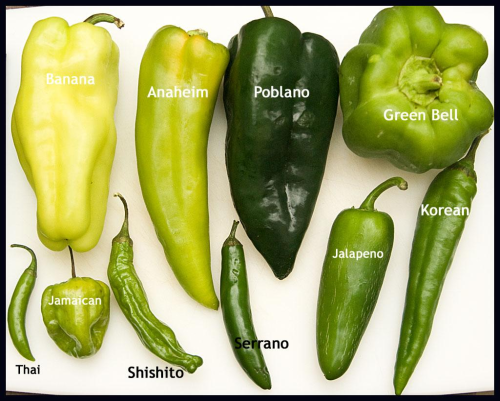
Mexico – Poblano, Jalapeño, and Serrano
Mexico has an incredible variety of chiles.
Poblano: Large, dark green, and generally mild. Frequently roasted, peeled, stuffed with cheese or meat, and used in chiles rellenos. When dried, it becomes an ancho chile.
Jalapeño: A familiar medium-heat pepper used in salsa, tacos, pickled toppings, and countless other dishes.
Serrano: Smaller and hotter than most jalapeños. Commonly used in fresh salsa, guacamole, and sauces.
Thailand – Bird's Eye Chiles
Don't let their small size fool you!
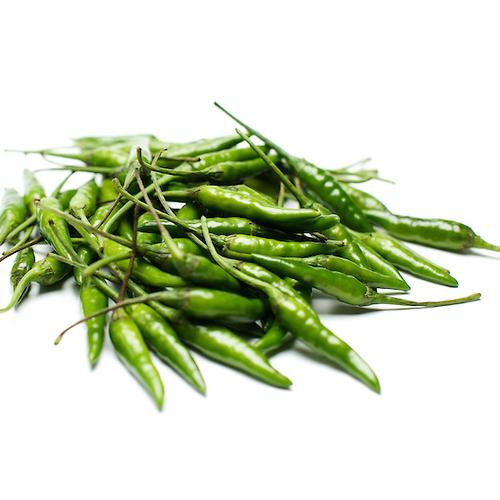
Thai bird's eye chiles, also called PrIkkee noo, are small but pack a serious punch.
They're used in Thai curries, stir-fries, spicy soups, dipping sauces, and chili pastes.
These are definitely not the peppers I'd recommend eating by the handful
India – Indian Green Chillies
Indian cuisine uses green chillies in countless ways.
Depending on the variety, they can range from relatively mild to extremely hot.
They're commonly chopped into curries, used in chutneys, incorporated into spice pastes, fried as a side dish, or added to lentils and rice dishes.
Some varieties are also stuffed with spices and cooked.
Japan – Shishito Peppers
These are an interesting one!
Shishito peppers are generally mild, small, and slightly sweet.
They're commonly blistered or pan-fried and served with salt as an appetizer or snack.
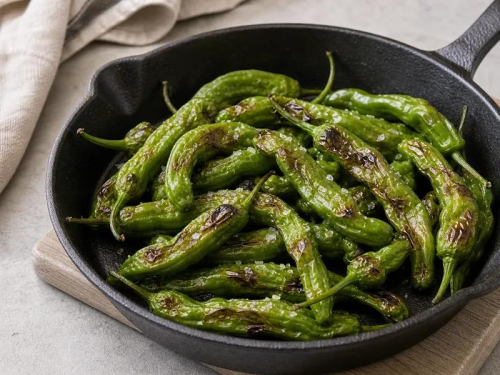
However, there's a catch: occasionally, one pepper can be surprisingly spicy!
Spain – Padrón Peppers
Padrón peppers are traditionally harvested while green and relatively small.
They're usually cooked in olive oil until blistered and sprinkled with coarse salt.
They're a popular Spanish tapas dish.
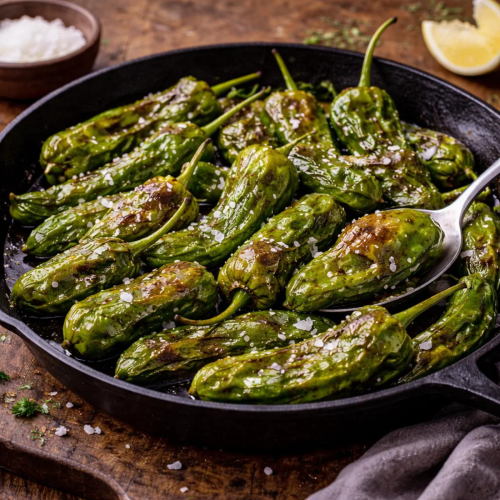
And just like shishitos, most are mild, but every once in a while, you might get a spicy surprise!
South Korea – Cheongyang Green Chiles
Korea has several types of green peppers, including the particularly spicy Cheongyang variety.
They're used in spicy stews, soups, sauces, and various side dishes.
They can also be chopped into dipping sauces and other condiments.
🔥 How Hot Are We Talking?
Chile heat is measured using the Scoville Heat Unit (SHU) scale.
Here's a general comparison:
| Pepper | Approximate Heat |
|---|---|
| Anaheim | 500–2,500 SHU |
| New Mexico 6-4 | 300–500 SHU |
| NuMex Big Jim | 500–2,000 SHU |
| Jalapeño | 2,500–8,000 SHU |
| Serrano | 10,000–23,000 SHU |
| Thai Bird's Eye | 50,000–100,000 SHU |
| Datil | 100,000–300,000 SHU |
Keep in mind that heat can vary depending on the pepper variety, growing conditions, and individual pepper.
And remember, New Mexico has plenty of varieties beyond the mild ones. Some of our hotter cultivars can definitely surprise you!
🌶️ Let's Hear From You!
Now that we've traveled around the world, I have a few questions for everyone!
What's your favorite green chile or hot pepper? Is it a Hatch chile, jalapeño, poblano, Thai bird's eye, shishito, or something completely different?
How do you like to eat your green chiles? In salsa, on pizza, in soups, stuffed with cheese, on burgers, or something else?
How would you describe your spice tolerance? Do you prefer mild, medium, hot, or the kind of spicy that makes you reach for a glass of milk?
Have you ever tried authentic New Mexico green chile?
THE ULTIMATE CHALLENGE: Do you think you could handle New Mexico green chile heat? Or would one bite have you waving the white flag? 😂
I'll leave you with one final question:
If you could add green chile to ANY food, what would it be?
Personally, I'm convinced that green chile belongs on just about everything!
Let's talk food, share recipes, and see who in our community can handle the heat! 🌶️

@Remina
Nothing like a Baked Poblano Pepper stuffed with cheese! Mild enough that most people can enjoy.
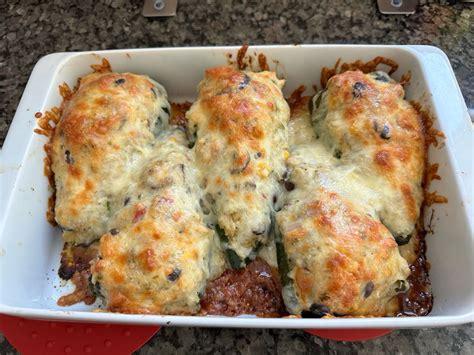
@caringShoulder1357
That looks really good. I could just bite into it.