The Bond of Love: Understanding the Grief of Muharram

Alsalam alykum wa rahmet Allah wa braktuh
Hello everyone 🌷
Hope you doing well
To truly understand why millions of people wear black and mourn during the month of Muharram, one must first understand the profound bond of love that connects Shia Muslims to the Family of Prophet Muhammad (peace be upon him and his family), known as "Ahl al-Bayt"—specifically his daughter Lady Fatimah, his cousin Imam Ali, his grandson Imam Hassan, and especially his beloved grandson Imam Hussain (peace be upon them all).
A Love Rooted in Faith and Family
In Muslims and especially Shia theology, loving the Prophet’s family is a core expression of faith, built upon their unparalleled devotion to justice, compassion, and divine guidance. When Imam Hussain (peace be upon him) was brutally martyred at the Battle of Karbala while standing up against a cruel tyrant, it left an irreplaceable wound in the hearts of those who love this holy family.
Consoling the Holy Prophet and His Family (Mwasat)
The mourning rituals performed during Muharram are deeply rooted in the concept of Mwasat—which means offering heartfelt consolation. Shias view their grief, tears, and gatherings as a way to share the sorrow and offer comfort to Prophet Muhammad, Lady Fatimah, and Imam Ali for the immense tragedy and injustice inflicted upon Imam Hussain (peace be upon him) and his family members. It is an annual renewal of loyalty to their peaceful values.
The Expressions of Grief: Tears and "Latm"
Because this love for Imam Hussain (peace be upon him) is so intense, the grief manifests both emotionally and physically:
The Tears:Weeping is an authentic, natural release of sorrow for the suffering of Imam Hussain (peace be upon him) and his family, who were denied water and massacred in the desert.
_The "Latm": This is the rhythmic, gentle tapping or beating of the chest. It is a traditional cultural gesture used to channel overwhelming sorrow, serving as a communal heartbeat that honors the ultimate sacrifice of Imam Hussain (peace be upon him).
Addressing Extreme and Uncontrolled Reactions
During these intense gatherings, the sheer magnitude of grief and love can sometimes cause certain individuals to experience uncontrolled emotional outbursts, leading to exaggerated behaviors or physical actions that go beyond regular mourning.
While these extreme actions stem from an overwhelming and uncontrolled emotional state of grief for Imam Hussain (peace be upon him), mainstream Shia jurisprudence—most notably the rulings of Grand Ayatollah Al-Sistani—emphasizes that protecting the human body from harm is an absolute Islamic obligation. The official teachings of the faith explicitly state that any ritual causing severe physical damage or presenting a distorted image of Islam is disallowed. The true, intended legacy of Imam Hussain (peace be upon him) and the Imams is to honor their memory through dignified reflection, intellectual growth, and peaceful solidarity.
💬 Open for Dialogue:
If you have any curiosity, thoughts, or questions about these traditions, please feel free to ask. Respectful and thoughtful questions are highly welcomed🌸🌸 so that we can all learn and benefit together!
Tulip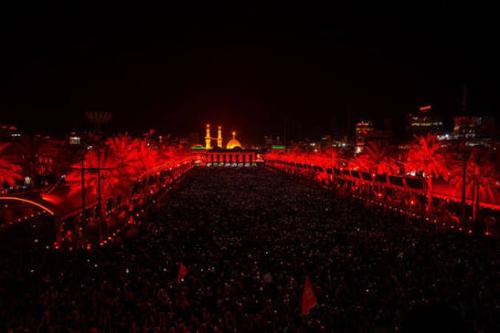

السلام عليكم
شكراً جزيلاً على تعليقاتك، اتعلمت كثير
I’m Sunni from Egypt and I don’t have much to add other than saying Shias are my brothers and sisters
Most people I know here have this same view too
جزاك الله خيرا and have a good day
@skob11
وعليكم السلام ورحمة الله وبركاته، وأهلاً بك وبكل أهل مصر الغاليين 🌷اتشرفت بك ونورت
Thank you so much for this incredibly beautiful and comforting comment. Your words truly brought so much joy to my heart. In a world that often highlights division, your perspective reflects the true essence of our faithwhich is built on love, mutual respect, and brotherhood. WajazakAllah khair for your kindness and for sharing such a wonderful message of unity in this space.أتمنى لك يوماً سعيداً ومباركاً ومليئاً بالخير دائماً ✨🌷.With all my respect and appreciation
@Tulipsmile
The Extended Human and Spiritual Dimension: How Muharram Transforms Grief into Healing, Resilience, and Inner Peace
When we contemplate the deeper layers of this annually renewed commemoration, we realize it is not merely a rehearsal of historical trauma. Rather, it is a profound process of inner human reconstruction, and a spiritual bond of love whose roots extend deep into the heart of the Prophetic message.
1. The Extension of Prophetic Love and Human Consolation
The very foundation of our love for Ahl al-Bayt (peace be upon them / عليهم السلام) stems directly from our boundless and profound love for the Messenger of Allah, Prophet Muhammad (peace be upon him and his family / صلى الله عليه وآله وسلم تسليماً كثيراً). They are his flesh, his blood, and his eternal legacy. Out of the sheer intensity of this love, a sincere desire arises within us to offer emotional and human consolation (Mwasat) to his holy heart.
When one contemplates the immense spiritual weight the Prophet (صلى الله عليه وآله وسلم) carried the painful reality of knowing, through divine revelation since the very birth of these pure souls, the tragedies that would eventually befall them it awakens a noble human instinct within us. It inspires us to console that great heart, which endured such profound sorrow solely for the guidance and uplifting of humanity.
2. Conscious Sacrifice and Championing the Truth
The extraordinary sacrifice offered by the Family of the Prophet (peace be upon them / عليهم السلام) was not a historical coincidence، it was a conscious, deliberate choice made to champion ultimate justice and protect the moral fabric of the Ummah. Even though divine interventions and heavenly support were entirely accessible and could have easily altered the material outcome of the battle they willingly accepted their destiny with absolute contentment and surrender to the divine will. They recognized that this supreme sacrifice would serve as an eternal remedy for the human conscience, awakening hearts across generations. Thus, they chose physical death so that timeless principles could live forever.
3. The Immortality of the Soul and the Warmth of Love in Times of Hardship
It is true that they departed this physical world, but their absence is merely bodily. Spiritually and ethically, they remain eternally alive within us, inside our hearts, and in the very details of our lives. Loving them grants the human soul an extraordinary tranquility and an indescribable inner peace.
A Warm Embrace for the Heart:Despite all the negative circumstances, personal pains, and hardships we accumulate within ourselves, their remembrance flows into the soul like a warm presence embracing the heart directly, dispelling its loneliness and filling it with profound serenity.
A Source of Patience and Strength: Their stories of unyielding resilience and their timeless lessons become, in our moments of brokenness, an inspiring source of strength that empowers us to endure and face life’s daily challenges with dignity and courage.
4. Cultivating Emotional Intelligence and Human Empathy
Weeping over this profound injustice is not a mere release of passive sorrow ،it is an annual exercise in deep emotional empathy. A human being whose heart can soften and weep for the thirst of children and the suffering of a family that took place centuries ago is a person whose conscience is naturally trained to reject oppression in their contemporary reality. This grief prevents hearts from turning hardened or indifferent, making the individual highly sensitive and responsive to the pain of the needy, the broken, and the oppressed everywhere in the world, regardless of their background.
5. Liberating the Self from Ego and Discovering True Self-Worth
In today’s highly materialistic world which heavily glorifies hyper individualism and self absorption, the school of Karbala arrives to reorder human priorities. By reflecting on the ultimate selflessness of that pure assembly, one learns that true self-worth is not measured by what we accumulate for ourselves, but by what we give, serve, and sacrifice for noble principles and for the sake of others. It is a profound invitation to break free from the chains of the ego and rise toward collective altruism, where a person's ultimate anxiety becomes serving humanity and spreading peace under the light of these pure guides.
6. Consoling the Living Fountain: Imam Al-Mahdi, the Awaited Savior (May Allah hasten his holy reappearance / عجل الله فرجه الشريف)
This annual covenant of consolation does not stop at the borders of history ،it extends with a living, breathing connection to our present and future, manifested in comforting the remaining proof of God on earth, Imam Al-Mahdi (may Allah hasten his holy reappearance / عجل الله تعالى ظهوره الشريف). In our doctrine and deepest sentiments, the Awaited Imam is the primary holder of this grievance, the living witness who carries the tragedy of his ancestors in his holy heart like a wound that never heals. He is the one who addresses his grandfather Hussain in the famous Ziyarah, declaring that he weeps over him blood instead of tears out of intense sorrow. Therefore, our tears and gatherings in Muharram serve as a direct heart to heart consolation to the Imam of our time, sharing the grief of his aching heart. Imam Al-Mahdi (عجل الله فرجه) is not merely a symbol of the unseen، he is the active extension of the justice of Karbala. He represents the ultimate hope of mankind, the promised light destined to fulfill the vision of all prophets by filling the earth with equity and peace just as it has been filled with tyranny and injustice. Our consolation to him dynamically renews our daily commitment to righteousness. It ensures that we move through this life not merely as passive mourners, but as conscious, active seekers of reform transforming ourselves and our societies to be worthy of supporting this grand divine-human project that achieves the ultimate goal of Karbala: establishing universal justice and heavenly peace on earth✨
Thank you for reading ✨

@Tulipsmile
@pinkBanana5906
@Tulipsmile
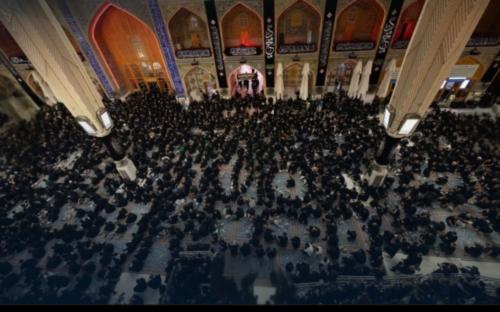
A photo from inside the Holy Shrine, at the sacred resting place of Imam Hussain (PBUH)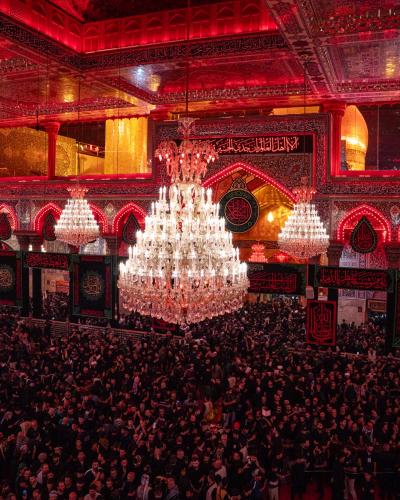
@Tulipsmile 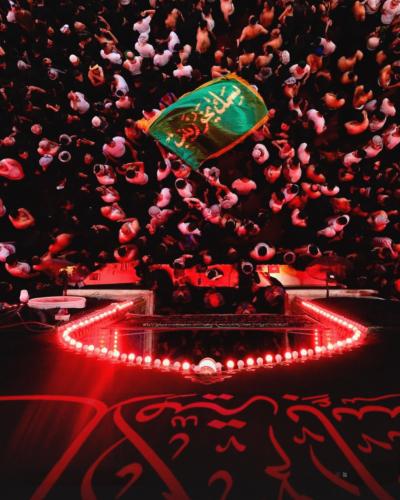
@Tulipsmile
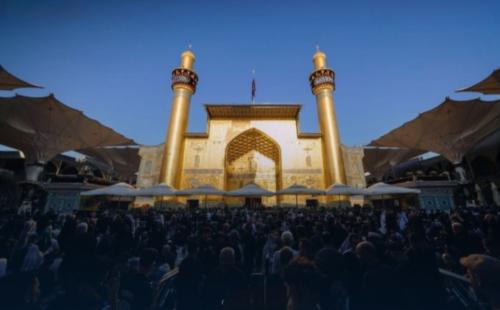
Commemorating the Holy Prophet's Passing in Najaf al-AshrafEvery year on the (28th) of Safar(Safar is the second month of the Islamic calendar, following Muharram. It holds deep religious significance, marked by solemn occasions like Arbaeen and the passing of Prophet Muhammad (PBUH).))
, millions of devoted pilgrims converge on the holy city of Najaf, Iraq. They walk from all across the country to pay their respects and offer condolences at the Holy Shrine of Imam Ali (AS), the cousin and son-in-law of the Prophet (Peace upon him)

Thank you for sharing this perspective. It highlights such a deep sense of faith, love, and devotion. It’s always insightful to learn about the spiritual significance behind these traditions.
We love ❤️ Labiyek ya Hussain A .s