The Bond of Love: Understanding the Grief of Muharram

Alsalam alykum wa rahmet Allah wa braktuh
Hello everyone 🌷
Hope you doing well
To truly understand why millions of people wear black and mourn during the month of Muharram, one must first understand the profound bond of love that connects Shia Muslims to the Family of Prophet Muhammad (peace be upon him and his family), known as "Ahl al-Bayt"—specifically his daughter Lady Fatimah, his cousin Imam Ali, his grandson Imam Hassan, and especially his beloved grandson Imam Hussain (peace be upon them all).
A Love Rooted in Faith and Family
In Muslims and especially Shia theology, loving the Prophet’s family is a core expression of faith, built upon their unparalleled devotion to justice, compassion, and divine guidance. When Imam Hussain (peace be upon him) was brutally martyred at the Battle of Karbala while standing up against a cruel tyrant, it left an irreplaceable wound in the hearts of those who love this holy family.
Consoling the Holy Prophet and His Family (Mwasat)
The mourning rituals performed during Muharram are deeply rooted in the concept of Mwasat—which means offering heartfelt consolation. Shias view their grief, tears, and gatherings as a way to share the sorrow and offer comfort to Prophet Muhammad, Lady Fatimah, and Imam Ali for the immense tragedy and injustice inflicted upon Imam Hussain (peace be upon him) and his family members. It is an annual renewal of loyalty to their peaceful values.
The Expressions of Grief: Tears and "Latm"
Because this love for Imam Hussain (peace be upon him) is so intense, the grief manifests both emotionally and physically:
The Tears:Weeping is an authentic, natural release of sorrow for the suffering of Imam Hussain (peace be upon him) and his family, who were denied water and massacred in the desert.
_The "Latm": This is the rhythmic, gentle tapping or beating of the chest. It is a traditional cultural gesture used to channel overwhelming sorrow, serving as a communal heartbeat that honors the ultimate sacrifice of Imam Hussain (peace be upon him).
Addressing Extreme and Uncontrolled Reactions
During these intense gatherings, the sheer magnitude of grief and love can sometimes cause certain individuals to experience uncontrolled emotional outbursts, leading to exaggerated behaviors or physical actions that go beyond regular mourning.
While these extreme actions stem from an overwhelming and uncontrolled emotional state of grief for Imam Hussain (peace be upon him), mainstream Shia jurisprudence—most notably the rulings of Grand Ayatollah Al-Sistani—emphasizes that protecting the human body from harm is an absolute Islamic obligation. The official teachings of the faith explicitly state that any ritual causing severe physical damage or presenting a distorted image of Islam is disallowed. The true, intended legacy of Imam Hussain (peace be upon him) and the Imams is to honor their memory through dignified reflection, intellectual growth, and peaceful solidarity.
💬 Open for Dialogue:
If you have any curiosity, thoughts, or questions about these traditions, please feel free to ask. Respectful and thoughtful questions are highly welcomed🌸🌸 so that we can all learn and benefit together!
Tulip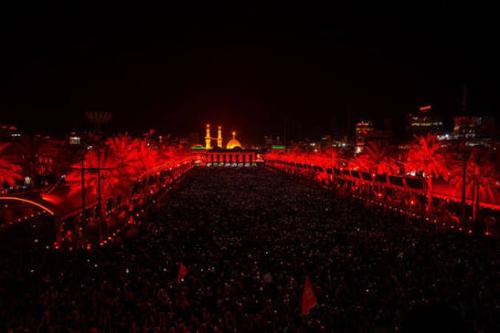
@Tulipsmile
Thank you so much for sharing an insight into something I didn't know about 🧡

@Amanda84
my pleasure ❤️❤️
I really want to share it here because I know many have questions or confusing about it,so I hope to help with it and show the real beautiful image 🌷🙏
Interesting, deep, touching, meaningful, and very beautiful. I loved your text. Thanks for sharing. 💗
@ClaraField
My pleasure 🌷🙏
☘️🌼🥰

@Tulipsmile
Walaikumassalam 🌷 JazakAllah khair for your beautiful explanation. I really appreciate the clarity you shared. I just have a few gentle queries to understand better, if you don’t mind. From what I understand, Islam does not establish an annual religious mourning system for Karbala or for any passing in a structured, repeated form of worship. The tragedy of Karbala and the martyrdom of Imam Hussain (RA) is indeed a deeply significant and heartbreaking part of Islamic history. At the same time, I understand that the Prophet Muhammad ﷺ did not instruct the Ummah to observe yearly mourning rituals for martyrs. Instead, Islam allows grief as a natural human emotion, but does not seem to establish it as a repeated ritual practice or act of worship according to the Qur’an and authentic Sunnah. I also came across the concept of “Mwasat,” which is described as comforting the Prophet ﷺ and his family through annual remembrance and mourning. However, I would like to understand this more clearly, as my understanding is that the Prophet ﷺ has already passed away, and Islam teaches us to follow his Sunnah and guidance rather than performing rituals intended as emotional consolation for him or his family. Regarding expressions of grief such as chest beating (latm), I understand that Islam permits sadness and even crying, and we know that the Prophet ﷺ himself expressed sorrow and shed tears. However, I am trying to understand the Islamic perspective on whether physical expressions that may involve self-harm or bodily harm are considered part of acceptable mourning, or if Islam encourages keeping grief within safe and respectful limits. Similarly, I understand that during intense moments of grief, strong emotional reactions can occur, and I would like to learn more about whether Islam differentiates between natural emotional expression and actions that may involve physical harm, and how scholars view maintaining balance and dignity in such situations. Lastly, I also have a question about the broader differences within the Muslim community. Why did Sunni and Shia differences develop over time, especially regarding concepts like leadership after the Prophet ﷺ, and how did these differences later influence variations in practices such as Adhan and other traditions, even though both groups share the same core belief in Allah and the Prophet Muhammad ﷺ? Thank you again for your patience and guidance 🌸 I am asking only to understand better and learn in the correct way.
@ThatBlueBetweenUs
Ameen wa Iyakum 🙏🌷 Thank you for your beautiful words and respectful questions
thank you so much for your kind response, your polite approach, and your genuine desire to understand. I truly appreciate and value the thoughtful way you have presented your queries. It is through these respectful and insightful conversations that we can all learn and benefit together🌷🌸
Below is a structured overview addressing each of your gentle queries, specifically reflecting the mainstream Shia jurisprudence, particularly the perspective and rulings of Grand Ayatollah Al-Sistani.
1. The Concept of Annual Mourning and "Mwasat" (Consolation)
You raised an important point regarding the structure of annual mourning and the concept of Mwasat (consolation) for Prophet Muhammad (peace be upon him and his family) and the Ahl al-Bayt.
-Annual Commemoration as a Core Rite:From the Shia perspective, commemorating the tragedy of Karbala annually is viewed as a fundamental religious rite (Sha'air). It is considered a deeply recommended (Mustahab) act of devotion aimed at keeping the core values of Islam such as justice, standing against tyranny, and sacrifice alive across generations.
-The Meaning of Mwasat:While it is true that the Holy Prophet and the Imams have passed from this physical world, Mwasat(solidarity/consolation) in Shia theology is understood as an ongoing spiritual alignment. By remembering their sacrifices annually, believers express their deep, living love and continuous emotional and spiritual loyalty to the Prophet and his family. It is a way of saying that the tragedy is never forgotten, and that the believers stand with them in spirit across time.
-Historical Precedents: Shia jurisprudence supports the legitimacy of this grief by highlighting historical records which state that the Prophet Muhammad himself openly wept and experienced deep sorrow over the future martyrdom of his grandson, Imam Hussain, before the event even took place. Additionally, early historical accounts record that expressions of profound grief existed among the companions and the women of the Prophet's family during times of immense loss, establishing a traditional precedent for communal mourning.
2. Physical Expressions of Grief: Chest Beating (Latm) and Safe Limits
Your query regarding the boundaries of physical grief and whether Islam encourages keeping sorrow within safe limits aligns closely with mainstream Shia jurisprudence.
-Chest Beating (Latm):Rhythmically tapping or beating the chest is viewed primarily as a traditional, cultural manifestation of intense grief, which is common in many societies when a deeply loved one is lost.
-The Bound of Preserving Health: Shia Islamic law places a strict emphasis on protecting the human body. According to the official rulings of Grand Ayatollah Al-Sistani: Chest beating, crying, and striking one's face out of sorrow for Imam Hussain are permissible and spiritually rewarding, provided they do not cause significant or excessive physical harm to the body. Gentle chest-beating that may cause minor temporary redness is acceptable as a symbolic gesture of a broken heart, but actions that result in actual injury or severe damage are legally disallowed.
-Other Intense Expressions:Traditional texts do discuss historic instances where individuals experienced uncontrolled emotional outbursts due to overwhelming sorrow (such as tearing the collar of a garment or striking the cheeks). In jurisprudence, while severe self-injury carries religious penalties, spontaneous expressions like striking the cheeks during immense grief carry no penalty other than regular spiritual seeking of forgiveness, recognizing them as products of overwhelming emotion rather than intentional self-harm.
3. Maintaining Balance and the View on Severe Self-Flagellation
You asked how scholars view maintaining balance and dignity, particularly regarding practices that involve bleeding or weapons.
-The Practice of Qame Zani / Zanjeer Zani: These practices (using chains or blades) are observed by some individuals during Muharram, but they are not universally accepted within the Shia community.
-Scholarly Stance on Image and Balance: Many contemporary scholars and community leaders actively discourage these extreme actions. They emphasize that excessive self-harm directly contradicts the foundational Islamic principle of preserving one's health and bodily integrity. Furthermore, many leaders express serious concerns regarding how these practices affect the public image of Islam among non-Muslims, advocating instead for dignified, educational, and peaceful methods of mourning.
-Ayatollah Al-Sistani's Guidance:Regarding the specific practice of striking oneself with a sword (Qame Zani), Ayatollah Al-Sistani chooses not to issue a definitive, binding statement for or against its absolute essence. Instead, his legal guidance directs believers that they may refer to other highly qualified religious authorities on this specific matter, while strictly observing the principle of following the most knowledgeable jurisprudence and avoiding significant physical harm.
4. The Origins of Sunni-Shia Differences and Variations in Practice
Finally, you asked beautifully about how these two groups, while sharing the exact same core belief in Allah, the Prophet Muhammad, and the Holy Qur'an, developed distinct practices like the Adhan.
_The Root Split (Leadership): The foundational divergence began immediately after the passing of the Prophet Muhammad regarding who should legally and spiritually lead the Muslim community (Ummah).
_The Shia view is that leadership was divinely designated, and that the Prophet explicitly appointed his cousin and son-in-law, Imam Ali ibn Abi Talib, as his immediate successor, followed by his pure descendants (the Ahl al-Bayt) as the ultimate legal authorities.
- The Sunni view is that the Prophet did not appoint a specific successor, leaving the leadership to be decided by the community through consultation and consensus (Shura), recognizing Abu Bakr(RA), Umar(RA), Uthman(RA), and...،sequentially as the Rightly Guided Caliphs.
Influence on the Adhan (Call to Prayer): Because each school looked to different reference authorities over the centuries, minor variations in daily rituals emerged:
_The General Phrases:Shia Muslims include the phrase "Hayya Ala Khayr Al-Amal" ("Rise up for the best of deeds") based on the narrative that the exact wording of the Adhan was delivered directly via divine revelation through the Archangel Gabriel to the Prophet. Sunni schools generally do not include this phrase, relying on traditions stating that the form of the Adhan was established based on a dream experienced by a companion.
_The Mention of Imam Aliعليه السلام:Additionally, in the Shia Adhan, you will hear the phrase "Ashhadu anna Aliyan Waliyyullah" ("I bear witness that Ali is the vicegerent of Allah"). It is important to clarify from a jurisprudential standpoint (according to Ayatollah Al-Sistani) that this phrase is **not considered an obligatory or foundational part of the Adhan itself.Rather, it is recited as a highly recommended testament of faith (Mustahab( and a proclamation of love and loyalty to Imam Ali, spoken alongside the main testimony without intending it to be a built-in part of the original prescribed call.
_The Timing of the Maghrib Adhan and Fasting: This jurisprudential difference also directly influences the specific timing for the Maghrib prayer and the breaking of the fast (Iftar).
-The Sunni School generally concludes the fast and announces the Maghrib prayer immediately upon the physical disappearance (setting) of the sun's disk below the western horizon.
-The Shia School follows a precise and fixed legal rule based on cosmic observations. Shia jurisprudence holds that the mere disappearance of the sun's disk is not sufficient. Instead, when the sun sets in the west, a reflection of redness appears on the eastern horizon (Al-Humra al-Mashriqiyyah). As time progresses, this eastern redness rises until it passes the meridian (the zenith directly overhead) and moves toward the west. The true time for the Maghrib prayer and breaking the fast begins only at that precise moment when this eastern redness transitions over to the western side. Because the time required for this transition varies depending on the four seasons and geographical locations, this fixed cosmic law is meticulously followed by Shias to ensure the absolute validity of their prayers and fasting.
-A Concluding Note of Mutual Respect
Please know that these details and jurisprudential explanations are shared purely for the purpose of clarity, knowledge, and mutual understanding for everyone. They are presented with the utmost love, complete respect, and deep appreciation for all backgrounds, schools of thought, and individuals within our global community. Embracing these respectful dialogues helps us build bridges of compassion and harmony together.
I hope this clarifies these concepts for you 🌷 , and please feel free to continue this respectful dialogue whenever you wish
Sorry for the long answer
@Tulipsmile
JazakAllah khair for your detailed and respectful explanation. 🌷 Thank you for taking the time to clarify the Shia perspective with kindness and sincerity.From my understanding, many Sunni Muslims would respectfully differ on a few points, not out of disrespect for Imam Hussain (RA) or the Ahl al-Bayt, whom they deeply love and honor, but because they believe acts of worship and religious rituals should have a clear basis in the Qur'an and authentic Sunnah.For example, while remembering Karbala, loving the Ahl al-Bayt, and feeling grief over the martyrdom of Imam Hussain (RA) are widely accepted and encouraged, many Sunni scholars do not view annual mourning rituals as a prescribed religious practice established by the Prophet ﷺ.Likewise, regarding physical expressions of grief such as chest beating, many Sunni scholars refer to narrations in which the Prophet ﷺ discouraged striking the cheeks, tearing clothes, and other forms of excessive mourning. Therefore, they generally encourage grief to be expressed through tears, du'a, patience, remembrance, and reflection while avoiding physical acts directed at oneself.Regarding leadership after the Prophet ﷺ, both Sunnis and Shias agree on the greatness of Imam Ali (RA) and the Ahl al-Bayt, but they differ on whether succession was explicitly designated by the Prophet ﷺ or left to consultation among the companions. This early disagreement later contributed to differences in jurisprudence and certain religious practices.Despite these differences, I believe respectful dialogue such as this is valuable. We all share belief in Allah, the Prophet Muhammad ﷺ, and the Qur'an, and discussions conducted with knowledge, wisdom, and mutual respect can help us understand one another better.Thank you again for your thoughtful explanation and for maintaining such a respectful atmosphere. May Allah guide us all to truth, increase us in knowledge, and unite our hearts upon goodness. 🌷🤍
@ThatBlueBetweenUs
Ameen to your beautiful Du'as, and JazakAllah khair for your deeply respectful, thoughtful, and balanced response 🌷🤍. I truly appreciate how you outlined these points with so much wisdom and kindness. It is a breath of fresh air to have such a mature and peaceful dialogue.
You are completely right, while we share the foundational love for Allah, Prophet Muhammad ﷺ, and the Holy Qur'an, our schools of thought look at certain historical and jurisprudential aspects through different lenses.
From our perspective, these gatherings and what we call "rituals of grief" are driven by an overwhelming love and an ongoing spiritual connection (Mwasat) to the Prophet and his family. Even though they have passed to the Highest Companion (الرفيق الأعلى), they remain eternally alive in our hearts. There are many spiritual traditions and narrations deeply rooted in our heritage emphasizing that our continuous remembrance, peace, and grief over their immense sacrifices actually reach the Holy Prophet ﷺ and Ahl al-Bayt, serving as a way to draw closer to them and to Allah.
Moreover, these annual commemorations are not just about expressing sorrow; they are an essential educational and moral school. Every year, they serve as a powerful reminder to commit ourselves to the core teachings of Islam, to learn from their pristine morals, and to embody their noble character. Repeating this every year is vital for passing these pure values down to the younger generations, protecting our youth from negative societal influences, and encouraging acts of community service and supporting one another.
It is also beautiful to look beyond just the expressions of grief. In reality, this love inspires incredible, heartwarming traditions of community service and boundless generosity, not only during Muharram but throughout the entire year. During major pilgrimage seasons, and especially in Muharram you will see people fully opening their homes to absolute strangers coming to visit the shrines, offering them clean beds, air-conditioned spaces, and a comfortable place to rest completely for free. Free medical teams and mobile clinics are set up everywhere by volunteers to care for anyone in need. You will even find dedicated rest areas equipped with everything necessary, alongside drivers offering their cars and trucks to transport people for free. It is a living, continuous embodiment of love for Allah, the Prophet ﷺ, and Ahl al-Bayt transforming our grief into a beautiful, practical message of humanity, mercy, and compassion that serves everyone.
As you beautifully noted, the historical divergence is indeed a painful reality that took place centuries ago. It is something we cannot change today, and it unfolded according to a divine wisdom known only to Allah Almighty even the Holy Prophet ﷺ foretold that these differences would eventually occur within the Ummah. These deeper theological matters carry vast knowledge and complexities that honestly require extensive research to fully appreciate, and diving too deep into them here can sometimes cause unnecessary sensitivities or misunderstandings that we are happily above.
Thank you once again for your open heart, your patience, and for creating such a beautiful, respectful atmosphere. May Allah bless you, unite our hearts upon goodness, and keep us all guided on the path of truth and mutual compassion 🌸🌷.
Warmly,
Tulip
@Tulipsmile
Ameen, and JazakAllah khair for your thoughtful and heartfelt explanation. 🌷🤍I truly appreciate the sincerity, love, and compassion reflected in your words 😊. Even where our understandings may differ, it is always uplifting to witness a discussion conducted with such respect, gentleness, and genuine desire for mutual understanding.The values you mentioned love for the family of the Prophet ( P.B.U.H), remembering sacrifice, serving others, caring for guests, helping those in need, and encouraging good character are qualities that inspire goodness in any community. It is beautiful when faith motivates people to show mercy, generosity, and concern for one another.While our perspectives may not always be the same, conversations like this remind us that knowledge grows best in an atmosphere of respect rather than hostility, and that sincere dialogue can build bridges of understanding even where differences remain.Thank you once again 🌸for sharing your thoughts with such kindness and grace. May Allah increase us all in wisdom, sincerity, humility, and beneficial knowledge, illuminate our hearts with guidance, accept our good intentions, and make us among those who spread peace, compassion, and understanding wherever they go. 🌸🤍"Wishing you and everyone reading this continued blessings, goodness, and success in this life and the next. It has truly been a pleasure engaging in such a respectful exchange. 🌷✨😊"
@ThatBlueBetweenUs
Ameen to your beautiful, heartfelt Du'as! Reading your words brings so much joy and peace to my heart 🌷✨. Sincerity and kindness naturally reflect back, and your presence in this discussion has been a true blessing.
Thank you for your open mind and for beautifully acknowledging the values of mercy, service, and generosity. It is exactly as you said: when faith motivates us to care for one another and look at our shared humanity, knowledge grows, and beautiful bridges are built.
The pleasure has been completely mine. Thank you for making this exchange so graceful, gentle, and enriching. Wishing you endless blessings, peace, and happiness in this life and the next. May Allah protect you and keep your heart illuminated with goodness always 🌸🤍.take care
With all my respect and appreciation,
Tulip 🌷😊
@Tulipsmile
🌷✨🤍
Loved to learn more, Tulip! 🌷🩷💗
@ClaraField
🌷☺️sure


Thank you for sharing those insights.
In a world full of division, understanding each other always opens up peaceful paths.
@MidnightListener7
You are so welcome! I couldn't agree more. In a world with so much division, building bridges of understanding and empathy is exactly what we need to find peace together. Thank you for your beautiful and meaningful comment 🌷✨

Alsalam alykum friend
Thank you so much for this beautiful explanation. 🌷
@TovaCares76
🌸🌸 Wa alykum Alsalam wa rahmet Allah wa brkatuh 🌸🌸
You are welcome ,I am happy to share it with everyone 💖💖
@Tulipsmile Thank you so much for such a thorough post, Tulip.. you really covered so much depth here 💗
Mourning was never wrong in itself.. it's often the extreme cases that get all the attention, and then every form of grief gets painted with the same brush, which isn't fair tbh.
What I feel often gets missed in these conversations is that Muharram isn't only about tears. It's also a reminder. A reminder to never stay silent in the face of oppression. To stand for truth even when you're outnumbered, just like Imam Hussain (AS) did in Karbala. Alongside the grief, there's sacrifice over compromising on principle. Loyalty to truth.. even at the greatest cost. And sabr.. through immense loss.
@MeilleureAmie 

@MeilleureAmie
Thank you so much for this incredibly perceptive 🥺🌷💖💞 and beautiful comment🌷🌷You’ve expressed it perfectly, and I completely agree with everything you said 💗. It’s so true that extreme actions often get all the attention, which unfortunately leads to unfair generalizations about the entire concept of grief and commemoration.
You touched exactly on why I wanted to write this post. I noticed that many people have a lot of questions and confusion about why millions mourn during this month, and what it truly stands for. I firmly believe that hearing an authentic, sincere explanation directly from someone who experiences and understands these traditions is always much better than just looking for answers on the internet, which can sometimes be confusing or inaccurate.
My true intent was to clarify the depth behind this sorrow, or what is often referred to as the rituals of remembrance, and to show its real, beautiful core. As you beautifully highlighted, it is never just about the tears ,it is an eternal school of resilience, staying loyal to principles, and standing up for truth and justice even when outnumbered, just as Imam Hussain (AS) did. Thank you for adding such valuable and meaningful depth to the conversation🌷🌸✨
@Tulipsmile I really appreciate your kind words 💗 And honestly, you did clarify it so beautifully.. your intent really came through in how you wrote it. It's exactly the kind of post that helps people understand instead of just judging from the outside. Grateful you took the time to write it so thoroughly 🥹
@Tulipsmile
When we contemplate the school of Muharram, we find ourselves standing before a grand human epic that overflows with profound intellectual and spiritual lessons, shaped by the noble stances of the Family of the Prophet, Ahl al-Bayt (peace be upon them), and their loyal companions, serving as a timeless guide for every human seeking freedom and dignity.The greatest meaning of Muharram is manifested in the historical turning point led by Imam Hussain (peace be upon him), reshaping the concept of victory in human thought. While material standards measure victory by the size of an army or weapons, the school of Karbala overturned these scales completely. Imam Hussain (peace be upon him) proved that righteous principles remain alive eternally in the human conscience, while tyranny and injustice fade away no matter how much power they possess. His sacrifice of everything his family and his own life was to preserve human dignity and reform the community, choosing a noble d-e-a-t-h over living in humiliation. He left humanity an eternal legacy that transcends boundaries, teaching everyone how to reject oppression by standing firmly with the truth.
In the heart of this immense sorrow, the meaning of prophetic patience shines through Lady Zainab (peace be upon her). She was not merely a witness to a tragedy ،she was the spiritual and intellectual force that carried the message of that revolution. In the darkest moments of captivity and grief after losing her brothers and family members (peace be upon them), she stood with absolute dignity and insight, shaking the fortresses of the oppressors with her eloquent words. The deepest embodiment of this absolute faith is her immortal reply when asked about what happened to her family, answering with a tranquil heart: "I saw nothing but beauty." This profound perspective transforms human pain into a source of strength, teaching generations that trials faced for noble principles represent honor, elevation, and the true forging of human character.
This exceptional human nobility extends to the pure altruism and absolute loyalty represented by Al-Abbas (peace be upon him). Amidst the severe thirst and the harsh siege of Karbala, Al-Abbas (peace be upon him) set the finest example of chivalry and true brotherhood. When he reached the river Euphrates and held the water in his hands, his loyalty and chivalry would not allow him to taste a single drop before his brother, Imam Hussain (peace be upon him), and the thirsty children of the camp. This stance is a cosmic lesson in prioritizing others over oneself and remaining faithful to one's covenant until the very last breath, making his name a universal symbol of sacrifice and sincere devotion.
These sublime meanings were not limited to the Imams (peace be upon them) alone, but also encompassed that unique constellation of loyal companions and friends. These faithful souls, both young and old, presented a school of pure loyalty. When Imam Hussain (peace be upon him) put out the lamp on the night of the 10th of Muharram and told them they were free to leave and save their own lives, they all refused, declaring with one voice their devotion until d-e-a-t-h. They preferred d-y-i-n-g for his sake multiple times rather than leaving him alone, showing the world that true friends remain in times of hardship just as in prosperity.
Even the youth and children in Karbala displayed an insight and dignity that far exceeded their years, proving that awareness and honor are not measured by age. The words of those young ones, who viewed sacrificing their lives for righteous principles as "sweeter than honey" and did not fear facing d-e-a-t-h as long as they were on the side of truth, formed an inspiring educational path for future generations on how to build a strong, conscious personality that rejects corruption.
In its deep essence, Muharram is a school for building a free human being who carries mercy in their heart, awareness in their mind, and solidarity in their actions becoming a supporter for the weak and a champion for the oppressed, transforming this remembrance into a continuous annual energy for spreading goodness, peace, and love among all people under the guidance and inspiration of the holy Imams (peace be upon them)🌷🌷🙏
@Tulipsmile JazakAllah khair for what you're doing, Tulip. It requires great depth and knowledge to write about these things so diligently 💗
Honestly, when we hear or read about Karbala, it feels like every single person there left behind a lesson for us.. each one teaching us something different, whether it's patience, loyalty, resilience, or innocence. Every name in Karbala carries its own lesson.. that's what makes it timeless.
@MeilleureAmie
Wa iyakum🙏💖 , thank you so much for your incredibly warm and beautiful words🌸 Your comment means a lot to me, and it truly warms my heart to see how deeply you connect with the essence of this message 💗.
You expressed it so beautifully Karbala is exactly that: a timeless landscape where every single soul, from the elders to the youngest children, became a living lesson for humanity. Whether it is the loyalty of Al-Abbas(peace upon him), the unshakable resilience of Lady Zainab(peace upon her), the ultimate sacrifice of Imam Hussain( peace upon him ), or the heartbreaking innocence of the little ones (peace be upon them all), each name indeed shines as a unique beacon of character and faith.It is because of these profound, individual lessons that this remembrance never grows old, it continues to teach us how to be better human beings year after year. Thank you for your beautiful presence and for adding such a thoughtful reflection to this space💫
@Tulipsmile Pleasure's mine ^-^ May Allah continue to bless you for the beautiful work you're doing here 💗 Keep sharing this knowledge with us, it really does make a difference ✨
@MeilleureAmie
Ameen to your beautiful Du'a, and may Allah bless you abundantly too 💗 Your encouraging words mean the world to me and give me so much motivation. Knowing that sharing this knowledge makes a positive difference is truly the best feeling. Thank you from the bottom of my heart for your kindness💕 , your beautiful spirit🌸 , and for being such a wonderful part of this space. Wishing you endless peace, happiness, and blessings always🌷✨
@Tulipsmile Wishing you the same kind blessings 💗💗💗


Hi! Thanks for sharing something so insightful and interesting! I love to learn more about things like this.
I had one question I hope it is ok to ask. When learning about the Muslim faith in school, we were told that people say “peace be upon him” after naming the Prophet Muhammad (peace be upon him). I noticed in this chat that people have used many forms from “peace be upon him”, to what looks like a premade symbol, to longer versions like “peace be upon him and his family”. I wondered if there was a reason behind these differences, or whether it is a personal choice?
I would love to know more as it’s not something we were really told about. We were only told that “this is something that is practiced” and that was it! Thanks for creating a welcoming space to ask questions!
@WinterWren11
Hello🌷
Thank you for asking such a thoughtful and observant question🌸 It is completely okay to ask, and it is wonderful that you are looking to understand the deeper layers behind what you were taught in school. The variations you noticed, ranging from short phrases to specific calligraphic symbols and longer versions, come down to a mix of theological teachings, textual settings, and digital convenience, all driven by deep love and respect.
In Islam, sending blessings upon the Prophet is a direct response to a Quranic command where God states that He and His angels send blessings upon the Prophet, and encourages believers to do the same as an expression of deep devotion, reverence, and gratitude. The most basic form, "Peace be upon him," which is often abbreviated as PBUH in English, is a universally recognized shortcut used as a general gesture of respect in daily conversation or general writing. In modern digital communication, typography, and printing, you will often see a beautiful, compact Arabic calligraphic symbol instead of text, which looks like this: (ﷺ). This is a single typographic character designed to seamlessly insert the full Arabic blessing into a sentence without breaking its visual flow.
The shift from "peace be upon him" to "peace be upon him and his family" stems directly from historical prophetic traditions regarding how the blessing should be structured. According to authentic historical records narrated across various schools of Islamic thought, when companions asked the Prophet Muhammad how exactly they should send blessings upon him, he explicitly taught them a formula that joins him with his pure family. Because of this, many believers place a strict emphasis on always using the complete form, which is written in Arabic as: (صلى الله عليه وآله وسلم), out of a desire to faithfully adhere to that specific prophetic instruction. In this view, including the family is a crucial aspect of fulfilling the complete etiquette of the blessing, acknowledging the spiritual status of his household. On the other hand, when people use the shorter version, it is often simply a matter of customary brevity, general flow, or simplified translation, rather than an intentional omission of his family.
As for the much longer versions you might find in some texts, these are usually reserved for specific religious contexts rather than casual text. You will often find them used upon finishing an obligatory daily prayer, during special supplications, or in formal lectures. These extended prayers beautifully expand the blessing to include the angels, previous prophets, such as Prophet Abraham whose name is always accompanied by the phrase "peace be upon him," written in Arabic as: (عليه السلام)and a detailed declaration of love and spiritual alignment with the Prophet's lineage. Ultimately, this reflects a beautiful, rich spectrum of practice where shorter forms or symbols are used for brevity and visual flow in digital texts, while including the family reflects a desire for theological completeness, honoring the specific manner taught by the Prophet himself.I hope this gives you the beautifully balanced context you were looking for! Please feel free to reach out if you have any other questions🙏
Thats so interesting! Thank you for answering! I love learning about the traditions. Is the blessing also used when speaking? And do you know if people often use it translated to their local language or if a spoken blessing is also often in Arabic?
Thanks so much!! 🌷

@Tulipsmile Assalamualaikum
Thank you for sharing. As one with little knowledge about Islam it's all a bit confusing for me. But I'm a lifetime learner and appreciate your detailed explanations.
Thank you!💜🫶🤗