Cerebral Palsy and its psychological effects

(This is my honors project)
No one can deny the correlation between physical and mental health. Sometimes, when people are born different, due to a birth disease or any other later developed in life, it can have a great impact not only to themselves but also to people who care about them. One such disease is Cerebral Palsy, which affects on average 10 thousand babies per year.
Cerebral Palsy is a condition marked by impaired muscle coordination (spastic paralysis) and/or other disabilities, typically caused by damage to the brain before or at birth. It is a permanent condition but not unchanging.
Symptoms:
~Variations in muscle tone, such as being either too stiff or too floppy
~Stiff muscles and exaggerated reflexes (spasticity)
~Stiff muscles with normal reflexes (rigidity)
~Lack of muscle coordination (ataxia)
~Tremors or involuntary movements
~Slow, writhing movements (athetosis)
~Delays in reaching motor skills milestones, such as pushing up on arms, sitting up alone or crawling
~Favoring one side of the body, such as reaching with only one hand or dragging a leg while crawling
~Difficulty walking, such as walking on toes, a crouched gait, a scissors-like gait with knees crossing, a wide gait or an asymmetrical gait
~Excessive drooling or problems with swallowing
~Difficulty with sucking or eating
~Delays in speech development or difficulty speaking
~Difficulty with precise motions, such as picking up a crayon or spoon
~Seizures
Causes:
~Preterm birth
~Term infants
~Genetics
Some types are:
~Spastic Cerebral Palsy
~Dyskinetic Cerebral Palsy
~Hypotonic Cerebral Palsy
~Ataxic Cerebral Palsy
~Mixed Cerebral Palsy
Therapeutic options:
~Physical therapy
~Occupational therapy
~Recreational therapy
~Speech and language therapy
There are also drug and surgical treatments. Stem therapy, which is believed that it can be a cure for many diseases, is still under investigation.
Mental Health:
Like I mentioned before there is a link between physical diseases and mental health, and CP is no exception. People with CP, have 3 to 4 times higher chances of suffering from depression. People staring and pointing at them as they are ‘different as well as excluding them from many social functions can have a negative effect on them and also it shows our society is not as accepting. Some people with cerebral palsy may feel frustrated, angry or sad as a result of having physical or cognitive impairments, especially if the impairments pose challenges to finding a significant other or living independently. Poor self-esteem and a negative self-image may develop from distress related to impairments.
Also while in school children & teenagers with CP are usually targets of bullying as they stand out from the rest of their classmates and as bullies think people with CP are unable to defend themselves. According to doctor Peter Raffalli : No matter how you look at it, bullying is a form of abuse victimization, plain and simple. Its a case of the strong – or at least the stronger – preying on the weak. It says volumes about where we are as a culture and race.
Cerebral Palsy in adulthood can be also difficult .The majority of individuals with CP will experience some form of premature aging by the time they reach their 40s due to the extra stress and strain the disability puts upon their bodies. The developmental delays that often accompany CP keep some organ systems from developing to their full capacity and level of performance. As a consequence, organ systems such as the cardiovascular system and pulmonary system have to work harder and they age prematurely.
Ways to prevent health problems of CP:
The are numerous steps the person himself/herself suffering from CP can follow, to take care of their mental health which include :
~Talking to their doctor
~Talking to a therapist
~Exercising
~Take part in social outlets
~Developing a mindfulness exercise
As there are also ways the community can help to make them feel more accepted :
~Giving them a fair treatment (no discrimination)
~Making products, communications, and the physical environment more usable by them
~Modifying items, procedures, or systems to enable a person with a disability to use them to the maximum extent possible
~Eliminating the belief that people with disabilities are unhealthy or less capable of doing things
Conclusion:
All in all ,Cerebral Palsy describes a group of permanent disorders of the development of movement and posture. The motor disorders of cerebral palsy are often accompanied by disturbances of sensation, communication and behavior, epilepsy, and by secondary musculoskeletal problems.One fact, CP is the most common physical disability in childhood. Despite the therapies, there is no known cure. Hopefully the stem cell therapy, can change that in the future.
Heres a nice video, explaining Cerebral Palsy in a few words:)
https://www.youtube.com/watch?v=Rsk3VQ-gr34

References:
https://en.wikipedia.org/wiki/Cerebral_palsy
https://www.mayoclinic.org/diseases-conditions/cerebral-palsy/symptoms-causes/syc-20353999
https://www.healthline.com/health/cerebral-palsy
https://cerebralpalsynewstoday.com/2017/10/17/cerebral-palsy-and-affect-on-mental-health/
https://www.livestrong.com/article/140774-early-signs-cerebral-palsy-infants/
https://www.cerebralpalsyguidance.com/cerebral-palsy/living/bullying/
https://www.1800wheelchair.com/news/physical-disability-mental-health/
Questions:
1) How did you feel reading about this? What did you learn?
2) Do you know someone who was diagnosed with this disease?
3) Do you believe there is a correlation between physical and mental health?
4) Do you suffer or know someone who does, from a similar disease? If yes ,can you tell us a bit about it?
Thanks for reading!

@Alex277 Wowzer Alex, this is amazing! I'm super proud of you for all the effort you have put into this honors project - it has certainly paid off! It was super interesting learning more about hte psychological effects of Cerebal Palsy! I'm interested to hear other thoughts on this! Now for the discussion questions
1. Although I knew a little about Cerebal Palsy due to a family friend suffering from the disease, I was upset to hear about the obvious link between CP and Mental health, the fact that individuals with CP are 3 to 4 times more likely to suffer from depression is such a shocking statistic, and one that I never knew or heard of before! I think knowing that, is super important so that we are able to spot signs of depression, and make sure to support individuals in the best way possible!
2. I kind of mentioned this in the first one, but yes I have a family friend who has been diagnosed with CP - and this has certainly helped me understand some of the different effects a little better!
3. I think to an extent there is, yes. I think that when our physical health isn't as well as we hope or expected, that can have an affect on our mood and our mental health! I don't think it is always connected, but I do think that there are lots of links with both physical and mental health, as shown in this honors project!
4. I don't believe so, but I'd be certainly interested to hear about other similar diseases!
Thankies for this post Alex! It's amazing, and I'm super proud of how informative it is Can't wait to hear other responses!
@emsworld thank you Em for being so supportive through all these!!!☺️ You are an amazing mentor:) Amazing answers! I look forward to reading more as well:)

@Alex277 My youngest brother can't speak and can't tell us when something is wrong. And my family can't afford therapy.
@AConfusedBewilderedBumblebee
I am truly sorry to hear this, it must be both hard for you and him. Hopefully he will be able to be helped!

@Alex277 hey Alex I really love this thank you for writing it. I have cp it can be hard a lot for me but I manage sometimes I do think that there is a connection between physical health and mental health. When I am in pain because of cp or I cant do something because of it I would get depressed. Yes I do have Cerebral Palsy I was bullying a lot in school because I was different. I had people ask what was wrong with me. My parents always said I cant do this or this because of Cerebral Palsy and I knew I could do it. I have help and support from my family it makes things a little easier
@Emily1256
Thank you Emily for taking the courage to share this with us I am sorry to hear that you have been bullied in school but I am proud you for believing in yourself and you knew you could do it:) Just a little support especially from our family ,is amazing :)

@Alex277
Yes mental and physical health are not separable. Very good point. Another example is cancer patients. They too suffer a lot of mental Illnesses. And cerebral palsy of course as you said. Because it's not easy for them to accept, to cope, to face pressure from family and friends all together so they eliminate this physical pain/pressure by converting it to mental illness. This become their coping strategy. Excellent job❤️
@viola05 great point and amazing answer:) Thank you so much❤
This is great post, except for one thing. Cerebral Palsy is a disability, not a disease. I should know, I have cerebral palsy.
@NG2
thank you and yes, sorry for my mistake!!

@Alex277 hey I like this it was good I have cp you did a good job
@Summerwish
thank you:)
Yayyy Alex! <3 Thank you so much for writing this thread! This has definitely been super helpful in educating me about CP!
1) How did you feel reading about this? What did you learn?
I felt much more empathetic for the people with CP :( But I definitely did learn about the different types of CP.
2) Do you know someone who was diagnosed with this disease?
Unfortunately, I don't; but I do read about it a lot in the news and in articles <3
3) Do you believe there is a correlation between physical and mental health?
Yes, there definitely is.
4) Do you suffer or know someone who does, from a similar disease? If yes ,can you tell us a bit about it?
My grandma does not have CP, but she has problems walking and it really does affect her mood sometimes when she can't walk or do the normal things a grandma can do :( <3
Thank you for writing this again, keep up the good work everyone lovv yaa
xo-crystal
@happyduckie
thank you so much:) Yes, learning more about something can increase empathy! I am truly sorry about your grandma, it must get hard for her sometimes. Thanks for reading and answering my questions❤
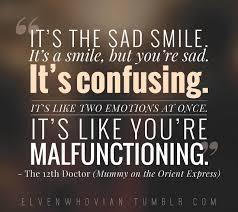
Reading this as someone with cerebral palsy I feel less responsible for how I feel, but I'm not sure that's a good thing.
@convivialPlum6966 it is true that you are not responsible for how you feel and it is really unfair what is happening to you. But that doesn't mean you cannot change it! I believe in you❤