How to Get People to Be More Civil

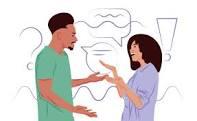
"If we want to make a positive difference in the world, it is difficult to go through our social lives with only light chatter. Sometimes we need to discuss serious topics, and this can get uncomfortable.
The trouble arises when we talk about important issues like climate change, health care, abortion, and so many more topics. It can happen when we talk to colleagues, friends, or family. Who hasn’t felt a sense of relief at the end of "awkward" conversations with someone who has very different views from us, during a party, family holiday, or work gathering?
We recently published research that suggests a subtle way in which we might be able to increase our own humility in debate and, perhaps, help the entire discussion have a more constructive tone. The technique is simple: Take a few minutes to consider the values that are important in your life, and then contemplate reasons why you cherish the value most dear to you.
In our experiment, we asked people to look at a list of human values (such as freedom, equality, wealth, family security) and to rate their importance. The participants then chose the value most important to them and wrote reasons why the value matters. In this way, participants had a chance to affirm the value and potentially build up a way to feel good about themselves in the face of any threats to their self-concept.
Groups of two or three participants were then invited into a room to debate an important topic, the use of tuition fees to pay for university education. An additional debator was an aid to the experimenter and was there simply to provoke debate from time to time. We recorded the 15-minute debate and later analysed each participant’s contribution to calculate an index of their humility in the debate. This index gave higher scores to participants who showed thoughtful engagement with points made along with less emphatic assertiveness and less indiscriminate agreement (which signals servility instead of humility).
We found that the simple value-affirmation task was effective in increasing the humility we coded from the discussions. Additionally, we found that participants felt more empathic and grateful when they reflected on their most important value. Prior research had found that this type of task can increase open-mindedness to ego-threatening information, but this new evidence suggested it could go as far as influencing actual discussion behavior.
For many years now, scholars have been worried that society is becoming increasingly polarized and that it's happening at the worst possible time—a time when we need people to agree on ways forward to tackle major challenges facing our world, our freedoms, and ways of life. There is no silver bullet, but values-affirmation may be one technique to include in our arsenal of methods. Rather than simply avoiding discussions because they might become stressful or upsetting, it may be time to build up our inner resources by thinking of what matters to us, and then dive straight in.
Of course, there are other ways which debates, even about controversial issues, might become more civil. For example, one important factor that contributes to perceptions of polarization in the first place is believing that people belonging to a disliked group have different values, beliefs, and personalities. However, in our previous research, we found that groups of people, such as women and men, people with different religious denominations, people from different countries, or people with different education levels, are substantially more similar than different in their values and beliefs. We also found that highlighting those similarities to people can increase their motivation to engage with each other and, as a recent large experiment found, reduce anti-democratic attitudes."
*I find it amazing how polarized our society is today. I really only have the perspective as an American, but our country is probably more polarized than it has ever been. It makes me sad because people put groups into these "boxes" and if you're in a certain box, then you are automatically associated with certain negative traits. Of course, there are people that fit these traits, but it's not fair to assume 100% of the people are like that. People become so wrapped up in their judgments that conversations can't even be civil anymore. People block each other on social media and will end friendships just because someone may associate with one side or the other. I really don't think this is fair and this polarization doesn't allow for any change to get done. I think we all need to be a little more accepting and understanding before judging each other based on one box that we may be labeled into. What are some ways we can practice empathy and kindness to those we may not always agree with?*
#Polarization #Empathy #Kindness
For the full article, please refer to Psychology Today!
If you liked this article, you may like this one!

@fruityPond7887
Good Topic....
i think the most important item in dealing with others is to not label or categorize them ....... focus on the in common themes regardless if you disagree on other topics etc.
most of the being uncivil is in how some try to lecture ............instead of discuss OR even entertain the possibility that both views may change .........
some avoid any discussion i feel as they are afraid their views may change and would feel like they must defend their original thoughts.
@toughTiger6481 I agree with you! I think people tend to dislike the person instead of disliking their views which isn't a good start to begin a conversation with someone. People always want to fight instead of calmly discussing a topic and why the other feels the way they do. Thanks for reading and replying! ❤️