A Boundless Path 💜

I will be writing about DBT and Buddhism and my mental health.
@SkillfullMeans
QuiteMagic, hello hope your are well. 😊
Yesterday I did not mean, translate for me.
I meant if you can't see it will you send me instructions on how to make it from written to text with google. I have been trying for about 15 min, trying to discover how this works! i cant find the instructions you already sent. 🙁
Don't spend your precious time on making these to texts unless you really want to. I appreciate all your help!
My other daughter suggests I take a class at the library on computer use. I think I will. A goal for winter... spend time learning this!


@SkillfullMeans
Sure, here's the post with the instructions:
https://www.7cups.com/forum/journal/General_2520/ABoundlessPath_364875/?post=3975483
Copy/pasting the instructions below:
1) Have a Google account of some kind
2) Go to https://aistudio.google.com/ and log in with your account
3) Confirm that "Gemini 2.5 Pro" is selected as the model
4) Attach the photo you took of the handwritten writing
5) Type in the chat window a message like "Hi, could you transcribe the text from this image?" and submit
@QuietMagic
Thanks! This looks alot more straight forward than what I was seeing. Will try tomorrow. 😊
@SkillfullMeans
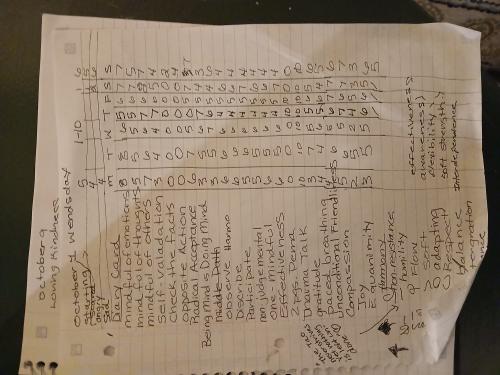
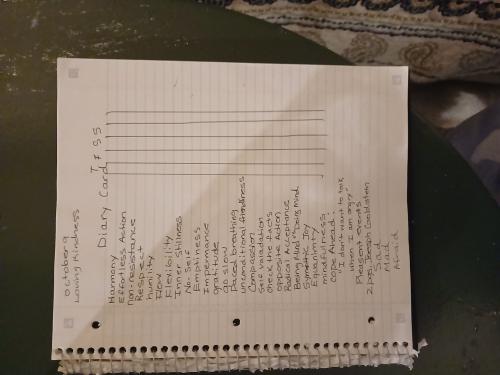
I did it! Thanks QuiteMagic!
@SkillfullMeans
Loving Kindness
1-10
TFSS
Diary Card
Harmony
Effortless Action
non-resistance
Respect
humility
Flow
Flexibility
Inner Stillness.
No. Seif
Emptiness
Impermance
gratitude
go slow
Paced breathing.
Unconditional friendliness
Compassion
Seif valadation
Check the facts
opposite Action
Radical Acceptance
Being Mind Doing Mind
Symathic Joy
Equanimty
mindfulness
cope Ahead:
"I don't want to talk when I am angry"
Pleasent events
5
2. pgs. Joesph Golstem
10
Sad
Mad
Afraid
@SkillfullMeans
Cool! And in general, if AI does something that you don't like, you can just tell it what you want it to do differently and it'll usually be able to do it
@QuietMagic
AI is pretty amazing. Thanks again!
@SkillfullMeans
Spirtual zealot or not my former diary card got way too complicated. I couldn't get though them all in in a.day!
I went down the list and they all can fall into into loving kindness or mindfulness. Buddhist talk about not getting enamored with these uplifting states. That is a stage you pass through on the path. Bliss states.
Equanimity is the goal for now. 🌷
these states fit
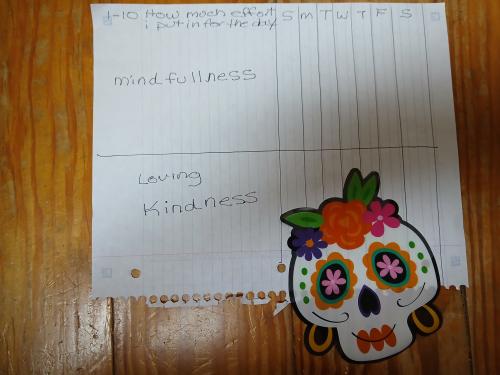
@SkillfullMeans
That looks so much easier to fill out 💜 And I guess if you find yourself wanting to remember all of the specific practices, you can back to one of your old cards for ideas
@SkillfullMeans
@QuiteMagic Hello 😊
How are you doing? What have you been up to? Something interesting I am.sure! 🐬
I put alot of chatgp stuff in here to rember what I am focusing on! I can look back and see if it.has been integrated. See if my experiment has worked. I am.sure you feel no pressure.to read it.or respond. I often skim.it.
I am learning practicing the Four Founadtions mindfulness. Do you know much about them? I did not. Started yesterday.
Chatgp
The Four Foundations of Mindfulness come from the Satipaṭṭhāna Sutta, one of the most important Buddhist texts on mindfulness. They describe the four areas to direct mindful attention to cultivate insight and liberation.
Here’s a clear, modern breakdown of each one:
🩶 1. Mindfulness of the Body (Kāyānupassanā)
Focus: Awareness of physical sensations, movements, and the body’s impermanence.
Practices include:
- Observing the breath (inhaling and exhaling with awareness).
- Noticing posture (walking, standing, sitting, lying down).
- Being aware of body sensations (heat, tension, relaxation).
- Reflecting on the body’s impermanent nature (aging, illness, death).
Purpose: Grounds awareness in the present and develops respect for the body as part of nature’s flow.
💛 2. Mindfulness of Feelings (Vedanānupassanā)
Focus: Observing feelings as they arise — pleasant, unpleasant, or neutral — without clinging or avoiding them.
Practices include:
- Noticing how experiences feel in the body and mind.
- Labeling feelings simply as pleasant, unpleasant, or neutral.
- Observing how feelings change and pass away.
Purpose: Helps reduce reactivity and builds emotional balance.
💙 3. Mindfulness of the Mind (Cittānupassanā)
Focus: Observing the quality of the mind itself — not thoughts, but the state of mind.
Practices include:
- Noting whether the mind is greedy or non-greedy, angry or peaceful, distracted or focused.
- Seeing thoughts and moods as mental events, not facts or self-definitions.
Purpose: Builds awareness of mental patterns, making it easier to respond wisely instead of automatically.
💜 4. Mindfulness of Mental Objects or Phenomena (Dhammānupassanā)
Focus: Observing the principles or teachings (dhammas) that shape experience — the mental processes and patterns.
Practices include:
- Observing the Five Hindrances (desire, aversion, sloth, restlessness, doubt).
- Reflecting on the Five Aggregates (form, feeling, perception, formations, consciousness).
- Seeing the Four Noble Truths in real experience — suffering, its cause, its end, and the path.
Purpose: Develops insight into the nature of reality — that everything is impermanent, unsatisfactory, and not-self.
🌿 In short:
Body — be present in sensations.
Feelings — notice how experiences feel.
Mind — recognize your current mental state.
Phenomena — observe deeper patterns and truths.
Would you like me to connect the Four Foundations to DBT mindfulness (like “observe, describe, participate” and “non-judgmental awareness”)? They align closely.
@SkillfullMeans
Perfect — the Four Foundations of Mindfulness and DBT mindfulness skills (developed by Marsha Linehan) are deeply connected. DBT actually drew inspiration from Buddhist mindfulness teachings like the Satipaṭṭhāna Sutta, but translated them into psychological language for therapy and daily life.
Here’s how they align:
🩶 1. Mindfulness of the Body ↔️ DBT’s “Observe” Skill
Buddhist view:
Be aware of the body — breathing, posture, sensations — without clinging or aversion.
DBT version:
“Observe — just notice what’s happening, inside and outside your body.”
Examples:
- Feeling your breath move in and out.
- Noticing muscle tension or heartbeat.
- Observing hunger, tiredness, or movement.
Shared purpose: Grounding awareness in the present, connecting you to the here-and-now before thoughts take over.
💛 2. Mindfulness of Feelings (Vedanā) ↔️ DBT’s “Describe” Skill
Buddhist view:
Notice feelings as pleasant, unpleasant, or neutral — without judgment or identification.
DBT version:
“Describe — put words to your experience without labeling it good or bad.”
Examples:
- “I notice an unpleasant tightness in my chest.”
- “This feels pleasant warmth.”
Shared purpose: Helps you name emotions and sensations without becoming them — reducing reactivity and building emotional regulation.
💙 3. Mindfulness of Mind (Citta) ↔️ DBT’s “Participate” + “One-Mindfully”
Buddhist view:
Observe the quality of mind — is it clear or confused, calm or restless, greedy or content?
DBT version:
“Participate — fully engage in the moment with awareness.”
“Do one thing at a time, with your whole attention.”
Examples:
- When you’re walking, just walk.
- When you’re listening, just listen.
Shared purpose: Develops awareness of mental states and encourages wise, wholehearted engagement rather than distraction or autopilot.
💜 4. Mindfulness of Mental Objects (Dhammas) ↔️ DBT’s “Non-judgmental” + “Effective” Mindfulness
Buddhist view:
Observe the mental patterns that cause suffering (like craving, aversion, or confusion). See them as temporary processes — not who you are.
DBT version:
“Non-judgmentally — see, but don’t evaluate.”
“Effectively — focus on what works, not what’s right or wrong.”
Examples:
- “A judgmental thought is arising — I can let it pass.”
- “Instead of criticizing myself, what would be effective right now?”
Shared purpose: Builds insight and compassion. You stop identifying with thoughts and emotions and start acting from Wise Mind — the integration of rational and emotional awareness.
🪷 Summary Chart
| Buddhist Foundation | DBT Skill | Focus |
|---|---|---|
| Body | Observe | Awareness of sensations and breath |
| Feelings | Describe | Label experience without judgment |
| Mind | Participate / One-Mindfully | Fully engage with awareness |
| Mental Objects | Non-judgmental / Effective | See patterns and act wisely |
Both systems aim for the same outcome:
To live with clarity, balance, and compassion, responding to life rather than reacting to it.
Would you like me to show how to practice the Four Foundations + DBT skills together in a short daily routine or meditation?
@SkillfullMeans
Hey, please make sure to type my username correctly if you want me to receive tag notifications! If you try to tag me in a thread I'm not already subscribed to and my username isn't spelled correctly, I won't receive any notifications, and I'll have no idea you're trying to tag me.
Wrong: QuiteMagic
Right: QuietMagic
***
I'm doing good. 😊 Weekends tend to be the busiest days of the week for me--lots of scheduled chats with people plus chores. I'm currently just working on trying to solidify my daily routines.
I'm not super-familiar with the Four Foundations (or Joseph Goldstein) but I've vaguely heard of both before. It's cool that ChatGPT was able to not only describe the purpose of each foundation but come up with analogies to DBT.
@QuietMagic
HI, so sorry about the wrong.name! I'll double check now. That had to be a pain while your busy.☹️ yes getting the routine in place is the hard work, then can sail along.
Take care 🙂
@SkillfullMeans
Thanks, I appreciate it! Yeah, it would just be a shame if you're trying to tag me to help someone else, I'd be thrilled to get tagged and eager to respond, but then I never see it. Would feel like a wasted opportunity. 💜
@SkillfullMeans
Maraha inspired 💥
Value: enlightment
Goal: learn and live Noble eightfold.path
Goal: be in a state of mindfulness much of the day.
Read, study practice. " Mindfulness A practical guide to awakening" finish in one month
1. Go through and read a chapter.
2. Go back and underline technical stuff or important things.
3. Go back and contemplate it.
4. Try it out.
5. Practice if it beneficial 🌸
6. Use journal as mindfulness diary. Writing in it everyday.
@SkillfullMeans
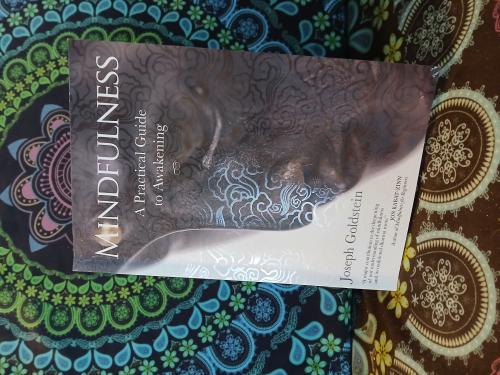
1st day of mindfulness and loving kindness.
Reading the book then practicing worked really well. Did that alot of the day. Keeps motivation going and keeps it interesting.
Book was talking about mindfulness of the Body. Inside and out. That went super well. Could stay focused.
Also did alot of paying attention to the breathe.
Only used loving kindness a.couple of times when I was.getting dull.
🐸
7 cups
I have been trying not to give advice or make it about me, I am having trouble. I worked in crises primarily and no time. Just used those short cuts. Looked at alternatives to that on chatgp. Will keep learning and practicing.