Conversation: Struggling with positive thinking? Research shows grumpy moods can actually be useful

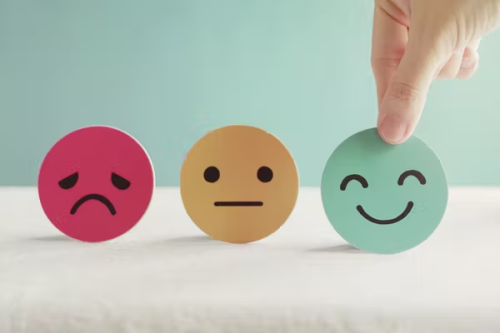
“As psychiatry, which uses medical and biological methods to treat mental disorders, has largely overtaken psychotherapy, which relies on non-biological approaches such as conversation and counseling, psychotherapists have sought alternative challenges. One common approach is to focus on enhancing the happiness of mentally healthy people, rather than relieving the mental pain and trauma of those who are suffering.
This is known as “positive psychology” and has recently expanded to accommodate not only psychologists but also social workers, life coaches, and new-age therapists. But there is evidence to suggest the approach has a negative side.
Perhaps the most common advice made by positive psychologists is that we should seize the day and live in the moment. Doing so helps us be more positive and avoid three of the most infamous emotional states, which I call the RAW emotions: regret, anger, and worry. Ultimately, it suggests that we avoid focusing too much on regrets and anger about the past, or worries about the future.
It sounds like an easy task. But human psychology is evolutionarily hard-wired to live in the past and the future. Other species have instincts and reflexes to help with their survival, but human survival relies very much on learning and planning. You can’t learn without living in the past, and you can’t plan without living in the future.
Regret, for example, which can make us suffer by reflecting on the past, is an indispensable mental mechanism for learning from one’s own mistakes to avoid repeating them.
Worries about the future are likewise essential to motivate us to do something that is somewhat unpleasant today but can create gain or spare us a greater loss in the future. If we didn’t worry about the future at all, we may not even bother with acquiring an education, take responsibility for our health or store food.
Like regret and worries, anger is an instrumental emotion, which my co-authors and I have shown in several research papers. It protects us against being abused by others and motivates people around us to respect our interests. Research has even shown that a certain degree of anger in negotiations can be helpful, leading to better outcomes.
What’s more, research has shown negative moods in general can be quite useful – making us less gullible and more sceptical. Studies have estimated that a whopping 80% of people in the west in fact have an optimism bias, which means we learn more from positive experiences than from negative ones. This can lead to some poorly thought-out decisions, such as putting all our funds into a project with little chance of success.
For example, optimism bias is linked to overconfidence – believing we are generally better than others at most things, from driving to grammar. Overconfidence can become a problem in relationships (where a bit of humility can save the day). It can also make us fail to prepare properly for a difficult task – and blame others when we ultimately fail.
And then comes the question of whether happiness is really the most important value in life. Is it even something stable that can last over time? The answer to these questions were given more than a hundred years ago by the American philosopher Ralph Waldo Emerson: “The purpose of life is not to be happy. It is to be useful, to be honorable, to be compassionate, to have it make some difference that you have lived and lived well.”
Read the whole article here
#Optimism #Emotions #Well-being
💬 Is being happy central to your life? What is the most important value for you?

@globalBraid3744
Quite a thought-provoking article, Braid. Thankyouu for sharing. ❤
Indeed most of us often see certain emotions in a bad light only, it does sound helpful to put a positive focus on them and to be more accepting of the same. I do feel it is rather situation specific though, what is the emotion we are feeling at a given point in time, what is trying to tell us, how is it impacting us and those around, and then to try "see in a positive light" thing harder. ❤
I could specially relate with the worry part, we indeed worry more when we care more and care for the things that matter in life, is good, I think. Minus the over-worry or simply put, over-anything lol. That's where things go south ooof!
Alsooo thankyou for giving me my new favorite quote, “The purpose of life is not to be happy. It is to be useful, to be honorable, to be compassionate, to have it make some difference that you have lived and lived well.” ❤ love it tooo much!
Happiness is not superrrr central to my life, I feel, it's mostly peace of mind at this time for me. 😮❤ How about you?