‘Depression Rooms’ and ‘Doom Piles’: Why Clearing the Clutter Can Feel Impossible

"The term “depression room” is relatively new. But experts have long recognized the link between messiness and mental health. The clutter that can accumulate when people are experiencing a mental health crisis is neither a form of hoarding, nor the result of laziness. The culprit is extreme fatigue, said N. Brad Schmidt, a distinguished research professor of psychology at Florida State University.
People are “oftentimes just so mentally and physically exhausted that they don’t feel like they have the energy to take care of themselves or their surroundings,” Dr. Schmidt said. “They just don’t have the capacity to engage with housecleaning and upkeep that they probably once did.”
A messy home can also contribute to feelings of overwhelm, stress and shame, making you feel worse than you already do. And while decluttering will not cure your depression, it can give you a mood boost.
If you are struggling and it feels impossible to keep your surroundings tidy, here are a few tips on how to clean strategically to optimize your energy and your space.
- Focus on function, not aesthetics
For KC Davis, a licensed professional counselor her clutter problem ballooned when her second child was born in early 2020. “I’ve always been a messy person,” she said, “but it’s always been functional.” Suddenly faced with a new baby, postpartum depression and a pandemic, Ms. Davis realized that, without any systems in place, she was in over her head.
One of her most popular strategies is “five things tidying,” the idea that there are only five things in any room: trash, dishes, laundry, things with a place and things without a place. Focusing on one category at a time keeps her from getting overwhelmed when it seems like there are a hundred different items that need to be put away.
Ms. Davis is also a big advocate for what she calls “closing duties.” She often doesn’t have the energy to clean her whole kitchen every evening, so she started doing just a few small tasks.
“I came away from this idea that it had to be all or nothing and just started thinking about function” when it came to cleaning, she said. “When I think about ‘What do I need in the morning?’ all of the sudden I can get specific.” She makes sure she has enough clean dishes and counter space so that she can make breakfast, empties the trash and sweeps up any crumbs. “What feels like this big, unending task is actually just 20 minutes of my day,” she said.
For people who are really struggling, Ms. Davis emphasized that things can be unsightly but shouldn’t be unsanitary because everyone “deserves to be clean and comfortable.” If you don’t have the energy to wash all your dishes, clean just one or two for your next meal, or use paper plates. If laundry involves too many steps, don’t worry about folding; wrinkles never hurt anybody.
- Make your home work better for you
People who are neurodivergent, with attention deficit hyperactivity disorder (A.D.H.D.), autism or other executive functioning issues, also often struggle with excess clutter. Like “depression rooms,” the term “doom piles” has become popular on social media to describe the random stuff that builds up and you don’t know what to do with. Nearly everyone has a junk drawer or two in their home, but these piles of clutter tend to be more ubiquitous for people who struggle with executive functioning.
Lenore Brooks is an interior designer who specializes in working with people who are neurodivergent.
Much of Ms. Brooks’s work revolves around helping her clients deal with seemingly endless clutter; they feel like they’re constantly cleaning, but the clutter is always there. People with A.D.H.D. especially struggle with this because, she said, “it’s almost like decision fatigue all the time. ‘I can’t decide what to do with it, so I’m just not going to do anything with it.’”
The first step, Ms. Brooks said, is to really pay attention to the items that you’re frequently cleaning up. Then find better places for them to live. “What I talk to my clients about a lot is systems,” she said. “Figuring out why things are where they are, why clutter is building up where it is, and then changing the design or the organization around how people are actually using their home.”
These changes can be simple. For instance, if you find yourself constantly removing pens from your living-room couch cushions and coffee table, think about designating a spot to keep the pens in the room where you’re actually using them. For a client whose home office was always filled with dirty dishes, Ms. Brooks got her a tray that she could load her tea and snack paraphernalia onto and return to the kitchen at the end of every day.
- Stop the problem before it starts
Once your space is cleanish and relatively decluttered, try to take a few minutes each day to keep it that way. Ms. Davis recommended setting a timer for five or 10 minutes and getting as much taken care of as you can during that time. “I tell myself, I don’t have to finish this task, but I’m going to get up for eight minutes and do it,” she said. “I’m usually surprised at how much I can get done.”
And remember, it’s normal to have some clutter in your home. The TV remote, your glasses, mail you need to sort, an art project you’re working on: “They are the signs of life in your home,” Ms. Brooks said."
Read the full article on The New York Times

✨Takeaway: Extreme fatigue is often the reason behind clutter for people with mental health problems, not laziness or hoarding. Experts advise concentrating on function, mindfully organizing, and preventing difficulties before they materialize.
✨Reflection: Have you ever struggled with keeping your space clean due to mental health?
#MentalHealth #Depression #Fatigue #Clean #Health #Wellness
-

@innateJoy9602
Oh yes there definitely is quite a strong link amongst the two. It feels rather impossible at times to gather the will to move let alone clean or tidy things up, almost metaphorical how the "doom" keeps piling be it physically, around us or mentally, in our mind. :o
Little steps count here also, something like making your own bed every morning holds a lot of power too. I find this quote really helpful here:
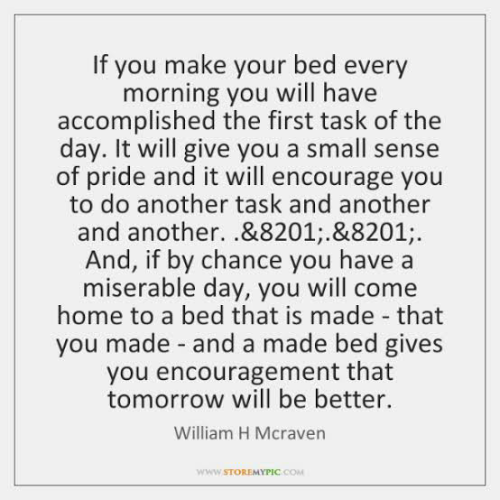
On most off-ish days, I try doing "atleast" this, still a struggle, but does work, I feel. ❤
Thankyou for sharing, Joy!💛
@Sunisshiningandsoareyou
Little steps do go a long way!
A task like doing your bed can already start the day productively and give you an accomplishment to be proud of.
This is a great suggestion.
Thanks for reading and sharing Sun!!💜
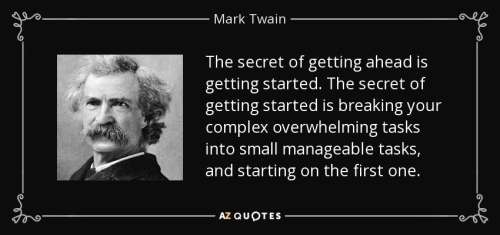
@innateJoy9602 It is, thankyouu, lovely!💜
It's an amazing quote and a helpful advice for sure!🌻