Psychology Today: 3 Ways to Incorporate a Sense of Bliss Into Your Life

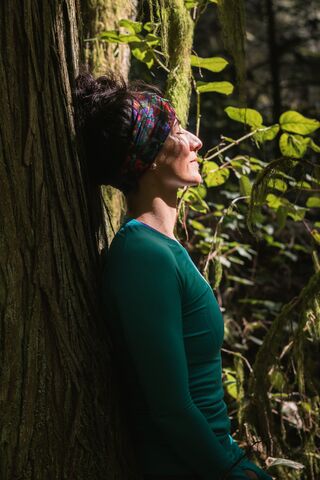
"A new study published in the Journal of Positive Psychology introduces a new concept in mental health inspired by Buddhist philosophy. This concept, termed "caring for bliss," consists of practices that cultivate sukha, or a state of unlimited, everlasting inner joy induced by a peaceful state of mind and a compassionate heart.
“The first and most important thing about bliss is that we must recognize in our everyday life that there is no unrealized condition—like a perfect job or a dream house—that has to be attained before we can be happy, but that happiness inside of us is always possible,” explains lead author, psychologist Myriam Rudaz of Florida State University.
To study bliss and its effects on well-being, Rudaz and her collaborator Thomas Ledermann used data from 638 college students. According to Rudaz, students face many new challenges and are particularly vulnerable to experiencing mental health issues.
“Although emerging adulthood is a positive experience for most, this stage of life is also turbulent with challenges, such as identity explorations and, for college-attending emerging adults, academic demands, leaving many vulnerable to stress and mental disorders,” clarifies Rudaz. “So, we thought this would be an interesting population to study.”
The researchers measured bliss on the basis of four main criteria:
- Finding happiness in the moment
- Finding happiness within oneself
- Appreciating what one has
- Following one’s deepest desires
They also examined a range of other emotional experiences students’ reported having, such as self-compassion, mindfulness, and depression.
They found that:
- Bliss enhanced self-compassion
- Bliss buffered the effect of low mindfulness on depressive symptoms
According to the study, emerging adulthood is a great time to start developing practices or behaviors to cultivate inner joy which could strengthen well-being and have positive effects on one’s abilities of self-compassion and mindfulness.
According to Rudaz, anyone can start this by introducing small exercises and mindset changes in their everyday lives like:
- Generating feelings of happiness in the here and now. Rudaz recommends becoming more mindful of the wonders of life that are always present, such as the blue sky, the trees, or the smile of a child.
- Taking time to acknowledge the things we are grateful for. Rudaz quotes Buddhist leader Thich Nhat Hanh to explain this point: “When we have a toothache, we would be happy not having a toothache, but as soon as we do not have the toothache, we do not treasure the non-toothache.”
- Listening deeply to the voice of our hearts. It is important to ask ourselves what we want to do in this life and whether this will make us truly happy. Oftentimes, the reason for our unhappiness is not that we are not doing anything; it is that we are not doing what we want.
“The Buddhist tradition of sukha talks about a true or genuine happiness that is lasting and, unlike pleasure, does not depend on specific times, places, and circumstances—and therefore gives people the inner resources to deal with the ups and downs of life,” says Rudaz. “It is my hope that future studies will continue to creatively integrate and explore the concept of caring for bliss and its impact on well-being.”"
*I think being able to be happy without the need for material possessions is something we all need to learn on our own terms. Practicing gratitude and being happy in the present are great ways to learn how to be happy with just internal resources. Like the author mentioned above, when we have a toothache, we aren't happy about it. But as soon as it goes away, we don't practice gratitude that it's gone. That's something that I definitely like to work on. I sometimes get migraines and they are the worst thing in the world to me, so after I get through one, I am so grateful that I feel better. I try to take this and apply it to the small things, like "I'm happy it's not raining like yesterday" or "I am happy I have a job to go to." It's little things like this that can help bring about more bliss into your life!*
What kinds of things do you do to encourage more bliss to enter your life?
#Bliss #Gratitude #Happiness
Read the full article here! ⭐️

@fruityPond7887
Aww this is such a sweet read, thankyou for sharing, Pond. You have the eye for amazing things lol. :P 💛
It seems haaaaaard to feel happy or try to practice gratitude when we are struggling with something, however, I'm slowly getting to agree on the fact that life is a series of just these moments lol, the struggling ones and then we need to make use of those little intervals in between and find something to rejoice for, find Bliss? And yes yes, it is haaarder to find something happy in these testing times specially, so we can always try to create it for ourselves, smallest of things that will have to make-do. ❤
I feel nature alone has so many things we can practice gratitude for, it's nice to see flowers blooming, hear the birds chirping, feel the breezy air, gaze at the flowing river and the list goes on. All such calming experiences that personify the word tranquil for me. 💛
@Sunisshiningandsoareyou Sun, you're always the sweetest person ever! Thank you! You're totally right. No matter how much we try, there will always be struggles and I think that's what makes us human. It's how we react to those moments that matters. Life has been so hard recently with everything going on and it's okay that people are angry or frustrated! I think we all are at least a little bit! Those feelings are to be expected! You're so right. The beach is my go-to <3
@fruityPond7887
💛 *hugssss tightttt* 💛
FruityBeach is that youuu? 😛 haha beach is a lovely place to be at!
@Sunisshiningandsoareyou Hahaha that should've been my name 🌊 Thank you for the huuugs ❤️

@fruityPond7887 Whenever I think about my friends and family, I feel a lot of bliss. I'm so grateful for them. Thanks for sharing this wonderful article!
@comfortableNight4463 I am the same way! It's hard for me sometimes though, because I feel that with loving people, you are prone to be disappointed sometimes and then I feel very alone. But that's the beauty of loving others ❤️
@fruityPond7887 Exactly. It's a fine line of love and disappointment.