The Powerful Psychology of Cuteness
KEY POINTS
- When we find something cute we may experience a distinct emotion.
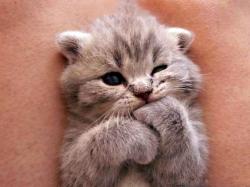
- Cute beings, like infants and kittens, activate the parental care system.
- The parental care system affects a wide range of psychological and behavioral inclinations, from interest in casual sex to our political views.
What Makes Something Cute?
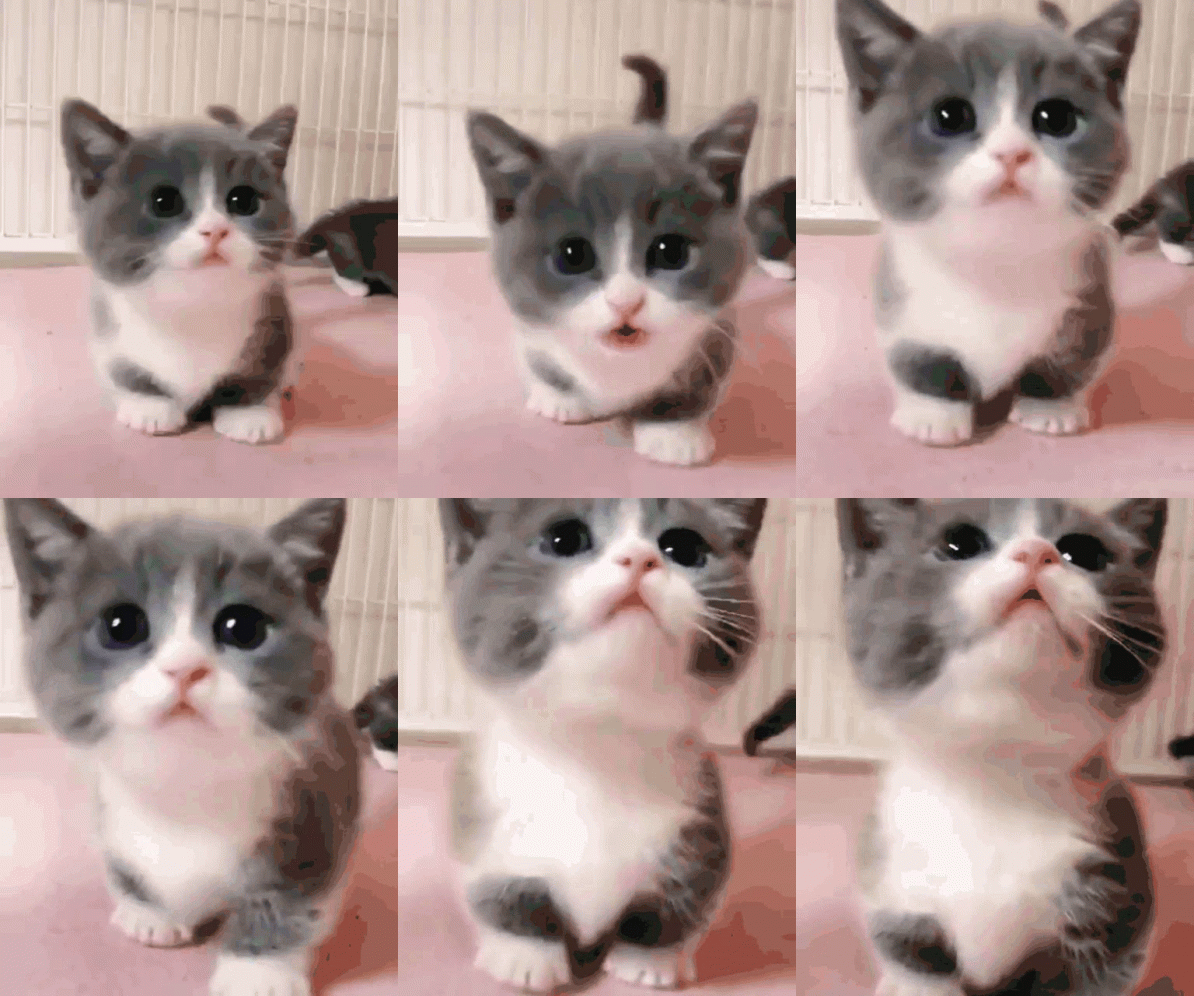
But let’s step back a second. What makes something “cute?" Drawing on work by Konrad Lorenz (1943), O’Neil tells us that “soft, rounded features; small, tightly clustered nose and mouth; high forehead and large cheeks; large eyes; short, stubby limbs; physical clumsiness; and inability to reach one’s goals,” are all features that lead us to perceive someone or something as cute. So, if we think about babies, toddlers, puppies, kittens, baby Yoda, and little delivery robots that are scared to cross the street, we start to see a pattern. They all possess what Lorenz described as kindenschema. And as O’Neil and Shiota note, the stronger the kindenschema, the cuter the kid, puppy, or robot (O’Neil, et al., 2022).
Why Does Cuteness Matter?
It turns out that when we find someone cute, it makes us want to help, protect, and nurture them (Kringelbach, et al., 2016). Evolution appears to have programmed us to respond in these ways, likely because it increases the odds that our children will survive and thus continue to pass on our genes (O’Neil, Danvers, & Shiota, 2018). In fact, we might think about being cute as a kind of superpower that babies (or puppies) possess — a power that helps them secure protection, food, and other resources from caregivers.
This cuteness response is part of a broader suite of psychological and behavioral tendencies which have been dubbed the parental care system (Kenrick, et al., 2010; Schaller, 2018). Interestingly, research involving over 15,000 people in 42 societies found that this is typically one of the strongest motivations people possess (Ko, et al., 2020; Pick, et al., 2022a). It’s stronger that our motivation to avoid infectious disease, gain status, or find new mates. And during the pandemic, it appears to have actually gotten stronger (Pick, et al., 2022b).
Beyond driving us to be nurturing and protective toward those we find cute, this system also causes us to avoid taking risks, reduces our trust in strangers, and makes us less interested in seeking out one-night stands (Schaller, 2018). All of these psychological effects arguably increase the odds that we will invest in children and keep them safe. This parental care motivation also appears to affect our political preferences. In countries ranging from Australia to Lebanon, a recent study found that the higher people were on this motivation, the more politically conservative they tended to be (Kerry, et al., 2022). Experimentally inducing this motivation has a similar impact on people’s political attitudes (Kerry, et al., 2022). And these kinds of effects don’t appear to be confined to people who are themselves parents, any more than they are confined to responses to our own children, or even to human children (Schaller, 2018).
So, the next time you come across an adorable infant, or a cuddly puppy, aside from that warm sweet feeling, you are probably also experiencing shifts in a wide range of goals, attitudes, and ways of perceiving others and the world around you.

@professionalVision2624
Awww this is the cutest cat! 🥰
I'm unsure how to describe the emotions lol, it just feels like "omigoodness this is unreal my heart is gonna burst out of happinesss" and also "I'll just cry because how else to express this immensely great-feeling" and somewhere in between lol! 🥺🥰🤧
@Sunisshiningandsoareyou
Aww that's wonderful! I'm happy you found the post aswell as the cute kitty intersting! Hahah yes I agree with you, I usually get flooded with a multitude of emotions when I see something cute