Verywell Mind - How Nature Therapy Helps Your Mental Health
“What Is Nature Therapy?
Nature therapy, which is also called ecotherapy, is based on the concept of using nature to help us heal, especially psychologically. Instead of spending time enjoying and benefiting from the natural environment, we are spending more and more time on screens and online.
Green and Blue Therapy
You might hear nature therapy called "green care," "green exercise," or "green therapy." That is because its powerful benefit lies in spending time in green spaces.
But nature therapy also includes time spent near soothing blue oceans, blue rivers, and blue lakes. Being near aquatic environments has a psychologically restorative effect. It puts us in good moods. The color blue also represents calm and tranquility.
The Blue Health project is an organization that has conducted studies about the relationship between blue spaces and health in 18 countries across Europe. After surveying 18,000 people, researchers discovered that people feel better being near waterways.
In fact, evidence showed a positive association between more exposure to outdoor blue spaces and health, particularly in terms of benefits to mental health and well-being.1 So, researchers have expanded their notion of ecotherapy to include blue spaces as well.
Nature Therapy’s Various Approaches
A host of nature-based therapeutic programs are available to you. There are relaxed approaches like gardening in the backyard, walking in a field of flowers, or floating on a tube in the river.
Nature therapy or ecotherapy can also encompass activities or therapies in which you are formally guided by therapists and trained leaders, too.
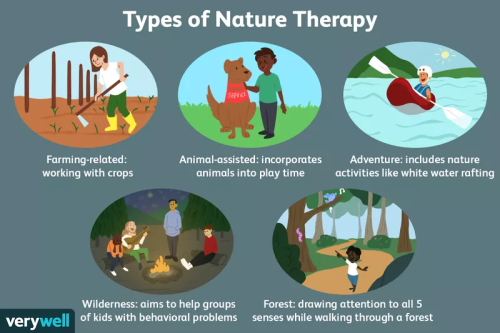
Here are some more formalized types of nature therapies:
- Farming-related therapy, which could involve working with crops, often in a community
- Animal-assisted therapy, which might consist of playing with or training horses or dogs
- Adventure therapy, which may feature white water rafting or rock climbing
- Wilderness therapy, which often helps groups of teens and young adults with behavioral issues
- Forest therapy, also called forest bathing, is a mindful practice in which you use your five senses as you walk through a forest
The Benefits of Being in Nature
What science is showing is that we can reap the healing powers of Mother Nature and gain a host of mental health benefits. The question is are we partaking in what might be an easy, cost-effective solution to our problems?
The latest research in psychology is furthering our knowledge about how spending time in nature is a low-cost and highly effective way to improve various aspects of our psychological wellness.
How to Bring Nature Indoors
Due to socio-economic reasons, not every group has easy access to green or blue spaces. Furthermore, during inclement weather and cold winter months, even those with the means might not choose to luxuriate in nature. The appeal of a stroll by a river or hike through a nature reserve may not be there.
If you have limited time or access, perhaps an intense work schedule, or are just not comfortable spending prolonged periods of time in the cold, you can still access nature conveniently.
How do we bring nature’s benefits inside when we are confined to our homes and workplaces? Here are some easy ways:
- Add plants. They not only remove toxins from the air, but research shows that people who spend time around plants have more concern, empathy, and compassion toward others as well as improved relationships.5
- Decorate with paintings or photographs of nature. Choose pretty landscapes, lush gardens, or natural scenes. In yet another study about the health benefits of nature, researchers found that viewing lovely green scenes resulted in the participants having lower stress levels.6
-
Use soundscapes and download apps of soothing nature sounds. Don’t underestimate the power of listening to a waterfall or the sound of rain. The result isn’t just enhanced relaxation and a sense of chilling out. Results also include attention restoration and better cognitive performance. In one particular study published in Psychonomic Bulletin & Review participants who listened to nature’s sounds, specifically that of the ocean’s waves and chirping crickets, performed better on tests than their counterparts who listened to urban sounds like traffic and car horns.
”
Read the complete article here
How often you do you spend time in nature? Does it help you? DO you think you should increase your time spent in greenery?
#MentalHealth #Therapy #NatureTherapy #GreenBlueTherapy
-

@zealousGrace5023
Nature is truly the free and most accessible forms of therapy and recreation out there. Combine with a little exercise (such as walking or hiking), it can prove a viable substitute to keep your mental and physical health in check. I really should start going out a lot more, I used to adore either night beach walks or early morning beach walks. Hearing the ocean waves was very therapeutic.
@sunnyWriting4806 it really is the best
especially for people who may not benefit as much from talk therapy

@zealousGrace5023-= thank you for this post. My life is almost exclusively outdoors in nature with horses and my dog. Feel very blessed to have this lifestyle, definately not easy. Just walked my two horses back to the barn in a cold blowing wind. Incorporate them teaching children informally about horse behavior and language. So crucial in today's world of computer technology replacing old fashioned time outside.
@barncat ooh wow that's so cool!
I love horsies they're wonderful
and absolutely
As great as technology can be it cant replace the benefits of mother nature itself
@zealousGrace5023
Nowadays there are so many different types of therapy! I have not heard of ecotherapy before but I would love to try it.
How often do you spend time in nature? Does it help you? DO you think you should increase your time spent in greenery?
Spending time in nature helps me to feel better. However, I don´t often find time to go outside when I feel I have too much work and I neglect it. I should definitely dedicate more time to going to nature.
@globalBraid3744 i hadn't heard of it either so this article was a fun read
i relate
day to day life can be so hectic and tiring we forget small things that are so important