"You Are Safe."

Hello everybody! My life is pretty trauma-focused lately because of a promotion that I really want to get for my job. While I was preparing my application, I remembered a *** post I made a couple years ago, and I thought I would share. Here it is!:
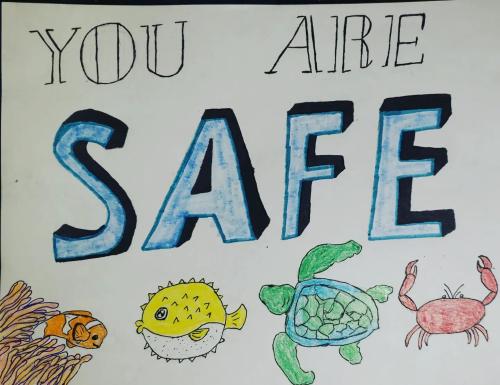
Oh I wanna show you an old *** post I made when I was at my old job. I created a sign that says "you are safe" and included drawings of a clownfish in an anemone, an turtle, and a crab with big pinchers and then wrote this to go along with it: One of the biggest (if not the biggest) needs of the traumatized person is the ability to feel safe. After spending (oftentimes a lot of) time in true fight-or-flight mode, we have a hard time coming down from the level of hypervigilance that we needed to survive our traumatic experiences. This includes not only the typically thought of jumpiness, but emotional hypervigilance as well. Someone might seem "overly sensitive" but the more accurate way of looking at it is that they are highly skilled at recognizing possible threats and protecting themselves from people who would or can hurt them, just sometimes in places where we are mistaken. It takes a lot of time and practice to teach the damaged amygdala that it doesn't have a constant need to be on guard. Being in "survival mode" can easily become the default, especially for those with chronic or complex trauma. The traumatized can be easily "triggered" by something that might not seem like a big deal to the person they are interacting with, but no one has a strong reaction to something for no reason. There is always an element from our trauma that we recognize and perceive as a threat. In this situation, it isn't big, but during our trauma it was. The child who has learned to look for the smallest change in facial expressions and to view those changes as a warning of danger does not just "grow out" of that skill for survival, rather they grow up and carry that weight with them, usually on a subconscious level. It's important to look for the possibility of a behavior or a reaction coming from a place of survival. What could this person have experienced that would teach them to act this way? To have a healthy relationship with someone who is dealing with trauma the number one priority is showing them that they are safe with you. Show them that you care about their feelings and not that you view them as irrational. Pay attention to what triggers them and try to avoid those things or behaviors. Tell them they are safe. Help them stay grounded in the present. That way, they won't feel the need to isolate in a place they control, bring out their prickly attitude, stay in their shell, or bare their claws.

@Lonnie great post and everything you said is so very true 💖 a little understanding and patients can really help someone in healing💖 thank you for sharing this with us all, hopefully it will open a few people's eyes 💖 gives you a giant tiny hug 💗