Strategies to Deal with Stress
Goal
To learn healthy methods to combat stress
 Identifying Stress Level
One of the first things to do to deal with stress is to know your level of stress. Awareness is the key. Be aware of what your stress triggers are and how susceptible you are to stress.
Identifying Stress Level Exercise (NHS Choices, 2013)
Instructions: Complete the below questionnaire to determine if you are experiencing too much work-related stress:
1. How do you manage your time at work?
2. When something is going to change at work, what happens?
3. How do you get on with your boss or supervisor?
4. How do you get on with the people you work with?
5. Are any of the following causing you problems? (You can pick more than one)
6. Which of the following best describes how you feel about your role at work?
7. Do you worry about any of the following? You can pick more than one.
Scoring Instructions:0-3 points We all experience pressure on a daily basis and your responses today suggest that with the help of your employer you’re managing that pressure well. If you do start to face stressful problems at work, it’s always good to speak to your boss or supervisor to stop them from becoming a bigger problem and improve the workplace for everyone. 3-9 points We all experience pressure on a daily basis but your responses today suggest that some areas of your work could be improved to avoid any unnecessary stress. 9-20 points We all experience pressure on a daily basis but your responses today suggest you may be experiencing more than healthy pressure at work. To improve the situation before it gets worse, it’s important to speak to your boss, supervisor, trade union or HR department about the issues that you face. |
Coping with Stress (American Psychological Association, 2013)
There are unhealthy and healthy ways of coping with stress. Some people may use unhealthy coping mechanisms such as substance use, poor diet, or angry outbursts towards family members or coworkers. Here are few tips on healthy ways of coping with stress:
Better time management: Keep a notebook or to-do list on your computer. See below for an example. Prioritize the most important to the least important tasks. This will help you be efficient with the time you have and not worry about forgetting important appointments or deadlines. This will also help you be more focused on the tasks.
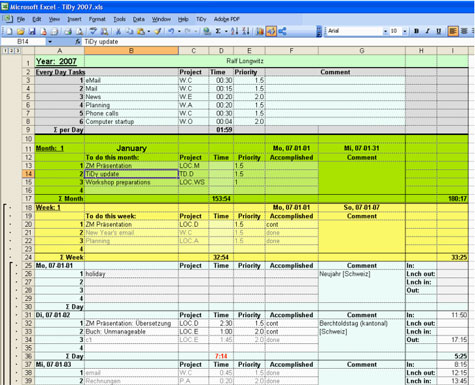
- Self-Care: This may be a popular word but it is often overlooked or the first to be discarded when work starts piling up and you feel overwhelmed. It is important to rejuvenate from time to time. Here are some suggestions for how to incorporate self-care into your life:
- Tune out from internet and phone at certain time each day/week
- Do something you enjoy everyday
- Exercise
- Set boundaries between work and your personal life
- Read a book you have always been meaning to
- Have a candlelight dinner
- Go for a walk
- Take a bubble bath
- Listen to your favorite songs
- Eat healthy foods
- Get adequate sleep
- Stay hydrated, drinking plenty of water
- Take Short Breaks: Sometimes taking a power nap or stretching and deep breathing will help reduce the building tension. In the next chapter relaxation exercises will be explained and shorter versions can be practiced even at your desk. Taking few minute breaks between tasks may help you change your focus to the next task. Lunch break is meant to be a break, so step aside from your desk to provide a mental break from working. Rest increases productivity.
- Change Unhealthy Habits: Just as habits are learned and formed, they can be unlearned. If you are engaging in unhealthy coping strategies such as unhealthy eating habits, smoking or drinking alcohol, or focusing on negative thoughts replace them with healthier habits. Find a partner or a support group if certain habits have been more challenging to incorporate such as better eating habits, exercise, quitting smoking, etc. Do not be discouraged if habits take longer to change. Just focus on one behavior at a time and take it slow. Some behaviors may require more professional help for change to occur such as group therapy or individual therapy run by licensed psychologists.
- Seek Out Social Support: This may be a struggle for people who tend to isolate themselves when they are feeling overwhelmed. Having the support of friends, family, and religious groups can boost your ability to deal with stress. Sometimes just talking to a friend over a cup of tea just helps alleviate some of the tension. Also, work places may have resources and information on how to manage stress.
- Ask for Professional Support: Sometimes use of strategies may not help manage stress or change unhealthy behaviors and you may need to seek mental health professional help.
Next Step
This website can help you to determine your likelihood of experiencing stress: http://www.healthcentral.com/sleep-disorders/stress-test-3454-143.html