Mindfulness
Goal
To be able to reduce stress by being in the present moment
What is Mindfulness? (NHS Foundation Trust, n.d.)
 Mindfulness means being present to the here and now in a non-judgmental way. This means that one does not analyze or try to change the situation, rather they accept it for what it is in that moment. Many times we get stressed trying to change or negatively evaluating a situation. Mindfulness exercises help you focus your attention, be fully present, and ultimately help you deal with your stress and anxiety. Many of the exercises can be learned easily through audio recordings or even finding videos on YouTube. Examples of exercises that you can engage in to practice mindfulness and relieve stress symptoms include body scanning, meditating, and being mindful in everyday tasks.
Learn more about how mindfulness is effective in dealing with stress and anxiety by watching the following video:
Body Scanning
Body scanning is similar to progressive muscle relaxation in that it helps you pay attention to sensations in different parts of your body. All you need is to find a quiet place where you can lay down or sit comfortably without any distractions. Here is a guided body scan exercise:
Sitting Meditations
The goal of sitting meditations is to focus on breathing, learn how to nonjudgmentally notice any thoughts that may come across your mind, and gently bring your focus back to your breathing. Do not worry if you find your mind wandering. This exercise takes practice. You can practice these for 5, 20, or 40 minutes. It is something you can practice easily at your work desk. Here is a video clip of a meditation script:
Mindful Tasks
Doing tasks mindfully refers to focusing on becoming aware of the physical sensations associated with a task, such as walking or eating.
Eating: Here is an example of a mindful eating exercise:
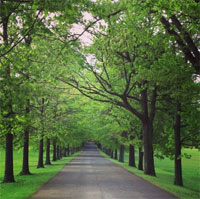 Walking (Sivak, n.d.): Below is a script you can record and then listen to as you take a walk. Be sure to find a place where you feel comfortable and that is reasonably free of distractions. It can be inside or outside.
“Stand at one end of your walk, with your feet parallel to each other, about 4 to 6 inches apart, and your knees “unlocked,” so that they can gently flex. Allow your arms to hang loosely by your sides, or hold your hands loosely together in front of your body. Direct your gaze, softly, straight ahead.
Bring the focus of your awareness to the bottoms of your feet, getting a direct sense of the physical sensations of the contact of the feet with the ground and the weight of your body transmitted through your legs and feet to the ground. You may find it helpful to flex your knees slightly a few times to get a clearer sense of the sensations in the feet and legs.
When you are ready, transfer the weight of the body into the right leg, noticing the changing pattern of physical sensations in the legs and feet as the left leg “empties” and the right leg takes over the support of the rest of the body. With the left leg “empty,” allow the left heel to rise slowly from the floor, noticing the sensations in the calf muscles as you do so, and continue, allowing the whole of the left foot to lift gently until only the toes are in contact with the floor. Aware of the physical sensations in the feet and legs, slowly lift the left foot, carefully move it forward, feeling the foot and leg as they move through the air, and place the heel on the floor. Allow the rest of the bottom of the left foot to make contact with the floor as you transfer the weight of the body into the left leg and foot, aware of the increasing physical sensations in the left leg and foot, and of the “emptying” of the right leg and the right heel leaving the floor.
With the weight fully transferred to the left leg, allow the rest of the right foot to lift, and move it slowly forward, aware of the changing patterns of physical sensations in the foot and leg as you do so. Focusing your attention on the right heel as it makes contact with the ground, transfer the weight of the body into the right foot as it is placed gently on the ground, aware of the shifting pattern of physical sensations in the two legs and feet.
In this way, slowly move from one end of your walk to the other, aware particularly of the sensations in the bottoms of the feet and heels as they make contact with the floor, and of the sensations in the muscles of the legs as they swing forward.
At the end of your walk, turn slowly around, aware of and appreciating the complex pattern of movements through which the body changes direction, and continue walking.
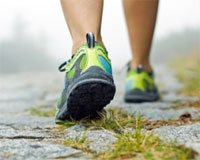 Walk up and down in this way, being aware, as best you can, of physical sensations in the feet and legs, and of the contact of the feet with the floor. Keep your gaze directed softly ahead.
When you notice that the mind has wandered away from awareness of the sensations of walking, gently escort the focus of attention back to the sensations in the feet and legs, using the sensations as the feet contact the floor, in particular, as an “anchor” to reconnect with the present moment, just as you used the breath in the sitting meditation.
Continue to walk for 10 to 15 minutes, or longer if you wish.
To begin with, walk at a pace that is slower than usual, to give yourself a better chance to be fully aware of the sensations of walking. Once you feel comfortable walking slowly with awareness, you can experiment as well with walking at faster speeds, up to and beyond normal walking speed. If you are feeling particularly agitated, it may be helpful to begin walking fast, with awareness, and to slow down naturally as you settle.
As often as you can, bring the same kind of awareness that you cultivate in walking meditation to your normal, everyday, experiences of walking.”
Remember: The aim of all of the exercises is to experience the sensations in your body to their fullest without judging them, trying to change them, or analyzing where they came from or what they mean.
Next Step
Here are additional online resources:
www.getsomeheadspace.com
www.mindfulness.org
www.mindfulnet.org