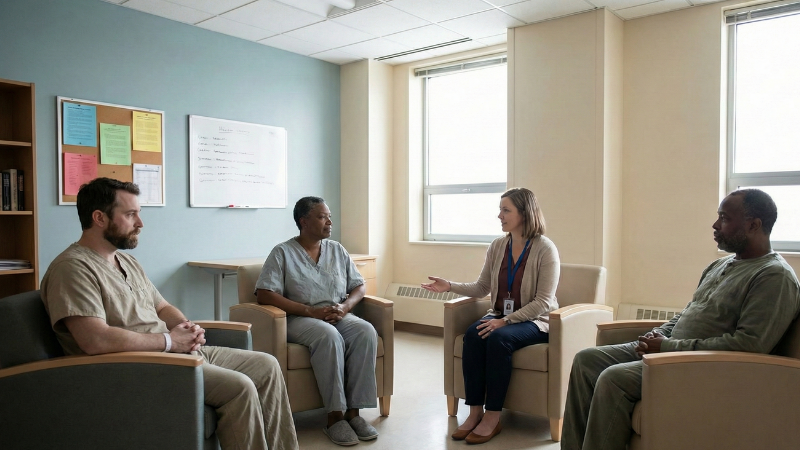
Milieu therapy explained with practical examples, benefits, limits, and how it differs from group therapy or a therapeutic community model.
Table of Contents
Overview
What Is Milieu Therapy?
What Milieu Therapy Looks Like Day to Day
Core Elements of a Therapeutic Milieu
Goals of Milieu Therapy
Who Does What: Roles on the Treatment Team
Practical Examples of Milieu Therapy in Action
Who Milieu Therapy Can Help
Benefits of Milieu Therapy
Limits, Risks, and What Can Go Wrong
Milieu Therapy vs Group Therapy
Milieu Therapy vs Therapeutic Community
How to Get Started and What to Ask
Milieu Therapy and Mental Health
Key Takeaways
Frequently Asked Questions
Overview
Milieu therapy is a treatment approach that uses the everyday environment as an active part of care. Instead of focusing only on scheduled therapy sessions, the setting itself is designed to support healing through structure, safety, relationships, and consistent routines. The goal is to help people stabilize, practice coping skills, and build healthier patterns in real time, in the moments where stress and conflict naturally show up.
Milieu-based care is most commonly used in structured settings such as inpatient psychiatric units, residential programs, and intensive day treatment. It is often paired with individual therapy, group therapy, medication management, and discharge planning. When it is done well, the environment becomes a living practice space for emotional regulation, communication, boundaries, and daily functioning.
This guide explains what milieu therapy is, how it works day to day, practical examples, benefits and limits, and how it differs from group therapy and a therapeutic community model.
What Is Milieu Therapy?
Milieu therapy is a structured approach where the social environment, routines, and day-to-day interactions are used intentionally to support mental health treatment. The word milieu refers to surroundings or environment. In milieu therapy, those surroundings are planned and staffed so people can build skills and stability through repeated practice, feedback, and support.
Milieu therapy is not just being in a facility. It becomes therapeutic when the program is designed around clear expectations, consistent boundaries, respectful relationships, and opportunities to practice coping and social skills across the day. It also depends on staff using everyday moments as teaching opportunities, not only responding during crises.
Milieu therapy is most often associated with inpatient and residential care, but milieu principles can show up in partial hospitalization programs, day programs, adolescent treatment settings, and other structured environments where safety and routine are part of treatment.
What Milieu Therapy Is Not
Milieu therapy is not simply group therapy scheduled back to back. Group sessions may be part of the day, but the approach is bigger than groups.
Milieu therapy is not punishment or rigid control disguised as structure. If rules are used to shame, intimidate, or silence people, the environment stops being therapeutic.
Milieu therapy is not a replacement for individualized care. People often still need individual therapy, medication evaluation, trauma-informed support, or specialized treatment depending on their needs.
What Milieu Therapy Looks Like Day to Day
Milieu therapy is experienced through a predictable day, consistent support, and repeated chances to practice skills. The details vary by setting, but the core idea stays the same: learning happens during daily life, not only during formal sessions.
-
A Predictable Daily Schedule: The day follows a steady rhythm with consistent wake times, meals, groups, activities, and quiet time so the nervous system has fewer surprises.
-
Staff as Active Participants: Staff observe patterns, model calm communication, coach coping strategies, and reinforce boundaries during routine moments.
-
Real-Time Feedback: Interactions become learning opportunities, including how to ask for help, respond to frustration, and repair after conflict.
-
Community Expectations: Shared rules support safety, respect, and accountability, and expectations are explained clearly rather than enforced unpredictably.
-
Practice Across the Day: Skills are practiced repeatedly in the moments they are needed, such as before group, after a phone call, during anxiety spikes, or when interpersonal tension rises.
Core Elements of a Therapeutic Milieu
Milieu therapy works best when the environment has specific qualities that make learning and change possible.
-
Safety and Containment: The setting prioritizes physical and emotional safety so people can stabilize enough to reflect and learn.
-
Structure and Consistency: Clear routines, predictable boundaries, and follow-through reduce chaos and reduce the need to stay on guard.
-
Support and Belonging: The environment emphasizes supportive relationships and dignity, so people feel less alone and less ashamed.
-
Involvement and Participation: People are encouraged to participate in choices, responsibilities, and shared problem-solving to build agency.
-
Validation and Respect: Feelings are taken seriously even when behaviors need limits, which helps reduce defensiveness and shutdown.
Goals of Milieu Therapy
Milieu therapy is practical. The goals are often about improving daily functioning and strengthening skills that reduce relapse and crisis cycling.
-
Stabilize Symptoms: Reduce crisis intensity and help people regain enough steadiness to engage in treatment.
-
Build Coping Skills: Practice emotion regulation, distress tolerance, grounding, and healthy self-soothing in real situations.
-
Improve Social Functioning: Strengthen communication, boundaries, conflict repair, and cooperative problem-solving.
-
Increase Independence: Build self-care and life skills that support functioning after discharge.
-
Strengthen Insight and Accountability: Help people notice triggers, patterns, and the impact of their behavior on themselves and others.
Who Does What: Roles on the Treatment Team
Milieu therapy is team-based. Different roles contribute to safety, structure, and skill-building across the day.
-
Nurses and Milieu Staff: Maintain safety, provide coaching in the moment, reinforce routines, and support consistent boundaries and de-escalation.
-
Therapists: Provide individual and group therapy, teach skills, support insight-building, and coordinate with the team about treatment goals.
-
Psychiatrist or Prescriber: Evaluates symptoms, manages medication decisions, monitors risk, and coordinates clinical stabilization.
-
Techs, Counselors, or Residential Staff: Support routines, observe patterns in daily behavior, help reinforce coping skills, and provide steady presence during vulnerable hours.
-
Peers and the Group: Provide community feedback, shared practice, and accountability that can reduce isolation and increase motivation.
-
Family or Supports When Included: Help translate skills to home, strengthen continuity of care, and support discharge planning.
Practical Examples of Milieu Therapy in Action
Milieu therapy becomes easiest to understand through everyday scenarios. These examples show how the environment itself can support treatment.
-
Conflict Repair After a Trigger: Two people argue during a group activity. Instead of the conflict being ignored or punished, staff help them pause, name what happened, and practice a repair conversation with clear boundaries. Learning the thin line between love and hate in social dynamics helps patients understand that intense emotion doesn't have to mean the end of a relationship.
-
Skill Practice During Anxiety Spikes: Someone becomes overwhelmed after a phone call with family. Staff help them use grounding, paced breathing, a brief walk, or sensory tools, then talk through what helped and what to try next time.
-
Boundary Coaching in Real Time: A person struggles to say no and later feels resentful. Staff coach a direct, respectful boundary statement and reinforce that setting a boundary is allowed and safe. Learning to say 'no' effectively is a key part of moving away from a savior complex or the urge to over-function for others
-
Community Meetings: The group reviews what is helping the environment feel safer and what is creating tension. The goal is building shared responsibility without shaming.
-
Routine as Treatment: Sleep, meals, hygiene, movement, and medication adherence are treated as stabilizing skills. Staff help people build routines that can continue after discharge rather than framing routines as compliance.
-
A Repair After Withdrawal: Someone shuts down after feeling criticized. Staff support re-engagement by helping them name their emotion, ask for clarification, and practice staying present without escalating or disappearing.
Who Milieu Therapy Can Help
Milieu therapy is often used when a person needs more structure and support than traditional outpatient therapy can provide. It is especially relevant when symptoms are affecting daily functioning, safety, or the ability to regulate emotions in relationships.
Milieu-based settings commonly support people experiencing severe depression, anxiety with functional impairment, mood instability, psychosis stabilization needs, suicidal crisis or self-harm risk, eating disorder treatment needs, substance use recovery in residential care, and adolescent behavioral crises. The fit depends on the quality of the program, the person’s needs, and whether the environment is truly safe and respectful.
Milieu therapy can also support people who feel stuck in destructive patterns at home. A structured environment can create breathing room and offer repeated practice with routines, boundaries, and coping skills. This is especially helpful for breaking codependent patterns that often arise in high-stress family systems
Benefits of Milieu Therapy
Milieu therapy offers benefits that are difficult to replicate in weekly outpatient sessions because of how often skills are practiced.
-
More Practice, Not Just More Insight: Coping and communication skills are rehearsed across the day, which can help them become more automatic.
-
Faster Feedback Loops: Patterns show up in real interactions, and support can be offered immediately instead of days later.
-
Support During Vulnerable Hours: Mornings, evenings, and transitions can be supported, not just the therapy hour.
-
Reduced Isolation: Community support can reduce shame and help people feel less alone in their struggles.
-
Structure That Calms the Nervous System: Predictability can reduce overwhelm and help people stabilize enough to engage in deeper treatment.
Limits, Risks, and What Can Go Wrong
Milieu therapy depends heavily on the quality of the environment. When the setting is not safe, consistent, or respectful, the approach can fail or cause harm.
-
Not All Environments Are Therapeutic: A chaotic, understaffed, or punitive setting can increase distress and mistrust.
-
Group Dynamics Can Backfire: Bullying, cliques, conflict contagion, or constant drama can worsen symptoms if not managed well.
-
Overreliance on Rules: If structure becomes control rather than support, people may comply without learning internal regulation.
-
Insufficient Individualization: People with complex trauma, autism, severe social anxiety, or sensory sensitivity may need thoughtful adaptations that not all programs provide.
-
Transition Risk After Discharge: A structured setting can feel stabilizing, but returning home without support can lead to relapse if discharge planning is weak.
If a program uses shame, unpredictability, or power struggles, it is reasonable to ask questions and advocate for a safer plan.
Milieu Therapy vs Group Therapy
Group therapy is a scheduled therapeutic session led by a clinician with a specific focus, such as skills training, processing, psychoeducation, or relapse prevention. It happens at set times and typically has a clear topic and structure.
Milieu therapy is broader. It treats the entire environment as part of care, so learning and practice continue outside group sessions. This includes routines, relationships, community expectations, and staff coaching during everyday moments.
Group therapy often teaches the concept. Milieu therapy provides repeated chances to practice the concept in real life, then reflect on what happened and try again.
Milieu Therapy vs Therapeutic Community
A therapeutic community is a treatment model that emphasizes the community itself as the primary vehicle for change. It often involves strong peer influence, shared responsibility, and community norms that shape behavior and identity over time. In some therapeutic communities, peers may have a larger role in governance or accountability.
Milieu therapy overlaps with this in that both use relationships, routines, and shared living as part of treatment. The difference is often in how the structure is held. Milieu therapy may be more staff-structured and clinically guided depending on the setting, while a therapeutic community model may place heavier emphasis on peer-led responsibility and community processes.
Some programs blend elements of both. What matters most is whether the environment is safe, respectful, consistent, and genuinely skill-building.
How to Get Started and What to Ask
Finding the right program involves evaluating safety, structure, and trauma-informed practices. For most people, entering a milieu-based program begins with a formal psych evaluation to determine the best treatment goals and the level of support required.
If you are considering a program that uses milieu therapy, practical questions can help you evaluate whether the environment is likely to be safe and effective.
-
Ask How Safety Is Maintained: What happens when conflict escalates, someone feels unsafe, or symptoms spike? How is de-escalation handled?
-
Ask What a Typical Day Looks Like: What is the schedule, how much time is structured, and how flexible is it based on individual needs?
-
Ask How Staff Handle Boundaries and Respect: How do they prevent shaming, favoritism, and power struggles? How are rules explained and enforced?
-
Ask How Trauma-Informed the Program Is: How do they support consent, dignity, and predictable care for people with trauma histories?
-
Ask How Individual Needs Are Addressed: How do they adapt the environment for sensory needs, autism, severe anxiety, or cultural and family factors?
-
Ask How Family or Supports Are Included: What education, family sessions, or communication processes are available?
-
Ask About Step-Down Planning: What outpatient therapy, medication follow-up, and support connections are arranged before discharge?
Milieu Therapy and Mental Health
Milieu therapy is often one part of a larger care plan. Many people in milieu-based programs also receive individual therapy, group therapy, medication evaluation, and skills training. The environment supports stabilization and practice, while other modalities address deeper patterns, trauma history, and longer-term goals.
Ongoing therapy after discharge is often important because the transition back to everyday life can reactivate stressors that were not present in a structured setting. Step-down care often includes identifying volatile symptoms early to prevent relapse after discharge. Continued support can help people maintain routines, strengthen coping strategies, and process challenges as they show up in real life.
Online therapy can be a practical step-down option after higher levels of care because it can be easier to keep consistent appointments while rebuilding daily life. It can also support skill-building in real time, since you can practice a coping tool during an actual trigger, then review what happened and refine your plan.
If you want structured ongoing support after discharge or alongside outpatient care, 7 Cups can connect you with licensed therapists who can help with anxiety, depression, trauma patterns, emotion regulation, and relationship stress. Consistent therapy can help maintain progress and reduce the risk of sliding back into crisis.
Key Takeaways
Milieu therapy is a structured approach that uses the environment as part of mental health treatment. It relies on safety, routine, supportive relationships, and consistent boundaries so people can practice coping and social skills throughout the day. Milieu therapy can offer meaningful benefits when the setting is respectful and well-run, and it is often most effective when paired with individual therapy and a strong discharge plan that supports the transition back to daily life.
For more support, join our empathetic community, chat with a free, trained listener, make progress through a community-driven growth path, or start affordable online therapy today.
Frequently Asked Questions
Read more below for answers to questions commonly asked about this topic.
What is milieu therapy in simple terms?
Milieu therapy is treatment that uses the daily environment, routines, and relationships as part of care. The setting is structured to help people practice coping skills, communication, and stability in real time.
Is milieu therapy the same as group therapy?
No. Group therapy is a scheduled session. Milieu therapy is broader and treats the entire environment as part of treatment, including routines, boundaries, and everyday interactions.
Where does milieu therapy usually happen?
It is most common in inpatient psychiatric units, residential treatment programs, and intensive day programs where structure and safety are part of care.
What does a therapeutic milieu include?
A therapeutic milieu typically includes safety, predictable routines, supportive relationships, clear boundaries, and opportunities to practice coping and social skills throughout the day.
Who leads milieu therapy on an inpatient unit?
Milieu care is supported by the whole team. Nurses and unit staff often maintain structure and coach skills across the day, while therapists and prescribers provide clinical treatment and planning.
What conditions can milieu therapy help with?
It is commonly used when symptoms affect functioning or safety, including severe depression, anxiety crises, mood instability, psychosis stabilization, eating disorders, substance use residential treatment, and adolescent crises.
What are the benefits of milieu therapy?
It offers repeated daily practice of coping and communication skills, faster feedback, reduced isolation, and stabilizing structure that supports recovery.
Can milieu therapy be harmful if the environment is bad?
Yes. A chaotic, punitive, or unsafe environment can increase distress, worsen symptoms, and reduce trust. Program quality and culture matter.
How is a therapeutic community different from milieu therapy?
Both use the community as part of treatment, but therapeutic communities often emphasize shared responsibility and peer influence more strongly. Milieu therapy may be more staff-structured depending on the setting.
What should I ask before joining a program that uses milieu therapy?
Ask about safety, daily structure, staff approach to boundaries, trauma-informed practices, individualization for your needs, family involvement, and discharge planning.