CDM Talk: Jealousy Assistance

Hi everyone. Welcome to today's CDM Talk
Before I begin, I will be posting these CDM Talk posts twice a month starting next week! So look forward to twice the fun every month!
With that out of the way, let's start!
As we know it, there are many free resources self-help guides available on 7 Cups. For instance, articles, training guides, growth paths, and mindfulness exercises. These are examples of digital content for mental health support.
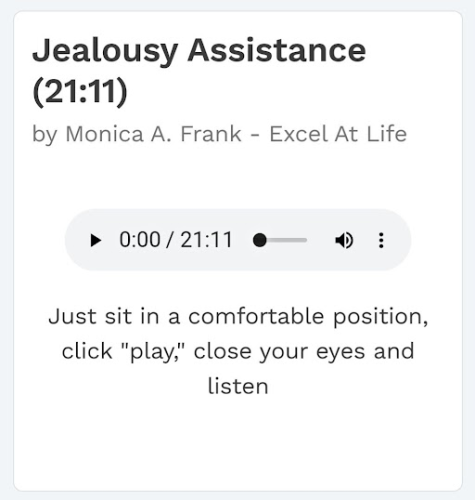
In support of the Relationship Support subcommunity, we are going to discuss one of the self-help resources: Jealousy Assistance. This 21:11 minutes mindfulness exercise is designed to help someone who wants to overcome irrational jealousy. Please note, there is no judgement here for those who are suffering from this issue. This behaviour can be painful for both parties. Instead of thinking of it as something completely negative, we can try looking at it as a helpful source of information to improve self-awareness.
What would be the difference between rational and irrational jealousy in your own words?
How can jealousy help self-awareness?
Do you have any tips/insights for someone who wants to get over irrational jealousy? Or for someone who is on the receiver end?
-
Hypothetically you are a CDM Trainee or to help a trainee create an article about irrational jealousy, what would be your idea for subheadings?
---------------------------------------------------------------------------------------------------------------------------------------
This post is brought to you by the Content Development & Marketing Program (CDM) 7 Cups Academy - Free program. Free certificate. Click here to apply. Click here for more info.

@azuladragon34
I think what considered rational is when there are solid evidence/s.
Jealousy, whether rational or irrational, can make a person aware of their fear and they can dig deeper to get to the root. Did something happen in the past? Are there any needs that aren't being met? Etc.
Tip: stop by at Relationship Support room to talk & discuss with others. Open 24hrs every Thursday 😍
What do you think, Az? Thanks for the discussion and have a splendid weekend! 💕

@azuladragon34
What would be the difference between rational and irrational jealousy in your own words?
The difference between rational and irrational jealousy depends on how much one believes the thoughts they're telling themselves, how open they are and how willing they are to sit long enough in quiet reflection to contemplate the situation.
How can jealousy help self-awareness?
Jealousy like any other negative emotion can help self-awareness by becoming less of a reason to make bad decisions and more of a signal to pay attention, take responsibility and make positive change.
Do you have any tips/insights for someone who wants to get over irrational jealousy? Or for someone who is on the receiver end?
If someone wants to get over irrational jealousy I think that taking time and being patient is a good idea because self righteous snap judgements leads to consequences. Likewise to someone on the receiver end.
Ultimately beneath the feeling of jealousy is a fact about the situation and unless one is willing to do what they can to face that then all they'll be left with is them wresting with a feeling when the reason is locked behind it.
Sub-headers? I dunno.
'Sit Down and Shut up'
'You're Both Wrong'
'Feelings aren't Facts'
'Cake won't Help. Mostly'
'Responsibility vs. Blame'
'Just don't get Arrested'
'Actually Cake Helps a lot'
Not necessarily in that order!
now i want cake
@Dallady what I read first was your subheading ideas 😂 I.love.it!

Navigating Jealousy: A Path to Self-Awareness
Jealousy, often perceived as a wholly negative emotion, can also serve as a valuable source of information to improve self-awareness. By understanding its nuances, individuals can transform this potentially destructive feeling into a tool for personal growth. As a psychology and neuroscience student I am here to provide some insight.
What is the difference between rational and irrational jealousy?
*Rational Jealousy:** This stems from a real, verifiable threat to a relationship or a perceived injustice. It's often proportionate to the situation and can serve as a signal that boundaries are being crossed or that legitimate concerns need to be addressed. For example, if a partner repeatedly cancels plans with you to spend time with someone new without explanation, a feeling of rational jealousy might prompt a necessary conversation about commitment and respect in the relationship.
*Irrational Jealousy:* This arises without a clear, objective threat or is disproportionate to any existing situation. It's often fueled by insecurity, past traumas, or unfounded suspicions. For instance, feeling intensely jealous because a partner spoke politely to a cashier, or constantly checking their phone without any reason to suspect infidelity, would be considered irrational. This type of jealousy is often more about one's own internal state than external reality.
How can jealousy help self-awareness?
Jealousy, particularly when examined introspectively, can be a powerful catalyst for self-awareness. It can highlight:
*Insecurities:* Often, irrational jealousy points directly to our own underlying insecurities, fears of abandonment, or feelings of inadequacy.
*Needs and Desires:*It can reveal what we value most in a relationship (e.g., exclusivity, attention, trust) and what needs might not be being met.
*Boundaries:* Understanding what triggers jealousy can help individuals define their personal boundaries and communicate them more effectively to others.
*Past Experiences:* Jealousy might unearth unresolved issues from past relationships or childhood that are influencing current reactions.
*Attachment Styles:* It can provide insights into one's attachment style and how it influences relational anxietie
Tips/insights for someone who wants to get over irrational jealousy, or for someone on the receiver end:
For the person experiencing irrational jealousy:
Identify the Triggers: * Pay attention to when and why you feel jealous. Is it specific people, situations, or times?
*Challenge Your Thoughts:* When jealous thoughts arise, question their validity. Is there actual evidence to support your fears, or is it based on assumptions?
*Focus on Self-Esteem:* Work on building your self-worth independently of your relationships. The more secure you are in yourself, the less likely you are to feel threatened by others.
*Communicate Effectively (and calmly):* If there are genuine concerns, express them to your partner or friend without accusation. Use "I" statements.
*Seek Professional Help:* If irrational jealousy is significantly impacting your life and relationships, therapy (individual or couples) can provide tools and strategies for managing it.
For someone on the receiver end of irrational jealousy:
*Don't Internalise or Blame Yourself:* Remember that the jealousy is often a reflection of the other person's insecurities, not your actions.
*Set Clear Boundaries:* Communicate what behavior is and isn't acceptable. Do not tolerate controlling or abusive actions driven by jealousy.Grey rock 🪨 🩶
*Encourage Self-Reflection:* Gently encourage the jealous person to explore the roots of their feelings, perhaps suggesting professional help.
*Maintain Your Own Life:* Don't let their jealousy dictate your friendships, activities, or independence.
*Prioritize Your Safety:* If the jealousy escalates to controlling, abusive, or threatening behavior, prioritise your safety and seek support from trusted individuals or professional.
Irrational jealousy Article, I would propose the following subheadings to offer a comprehensive and helpful guide:
*Understanding the Roots: What Fuels Irrational Jealousy? 💚
* Insecurity and Low Self-Esteem
* Past Traumas and Attachment Wounds
* Cognitive Distortions: Jumping to Conclusions and Catastrophizing
* Societal and Cultural Influences on Jealousy
*Recognizing the Signs: How Does Irrational Jealousy Manifest?*
* Controlling Behaviors and Demands
* Constant Suspicion and Accusations
* Monitoring and Snooping
* Emotional Outbursts and Volatility
* Withdrawal and Passive Aggression
*The Impact of Irrational Jealousy: On Self and Relationships*
* Eroding Trust and Intimacy
* Straining Communication and Connection
* Increased Anxiety and Distress for All Involved
* Potential for Isolation and Relationship Breakdown
*Narcissistic Injury
Strategies for the Jealous Individual: Reclaiming Inner Peace
* Mindfulness and Emotional Regulation Techniques
* Challenging Core Beliefs and Cognitive Restructuring
* Building Self-Worth and Independence
* Effective Communication and Assertiveness Training
* When to Seek Professional Support: Therapy Options
Guidance for the Receiver: Navigating a Jealous Partner/Friend
* Setting Firm Boundaries and Maintaining Autonomy
* Practicing Empathy Without Enabling
* Protecting Your Emotional Well-being
* Recognising Red Flags and When to Disengage
* Building a Support System for Yourself