Learn About… ETHIOPIAN Food! :)

Tell us about the food from your culture/homeland/etc! Tell us about the ingredients, show us pictures, describe the taste and texture, tell us fond memories surrounding the food! Share anything about everything you want! <3
Even if you aren’t a part of this culture yourself, but you’ve tried dishes from there, please share with us! Help us learn about wonderful foods from another culture <3
@ShadowFaerie @unassumingEyes @Sunisshiningandsoareyou @sadcat13 @Amanda84 @goldenduckling @mytwistedsoul @Tinywhisper11 @LovemyMoonflowers @GreenLime3141 @7Bear7 @Phoenixthepoised @Torean @GentleHealingInitiative @cyanessence @YourCaringConfidant @CaringEzra @NobleSeeker @fossilfellow @BastionKnight @trueconfidant123 @safeplace288 @lovingCat6978 @reservedOwl321 @dapperNest2125 @Creamyyy @naturesbeauty1234 @bubbleSummer9800 @peachThinker662 @warmheartedHuman836 @Mansbestfriend @Paliloveyourself @Magicpawsoffuture @SelfCareMatters @TovaCares76
I’m adding a taglist to start, but this post is open to absolutely everyone! <3

@jesusredeemedme2425
Good choice , looking forward to hearing more 💚
I genuinely want to know more about this one. I've had it once and it was so good.
Do tell <3
Uh, it was like a kind of family meal... Everything is set out and everyone is supposed to eat with their hands and take stuff with this kind of bread that tasted a little on a tart or sour side. It was really tasty and a fun experience
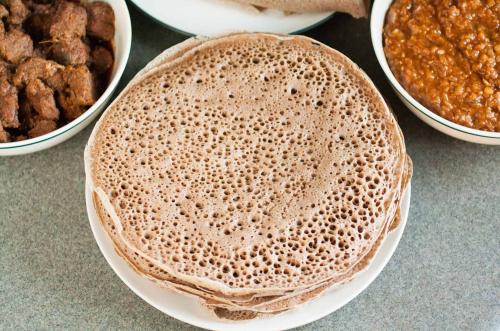
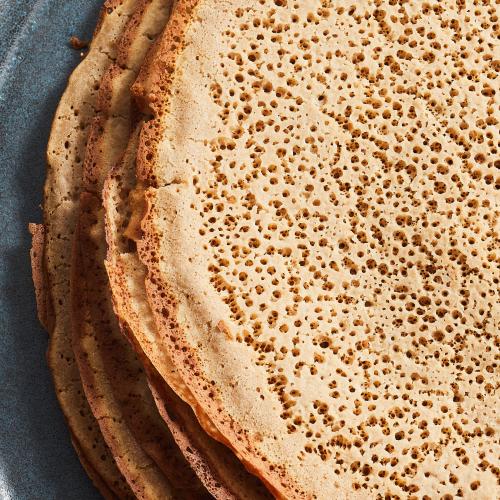
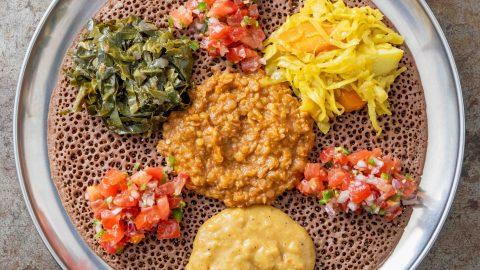
Injera is a slightly sour, spongy flatbread that’s a staple food in Ethiopia and Eritrea. Despite its delicate appearance, injera is surprisingly strong and elastic, and functions as both a plate and a utensil during traditional Ethiopian meals. The communal dining experience involves a large injera platter placed in the center of the table, surrounded by various stews (wots). Diners tear off bite-sized pieces of injera and use them to scoop up the wots.
Sharing injera is a sign of respect and affection. For instance, gursha is an Ethiopian custom that literally means “mouthful” in Amharic. Gursha involves scooping a morsel of stew or wot with a piece of injera and feeding it to someone directly by hand. This action signifies love, respect, and a sense of deep connection between the giver and receiver.
Gursha is practiced during various social gatherings, from family meals and celebrations to weddings and everyday interactions with loved ones. It can even be a welcoming gesture extended to strangers by offering them “enebela” (let’s eat!) along with some gursha.

@jesusredeemedme2425
I watch my caregiver Bee make this all the time. It's so cool. It's an interesting texture, kind of like a thin, slightly wet pancake. She makes them on a big crepe griddle by pouring the mixture from a little pot in a circle.
@jesusredeemedme2425
OKAY....this one I can definitely share on!! My caregivers are from Ethiopia, and my caregiver Bee cooks ALL kinds of things!
Two of my favorites are sambusa and mandazi. I will come up with recipes!!
I love this! Please share away <3 If you can’t add pics, we can <3
@jesusredeemedme2425
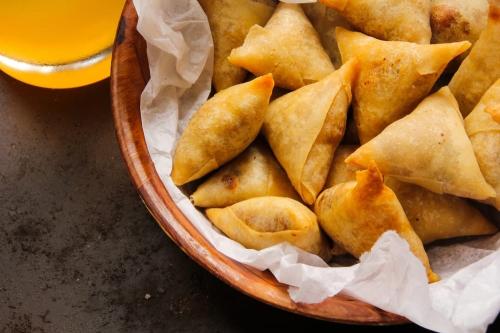
Now, I've heard this called Sambusa or Samosa, and it is popular in both Ethiopia and Somalia. This is the Ethiopian recipe made with lentils. If you don't want to fry them in the wrappers, you can just eat the filling as a lentil salad it's THAT good. Use red onion if you make it
https://demandafrica.com/food/recipes/lentil-sambusas/
@jesusredeemedme2425
This is MY picture from the last time I had mandazi. It is one of my very favorite foods and when I could still eat gluten, you bet I could eat this whole bowl in one sitting.
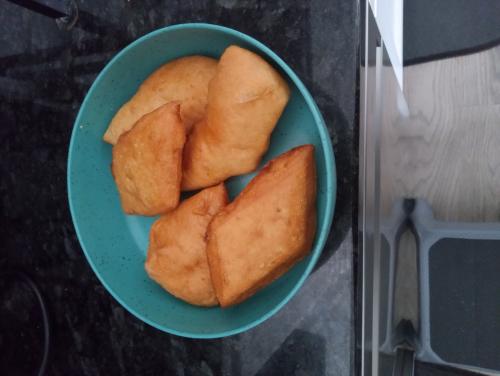
Mandazi are East African donuts. They can be made all kinds of ways, and can be savory or sweet. The recipe Bee makes incorporates a black seed called Nigella Sativa. We grow it in our backyard from seeds gathered in Ethiopia. It is a tradional spice and medicine, and it has the most unique flavor of anything I've ever tasted. Too little and you can't taste it, too much and it's overpowering. I only know it savory, made with the seeds.
Mandazi Recipe (East African Doughnuts)
This recipe is adapted from standard East African preparations, which often use coconut milk and cardamom.
- 3 cups all-purpose flour
- ¼ cup granulated sugar
- 2 tsp active dry yeast
- ½ tsp salt
- 1 tsp ground cardamom (or crushed seeds)
- ½ cup lukewarm water
- ½ cup coconut milk (room temperature)
- 1 large egg, beaten (optional, can be vegan without it)
- Vegetable oil for frying
- Optional: 1-2 tsp of black seeds (nigella/kalonji) to add a unique flavor
- Activate Yeast: In a bowl, combine the lukewarm water, a pinch of sugar, and the active dry yeast. Let it sit for about 5-10 minutes until it becomes frothy.
- Combine Dry Ingredients: In a large bowl, whisk together the flour, remaining sugar, salt, and ground cardamom. If using black seeds, mix them in now.
- Mix Dough: Add the activated yeast mixture, coconut milk, and beaten egg (if using) to the dry ingredients. Mix to form a shaggy dough.
- Knead: Turn the dough onto a floured surface and knead for about 10-15 minutes until it is soft, smooth, and elastic.
- First Rise: Place the dough in a lightly oiled bowl, cover it with a cloth or plastic wrap, and let it rise in a warm place for about 1 hour, or until doubled in size.
- Shape: Gently press the dough down. Divide the dough into 4 equal portions. Roll each portion into a circle about 1/4 to 1/2 inch thick on a floured surface. Cut the circle into 4 or 8 triangles using a knife or pizza cutter.
- Second Rise: Cover the cut dough pieces and let them rest for another 20-30 minutes.
- Fry: Heat about 2 inches of oil in a deep fryer or large saucepan over medium heat. Fry the mandazi in small batches, turning them over, until they are puffed and golden brown on both sides (about 2-4 minutes total per batch).
- Drain: Transfer the fried mandazi to a paper towel-lined plate to drain excess oil. Serve warm with tea.
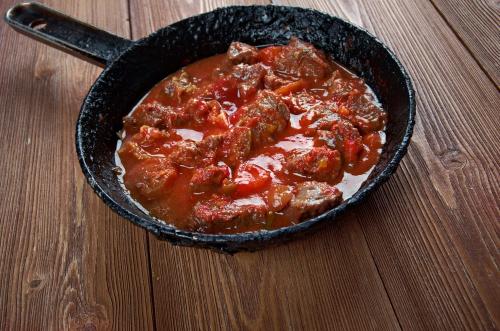
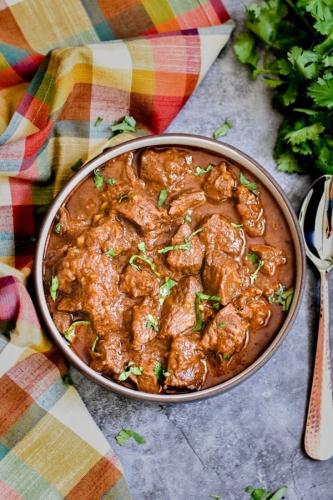
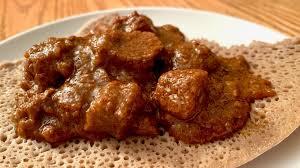
Key wat is a fantastic Ethiopian beef stew.
The meat is usually cut into tiny cubes, then stewed with a generous amount of red berbere seasoning, some extra cumin, fenugreek, onions, garlic, and a bit of tomato puree to make the sauce.
The meat and sauce combination of key wat makes for the perfect dish to mop up all the flavorful sauces and juices. The bottom of the injera, at the end of your meal, is always packed with flavor.