Kintsugi or “Golden Repair”

Kintsugi is a process of using lacquer and gold to repair ceramics leaving a visible golden seam highlighting where cracks had been. While modern kintsugi has expanded beyond the traditional golden seams to include silver, and other materials, the word kintsugi comes from the Japanese words meaning gold and joinery.
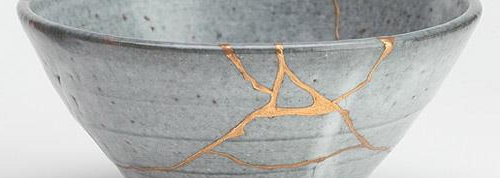
[image consists of a close up of a kintsugi bowl]
Many find a lot of therapeutic symbolism in kintsugi pieces, the celebration of use and repair, embracing the imperfection and highlighting the way things have broken and been mended. Even the process of creating a kintsugi piece can often be healing for some.
While the idea of creating one of these kintsugi pieces may sound like a daunting task, seeing a loss turned into a new piece of art can be very therapeutic. Today you can even get kits that include all the materials you need, some that are also food safe in case you want to repair a cherished serving platter that perhaps was a Thanksgiving casualty?
(🦃Happy Thanksgiving to everyone celebrating today!🦃)
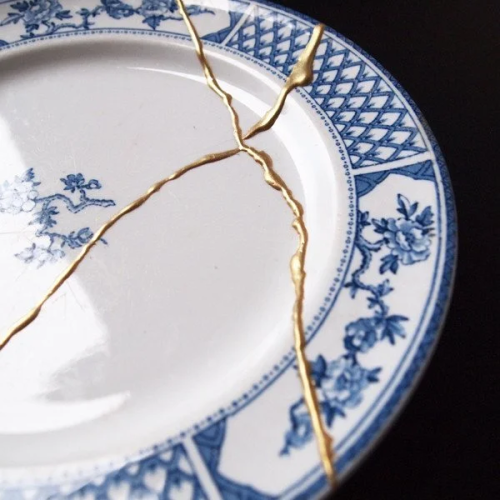
[Image consists of a close up of a kintsugi plate]
Whether you get a kit or just the materials (clear epoxy resin/other ceramic adhesive, gold mica powder/liquid gold leaf, stir sticks, gloves etc.) if you plan to create some kintsugi yourself, a few things to keep in mind, while each kit or epoxy will contain its own instructions to follow, some general tips would include:
Fewer pieces and clean breaks can be important especially when starting out.
Also consider doing a few ‘practice’ pieces first while you are learning. (Just think, if you want to practice you might get to intentionally break something too!)
Patience is important, depending on the piece and number of breaks you may have to repair the piece in steps rather than all at once.
Working quickly can be important - The process often involves using a 2 part epoxy mixture that will set up fairly quickly so requires applying the epoxy in a patient but confident manner to get an even layer of the right thickness.
Remember the process itself is about celebrating imperfection and repair, so it doesn’t need to be perfect!
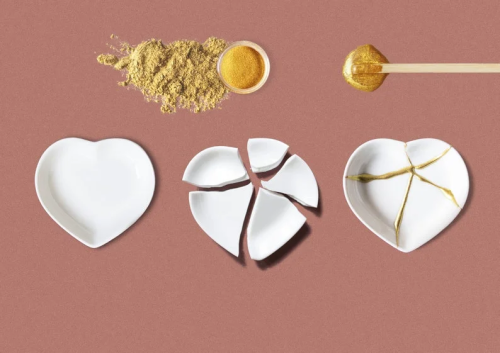
[Image consists of heart shaped kintsugi kit with stages and materials]
Join in the conversation?
Have you ever had something break that you wish you could have repaired in this way?
As I mentioned, some people find a therapeutic value and meaning behind kintsugi, so what is one way you have healed that you would like to celebrate and highlight rather than hiding?
So, will you consider giving kintsugi a try?
Sources:
https://traditionalkyoto.com/culture/kintsugi/
https://www.nbcnews.com/better/health/how-japanese-art-technique-kintsugi-can-help-you-be-more-ncna866471
https://nymag.com/strategist/article/kintsugi-repair-kit-review.html
https://nomliving.com/blogs/thingswedo/kintsugi-a-how-to-guide
https://www.invaluable.com/blog/kintsugi/
https://forms.gle/tSRzfxpQJvvYpZXh6 Feedback & Ideas Form, Share your ideas!
Tagging the Hobby Zone subcommunity tag list
(If you want to be added/removed click here!)
@Aileen1114117 @Aliceiin3rdwonderland @corinnajoyhenryluv @CosmicMiracle @EmotionsListener @enigmaticsmile321 @FallandWinterPlease00 @HealingTalk @Helpingheart23 @hiraxx @independentFig7852 @jujubears @LadyOrgasma @Liv125 @Lou73 @Meifeng @Merliah001 @MilaAvery @MistyMagic @NicholasW @Paprika001 @practicalTree3613 @SerenitysFire @SleepyShyCat @SmileSravani @SparklingSeashells @Sunisshiningandsoareyou @sweetrosa1987 @ThadSterling @thandocilo @theboymoana @tidyHickory3283 @Walker7957 @WarmLightXO @WorriedMagpie

@EmotionsListener
The concept of Kintsugi sounds so cool. It makes a ceramic project look even better in my opinion.
- I can think of many times I have broken one of my mom's plates or vases lol. Kintsugi would have come in handy back then!
- I love the idea of celebrating rather than hiding something. I'd love to celebrate my growth of as a person. I feel I've grown a lot these past years<3
- I 100% would consider giving Kinstugi a try! 💜
@innateJoy9602
Thank you for joining in, It can really make something look wonderful, I find I like it best for the more solid toned ceramics than those with floral patterns or such on them, but that likely is about the competing designs for me.
As for personal healing, I've sometimes taken to calling those marks struggles may leave on us, survival marks, and regularly liken them to kintsugi.
Too bad for your mother's vase but I do hope you'll get a chance to kintsugi a try, though preferably not by breaking things! 🤣
Thanks for the awesome post @EmotionsListener!
I love kintsugi, it looks gorgeous and has such a beautiful concept and meaning behind it ✨
@Lou73
I really enjoy the meaning and have often wanted to create a piece to 'represent me' so to speak too. Thanks for joining in! ❤️🧡💛💚💙💜

Whoah🤯 I love this idea so much!! The concept is just amazing! I definitely gonna try it! Thank you sm for sharing this idea💛
@23helicopters
I hope you do get to try it, and if you do please share your results with us! Thank you for joining in! 💖

@EmotionsListener
This is awesome! I forget the name of it but there's a philosophy that honors things that are broken, and how to fix, use, recycle and repair things with the beauty of the process of decay and restoration being a central focus. I am not sure if this is at all related but I could see this being a very rewarding practice. Beautiful results, too!
@ThadSterling
That sounds very similar to the whole philosophy of kintsugi or kintsukuroi. But it is indeed a powerful image and shows the beauty that can be found in being broken and healing. Though that healing is often a rather difficult process as well!

@EmotionsListener
These are so pretty! I've heard about this before. Thanks for sharing! <3
@LovingPeacefulHeart
Thank you for joining in! Kintsugi can indeed be very pretty!

@EmotionsListener
I like this. I love the concept of celebrating the imperfections. It reminded me if a song I like, which I call "the bent, not broken" song. Which is also about how we have imperfections and make mistakes (we're bent), but that doesn't mean that we are hopeless (not broken).
I suspect I won't take it up as an activity. But owning a piece, that reminds me that imperfections can be an asset, would be cool.
Thanks for introducing me to it.
@Clio9876
Thank you for mentioning the music, it sort of reminds me of the song "Beautifully Broken."
It seems like many of us could use a reminder that this sort of piece would create in our lives, that each time we heal we can line ourselves with gold as well and be more beautiful for that healing rather than feeling lesser for when we break.
Thanks for joining in!

Love this.