Breaking Barriers for disabled people facing inaccessbility

So welcome back, everyone, to an unwanted or wanted sequel, like popular Disney movies, about the other problems that disabled people face on a daily basis, from red bathroom cords to service dog distractions and more
Red Bathroom Cord
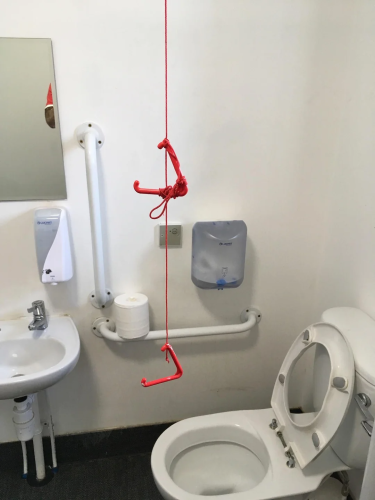
So in Europe, at least, and maybe in at least some hospitals in North America, disabled bathrooms (not stalls, just disabled bathrooms) have this long red cord that dangles to the floor. The purpose of this cord is that if someone falls in the bathroom and is on the floor, they can pull the cord to access help.
Now, let's talk about the aspect of inaccessibility in the problem. The issue with the bathroom red cords is that often managers or janitors will either tie them up or cut them, thinking that they are obstructing the way. As a result, the cords become either useless if they are cut or cannot be reached from the floor in case of a fall, causing serious harm to people who might not be able to call for help in any other way.
Expensive Accessible Items
 Accessible cafeteria table
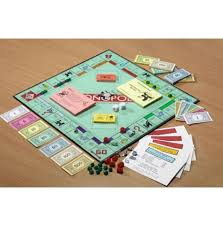
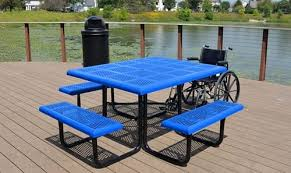 So the next topic we're discussing is the fact that accessible items are often more expensive than their normal counterparts, if there are any non-accessible counterparts. There are only two accessible items I know of that have non-accessible normal alternatives. One of them is Braille games—both card games like Playing Cards or Uno, and Braille board games like Monopoly, where the street names are in Braille, the Monopoly money has Braille (unlike American money), and the Monopoly property cards are twice as big as the standard Monopoly property cards. The other non-game accessible version is a picnic or cafeteria table where a wheelchair user can join non-wheelchair friends at the same table and be part of the conversation. With the normal setup, they have to eat by themselves or be stuck at the end of a table. There are other versions of accessible items , such as ramps, stair lifts, or house elevators , that don't have normal alternatives besides something as simple as "walking up the stairs." Why is this an accessibility issue? Because regardless of whether they have a normal alternative or not, the accessible items are generally more expensive than their regular counterparts. As we will be discussing in later topics, disabled people don't even have money for fun or to obtain accessible housing without needing to spend over $1,000 on renovations. The reason for the expensive price of these accessible items is due to the fact that companies believe there is less demand for them because "not a lot of people need them" compared to the normal versions, which means less stock of them. This is sometimes jokingly called a "disability tax."
Traffic Light Countdowns and Sidewalk Barriers
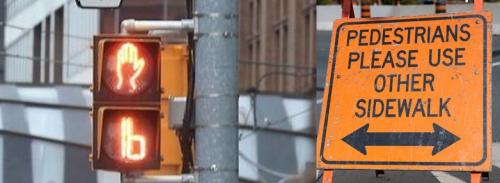
This section will be about Major Accessbity barriers. Originally it was only going to cover two topics but I found more sidewalk barriers beside construction signs to discuss. The topics included traffic light countdown, construction signs and other sidewalk barriers (recycling bins/snow)
Traffic Light countdown
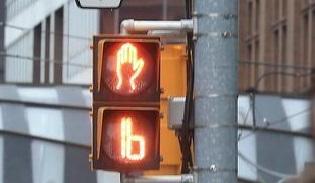
Have you ever just not been able to make it to the other side of the crosswalk? if You can barley make it to the other side, think about how much more difficult it might be for someone who is a slow walker or has a mobility device
On a main street in my home town there's a crosswalk nearby an apartment complex. Most of the people in that complex are seniors-they're mobile enough to live independently without much help. But some of them use walkers This crosswalk countdown doesn't give you much time to cross. If I can barley make it across, how can any of the seniors make it across if they're using walkers or mobility scooters? It makes me even more mad that I know that in another part of town that is more then three blocks the crosswalk countdown are much longer then near the seniors apartment complex
Another problem with traffic countdown is when the road starts as a 2-lane road and gets expended to a six lane road, the town doesn't bother to update the countdown system. This happen in a friend's town and the mall I go too occasionally. Another problem i had is my Mom and I did help my friend Grace, to get to her hairdresser in our town, (taking the bus) -she and my Mom are only half way across the street because of Grace slow walking when the countdown is almost done happening. The other town you have to run across the street to get across in time
Sidewalk Barriers
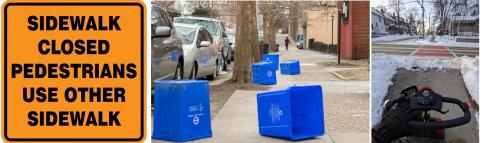
There are many types of sidewalk barriers that pose a problem for many people. The first thing is infuriating when I come across a one-sided sidewalk street and construction is talking place on that sidewalk. They often have a sign that says "Sidewalk close use other sidewalk" but on a one-sided sidewalk street there is no alterative sidewalk. In such situations-everyone pedestrians, and people with mobility devices or families with young children in strollers are forced to use the street and that poses a danger for both drivers and pedestrians (on foot or in mobility devices).
The second accessbity issue is when cars or vans are parked on the sidewalk portion of their "driveway". Someone who can walk can go up, down and around easily but for people in wheelchair or mobility device either have to go out into the street or go back to a curb to find another way to get to wherever they're going.
The third issue is about e-bikes -this is mostly why Toronto had considered banning them. They are left all over the place and not parked properly either next to a wall or at a train station. This makes it difficult for people with mobility devices, especially if they're at the curb-cut, as they have to go find another way to get into the road and get to places if the e-bike is left on the curb cut.
The fourth accessbity issue with sidewalk barriers is a significant one. When construction happens on a sidewalk and nearing completion poles, posts, or other objects either are not moved, or are planted in the middle of the new sidewalk without moving ones that were already there before. In my town near the Courthouse theatre there's a stop sign that's planted right behind/infront of a curb-cut. This could cause serious harm to someone who is distracted and could cause someone in a wheelchair to fall out of their chair As of Dec 11th in the Toronto Star there was a column about a fire hydrant being in the middle of the sidewalk, and the city's claim is "it couldn't be put any place else" despite being a major violation of the AODA (Accessbity for Ontarians with Disabilities Act).
Next two issues are around recycling and garbage. A major problem I found is when I'm out with Mom with our bundle buggy and the recycling truck has come and gone and the recycling bins are just thrown in the middle of the sidewalk blocking the sidewalk for someone who can walk or someone accompanying someone in a wheelchair or pushing a stroller. The companion can put the recycling bins out of the way. What if the person in a mobility device is on their own without anyone to help? They have to probably go out into the road to get around because they can't move it on their own.
In Toronto and similar cities there's a multitude of problems with trash bins if the trash bins are not working. For one thing when Toronto trash bins don't work trash doesn't go in which means garbage end up blocking the sidewalk. Additionally when trash bins doors are open and don't get closed it caused accessibility problems for mobility device users.
The fifth and final issue is about snow plow barriers and what happens after they go by after it snows. When street and sidewalk snow plows go by and turn corners they leave mountains of snow at the curbs where people need to cross. This along with people who don't shovel their sidewalk after it snows causes both disabled and able-bodied individuals to walk in the road
Elevators III
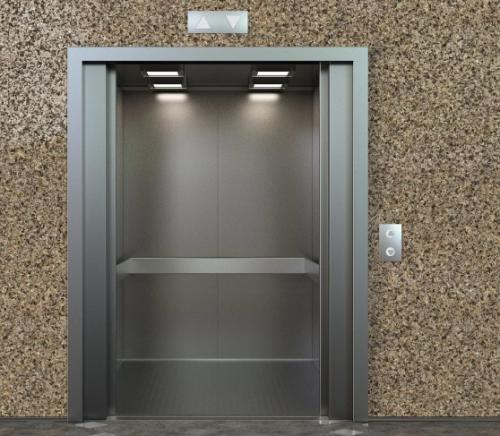
There are five additional problems to what I mentioned in Elevator Parts I and II in the previous post. The topics will be about how the Braille is not on the numbers properly, there’s no directory anywhere, you can’t hear the audio announcements on the elevator due to low volume, having to walk a bit to a secondary elevator, and having to hop onto a non-accessible car because it would take too long to get to the accessible one when you don’t have very long to hop on the train and don’t know which direction to go. The first and third topics will reference a video the AODA (Accessibility for Ontarians with Disabilities Act) Alliance did, a group of disability advocates who test supposedly “accessible” places.
According to the AODA Alliance video from last August, David Lepofsky, has found several accessibility problems including with the elevators, at this inaccessible courthouse theatre. There are nine elevators but only six are for public use. The first psychically problem with one elevator is that the Braille is not at the same level as as the normal print level; its slightly down and to the left-like the Braille is playing a game of hide & seek.
Another issue is that for the elevator print and Braille "G". Its fine in print but there's only a Star symbol next to it (which tells a blind person nothing) "But in Braille, it doesn't say "G" but "D" -did they mean to say "G" and did anyone proofread this Braille?
It's great that there's audio announcements in the elevator but its kind of annoying that in the one elevator shown in the video, you can't really hear the audio announcements -you can barley hear it say "2nd floor" and "ground" in the video. This would be a major problem if the elevator was full of people chatting.
So something *not* related to the inaccessible Courthouse: in Toronto there's a building called the Tenor. When Mom and I went to see Moana 2 there's no directory on the inside of the elevator only on the outside on each floor so that if you don't go very often you can't remember which floor is which. Another similar issue is at Toronto General Hospital there's no directory outside or inside the elevators to know which doctor is on which floor of 13 floors of that wing from hospital. and that's annoying when you only go once every 12 months.
So another issue with elevators is that they can take awhile to fix. When i was in Toronto to get bloodwork done at Toronto General Hospital, my Mom and I noticed that the normal elevator on Platform 5 was a little slower then normal to come up. On May 14th when Mom and I went into Toronto to my annual check-up at Toronto General Hospital the normal elevator was out of order so Mom and I had to walk all the way down to the other end of the platform to the other elevator.
In addition to the above topic, another issue that has come up occasionally when Mom and I go into Toronto is the fact additional elevators are too far away from the accessible platform on Platform 10-11. If you're in a hurry and there's no signs, you don't have time to run to the ramp when you're playing guessing games about which way to go. Mom and I try going in one direction and then the other to the accessbity platform but we ended up hopping on a non-accessible car instead.

So in September 2024, I was in Stratford, Ontario, to see a play. After the play, while waiting for the bus back to Toronto, my Mom spoke to a woman with a mobility device who was also waiting for the bus. This woman talked about the fact that she had traveled a lot and only twice out of twenty times had the airlines ever brought her walker to her at the plane door. One time in Frankfurt, they had to get two off-duty baggage handlers to search for her walker. At Heathrow Airport in London, UK, it took two hours for them to find this woman’s walker. When she finally got to the bus for what was supposed to have been a tour of the city, the other people on the bus weren’t too happy with her, even though it wasn’t her fault.
This woman’s story highlights one of the three problems that travelers with mobility devices have with airlines. The other two are that mobility devices are either damaged when they’re returned to the traveler or forgotten at the point of departure. Wheelchairs’ tiny front wheels are frequently bent, crooked, or entirely broken due to baggage handlers mishandling them, and small repairs for wheels can be an added expense, especially in a country where you don’t speak the language.
It’s quite common for airlines to forget mobility devices at the point of departure. In 2023, this happened to Stephanie Cadieux, Canada’s chief accessibility officer. She was traveling from Pearson Airport in Toronto to Vancouver, B.C., and somehow her wheelchair was left behind at Pearson Airport. (Side note: She mentioned that her wheelchair has also been damaged frequently.) Air Canada didn’t get involved until the media spoke to them, and only then did they apologize to Cadieux. Another woman who was visiting Mexico in 2023 didn’t receive her wheelchair until November 2nd after WestJet forgot to put it on the plane on October 31st, and even when she did get it back, it was damaged. In 2022, a woman booked a direct flight across the U.S. to avoid any issues with wheelchairs, but instead, she and her group got stranded at a Florida airport because someone at American Airlines forgot to load her wheelchair onto the plane. In 2023, two wheelchair rugby players had to use their rugby wheelchairs during a layover in Houston, Texas because “United Breaks Guitars” Airlines forgot to include their standard wheelchairs on the plane. One player described how this situation reduced him to an infant, as he requires a significant amount of assistance when using the rugby wheelchair, which is not meant for everyday use.
Banks
There are two major problems with banks; one is with counters and the other one has annoyed me for awhile about Pin covers for of the debit/credit machines whether it's at the ATM or at the teller's desk they seem to fix that at my local bank.
Counters II
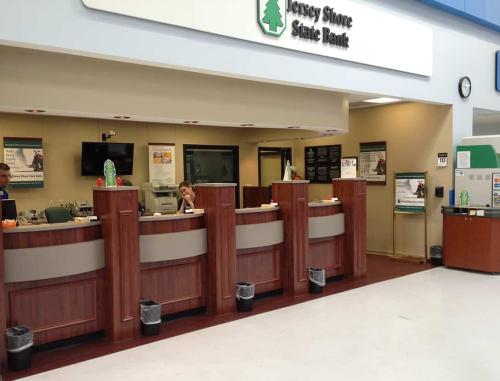
So one of the major problems, not just here but at post offices and similar places, is that if the accessible counter isn’t available or doesn’t exist, other counters are too tall for someone small or in a wheelchair. This was the experience of Cassidy Huff more than once, making it difficult for her to sign documents and such without help from her boyfriend.
Pin Pad Covers
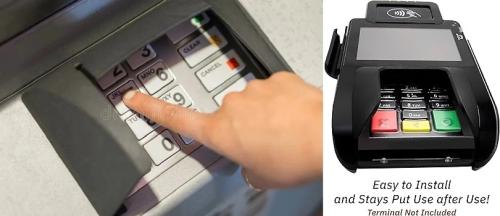
So a problem I have had in recent years is that my bank installed pin pad covers for the ATM pin pad and also the debit/credit card machines. This makes it really difficult to type when your PIN might include the numbers 1, 2, or 3 in the first row without needing to basically lean all the way down so your nose is against the pin pad to see those numbers or needing to learn Braille as a sighted person.
Accessible Parking Spaces Part II
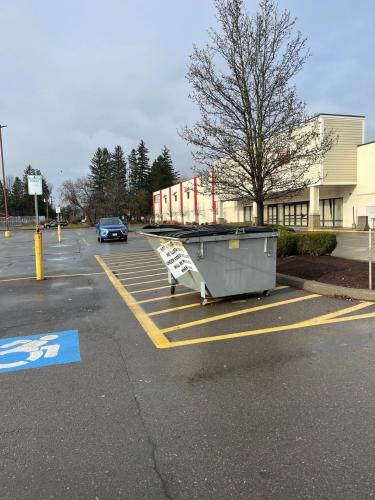
Another common problem of accessible parking spaces is that, besides obstacles like; shopping carts, bicycles, and motorcycles being in the "buffer zone" next to the parking space there could be a dumpster in the buffer zone making it really difficult to get in or out of the car. This is more commonly found in places where there's only one accessibility parking spot.
Door Openers
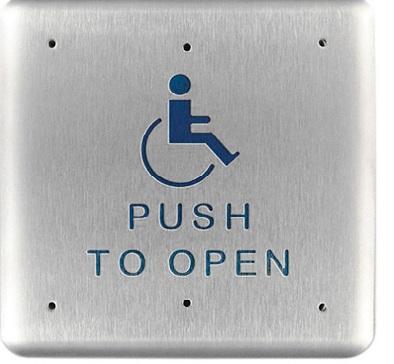
Push buttons are suppose to be an accessible help but sometimes they turn into an accessibly problem. Three examples of this is: either no button, the button is covered up by something or at the new Inaccessible court house i mention previously (and i will talk more about later); In 2003 someone got hit by the door because the door swung open on the same side as the push button.
Its obviously why having no push button is an accessibility issue. With no push button someone in a wheelchair or with their hands full have no way of getting in without someone else helping them enter a place of business. Either that or they have to forgo going to that particular place because of lack of push buttons.
The next problem of why having push buttons hidden is an accessbity issue. It's an inaccessibility issue if a plant or something else is covering up a push button people wouldn't be able to see and use it-essentially preventing access to the building/business. This happened to my Mom and I in the summer of 2024-one of the times we went to Boston Pizza that summer, we couldn't find the push button (that we knew was there) until after we exited the restaurant due to the fact the leaves of a plant they had outside had covered up the button.
Going back to the inaccessible courthouse I mentioned in a previous topic; another problem this inaccessible court house had was when David Lepofsky visited the courthouse the first time in 2023- when he pushed the push button, the left-handed door swung open hitting him because whomever designed that system didn't think about the fact people would need to be able to get around the door or that anyone would be that close to the button. It was fixed for David Lepofsky's 2024 visit.
Drive Thru Ban II
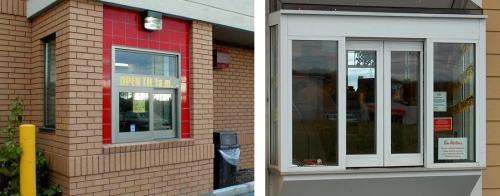
So I talked about the drive-thru ban in the last thread. Due to visits in the last year -a food court with a Wendy's in it, and also Harvey's (a Canadian restaurant)-I found another reason why I think that anything that's not cars in the drive-thru lane is a heap of rubbish. it's common or at least in my area, that for people who don't need push-buttons, when you got to the restaurants you find additional doors being near the drive-thru lane-which means you have to walk through the drive-way because there's no alterative to get to the additional doors (or back to a car) when going in or out of the restaurant.
Public Transit II
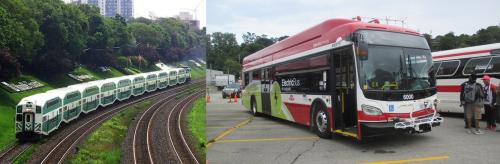
One of the several topic of inaccessibly will cover the lack of signage, confusing signage at Toronto Union Station (both on the platform and in the concourse). The next topic will be lack of public transit. We then will discuss Wheel-Trans and "Family of Services"
Lack of Signage
On Sept 4th of 2024, my Mom and I went into Toronto to go to Stratford, Ontario to see a play. We ended up in a different part of Union Station's concourse then usual so we followed the crowd and found ourself in the downstairs section of the concourse and we needed to find a washroom. It took awhile to find a washroom but we did it beside a restaurant-however due to a lack of signage we only found that washroom because I happen to be looking up and found one bathroom sign saying "<-Washroom" above you. When we looked in the direction of the arrow we saw the word "Washroom" up high online. This washroom would be impossible for a blind person like Molly to get to since there's nothing at eye level to inform you there's a washroom there.
Confusing Signage
So the normal Union Station platform that Mom and I go home from is 10-11 (the 11th is wheelchair accessible the other side of the train 12-? isn't). There's more then once we're on the platform trying to get to the accessible platform and there's a signage somewhere on the platform saying the right hand side (my right) is "10th" but when we got to the actually accessible part of the platform it's was the correct 11th platform. The platform was right the signage wasn't.
On March 2024th, I was in Toronto to see a concert with my Mom and getting home was a bit difficult. We had to hurry to the Go train so we ended dup sitting in an non-accessible car with the bundle buggy and Mom helped another woman with a stroller get on the non-accessible car. When we got back to our town it was about 11pm on a Saturday-so there was no buses. The woman with the stroller also got off in our town and wanted a bus to get someplace, as did a woman we ran into at the bus stop Mom and I would normally wait at (if we didn't walk home) to get the bus in the town's bus area at the station. The two women walked with us until they went to Tim Horton's so one of the women could charge their phone so they could call someone.
When I contacted the local public transit they told me about an "on-demand" public transit app for when the buses aren't running. But they also told me there is a need to "booked in advance" (at least the day before the trip-not really "on demand" is it?). To me that creates two problems
1. How can someone book something in advance if they're from out of town like the two women I meet on March 2024?
2. People don't have other options if the buses aren't running and they don't have access to the on-demand app whether because they're out of town or because their phone is dead.
Another problem of lack of Public Transit is during the spring or summer when I go to Pickering Mall and I'm trying to go home in the East. The local public transit information says there should be a bus at 5 after 4pm (4:05) and yet a bus doesn't come until 20 after 4 (4:20pm). As a result, I'm late getting home.
It also doesn't help when the 4:05 bus is coming from another town so accidents on the highway/traffic could delay that bus getting to me while the 4:20 bus is coming from basically behind the mall since there's a bus terminal there so it doesn't need to travel as far to get to me.
Wheel Trans is a whole other ballgame in the world of accessibility. I have a lot to chow down on in this world of inaccessibility. Wheel Trans should be accessible, get this -it's not! Whether because they cancel people's services or the fact it has to be booked in advanced So let's hope into it shall we?
Wheel Trans
Booking Wheel Trans
The first inaccessible problem with Wheel Trans is not like normal transit, which pulls up to a bus stop to pick people up-it's a service you have to book weeks, or sometimes even months in advanced. In some places, Wheel Trans doesn't even run on the weekends, so if you need help getting places, you're not going to be going out on the weekends. Also for the first trip, you need to have "proof of disability" and how you can't use conventional public transit (which is a bit of a laugh due to another topic we will discuss soon). Now under new TTC rules some of these people who use Wheel Trans have to reapply to have "proof of disabilities" Under the new rules there's 3 categories: Temporary, Conditional and Unconditional. Like other places do they think disabilities can suddenly disappear?
Wheel Trans Cancelling Services
Before Covid there was a lot of stories in the Toronto Star about disabled people using Wheel Trans for a long time and then suddenly out of the blue not being able to use Wheel Trans because someone higher up decided these disabled people "didn't deserve" Wheel Trans and could use normal Public Transit. One case I remember see is either a teen or a Young Adult (18-20). They had been using Wheel Trans for years to be able to go out with friends and then because of TTC's decisions she couldn't anymore.
Family of Services
Family of Services means that the transportation will be a merge of both Wheel-Trans and the “conventional public transit” services. But there’s a problem: the people at the top of the food chain don’t realize how inaccessible some stations are, not just because of the hoops they have to go through if the elevator is down at a station, but also because the gap at some stations between the train door and the platform is a problem. In one recent case, Wheel-Trans tried to cancel a woman’s door-to-door Wheel-Trans service because they declared that she could “use conventional public transit.” The woman mentioned to the Toronto Star that back when she was using normal public transit, one time her wheelchair wheels got stuck between the gap, and the only way she got over it was with two guys helping her over it.
When I was trying to look up this topic, I found out that someone had an issue with “Family of Services” because the 70-year-old woman wanted to visit her 90-year-old mom in a home. Because the normal door-to-door Wheel-Trans was booked solid, she had to settle for “Family of Services” and ended up with sore knees due to, in places, a long walk between subway stations and standing for long periods of time. That’s not counting the other issue that the Wheel-Trans service took her to either the wrong subway station, which was in the opposite direction of where she was going, and what should have been 10 minutes with door-to-door service was more than an hour and a half. Going back home was even longer—two and a half hours!
Another Wheel-Trans user, who uses an electric wheelchair, has more than once canceled his trip because of rain, which could short-circuit his wheelchair. This means he can’t use the Family of Services like the TTC wants him to use. Also, the booking system doesn’t seem to have a condition for “rain” and tells him to call the Priority Line on the day of his appointments to see if there are any rides, which there normally aren’t, so he has to cancel the appointment.
It’s not just wheelchair users or people with limited mobility who are having issues with Wheel-Trans; it’s an issue for blind and visually impaired people as well. There’s one story where a blind person waited for Wheel-Trans to come and pick her up, and when it appeared, Wheel-Trans didn’t pick her up. She called the Priority Line and was told that Wheel-Trans had come and left without ever informing her they were there. She’s not alone in this problem. Another issue with the Family of Services for the visually impaired is that they can’t manage steps without help in an unfamiliar environment or if the stairs are under construction.
According to the blind lawyer David Lepofsky, he has heard of several cases where disabled people who were forced to use “Family of Services” either found out or figured out that the Wheel-Trans vehicle that picked them up from their destination subway station is the same vehicle that dropped them off at the other subway station. So what a waste of time—even the drivers think this when they’re the same ones picking up and dropping off people for Family of Services. If this is supposed to be about efficiency, wouldn’t it make more sense to keep them on the bus?