The Power of Environment

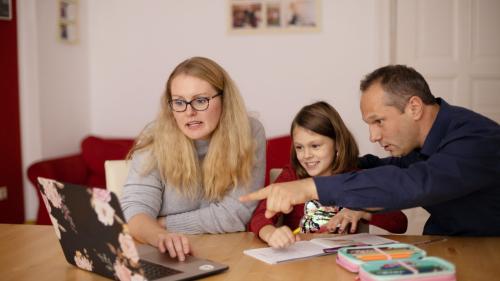
"As your child’s most important teacher, it is your job to create a secure and rich environment with printed letters, numbers, and physical objects he can observe and manipulate. These tools can help them develop the cognitive and emotional skills that, in turn, contribute to intellectual, emotional, and social growth, ultimately leading to academic and personal success later in life.
The Right Environment
There are many ways to create a stimulating environment for your baby. Encourage them to explore toys differently by touching, banging, stacking, or shaking them. You can also turn everyday routines into playful learning moments. For example, you can teach them about sinking and floating, wet or dry, or under or over the water during bath time.
You can also pay attention to what your child is interested in. Children learn best when they are excited. If they like dogs, take them to watch dogs play at the dog park. Ask them, “What color is that dog?” “How many dogs are there?” “How many dogs are big? How many are small?” These questions will help them think and create classifications, labels, and interpretations about what they see. When reading a book together, ask, “Why do you think the girl is smiling?”
Helping your children learn and excel is neither time-consuming nor difficult. And the results can start appearing in just days, not years. L. Madden, reporting on the remediation of poor readers in elementary school, found that parents who were taught how to interact with their children by reading in their own home over six to eight weeks multiplied their children’s comprehension rate by six times the normal rate.
Personality Development
Lest we focus too much on cognitive development, it is important to acknowledge that the same goes for your child’s personality development. Take the trait of shyness, for example. It was once believed that a predisposition to shyness was permanent; if you were a shy infant, you were a shy kid and a shy adult. These were simply the cards you were dealt. But now, we know differently.
The expression of genes is not set in stone. Instead, they must be activated to be expressed and predominantly activated by family interaction. Even if your child has the genetic predisposition for shyness, if that gene is not turned on, or if genes that relate to a more outgoing personality are activated instead, he will not be as shy as he may have been.
Of course, genes do matter. However, your response to their expression can affect the expression and outcome of those genes and how your child turns out. If your toddler is challenging, cranky, and acting out aggressively, you will most likely respond to his behavior in a heightened state. A problem child can bring out the worst in parents. When signs of antisocial behavior surface, it can trigger a negative response that starts a loop of adverse reactions to this problem behavior. If you aren’t conscious and paying attention, you can get caught in a cycle shaped by your child that only stimulates your child’s budding antisocial characteristics.
In other words, you can unintentionally reinforce the trait you wish to eliminate if you’re not careful. That’s because your social interactions and reactions to your child determine which genes are activated and have everything to do with your child’s temperament.
Your decision to either take control and create an appropriate environment to address your child’s behavior, or continue a cycle of negative reaction and reinforcement, will determine whether your child sets out on a healthy course or develops a behavior disorder. To choose how to meet your child where he is and create an environment that amplifies or represses innate traits, you have to be there and know your child."
*I thought this article was extremely interesting. I found it so cool how much of an impact environment has on a child's overall development. Depending on how parents react to a child's behavior, certain genes can be activated or repressed and this changes a child's personality. It's so important for parents to be present and actively involved in their child's development so that the child can be prepared for the real world. What other factors besides parents influence have on a child's development as they get older?*
#Environment #Genetics #Development
Please find the full article at Thrive Global.
If you liked this article, you may like this one on family background and children's education.

@fruityPond7887
The power of environment is a life long thing ..... while in childhood it really helps in learning and development as kids are much better at absorbing not just words but actions as well
As people get older ............ who they are surrounded by makes a huge difference at work home or basic interactions
not just positive and negative attitudes........ but perspectives and practices that show you other possibilities can change your world ... for good or bad.
i think it is subtle and may not even be noticed at first .........
example if you are surrounded by active people it is harder to be a couch potato ....... if reversed it is easier to rationalize less activity....
@toughTiger6481 I agree with you 100% Tiger! Who we surround ourselves with is so important when it comes to who we want to be. You're right - we don't realize how much of an impact it has, but more than we think! Thanks for sharing your thoughts!❤️